The optimization of web pages can be described as the most basic. The site consists of numerous separate pages, each of which is part of the site's optimization. It is important not to underestimate the importance of each page. The optimization of the website's pages directly affects the number of entries in the search engine, while the key vocabulary and ranking of the site are related to the number of entries on the site。
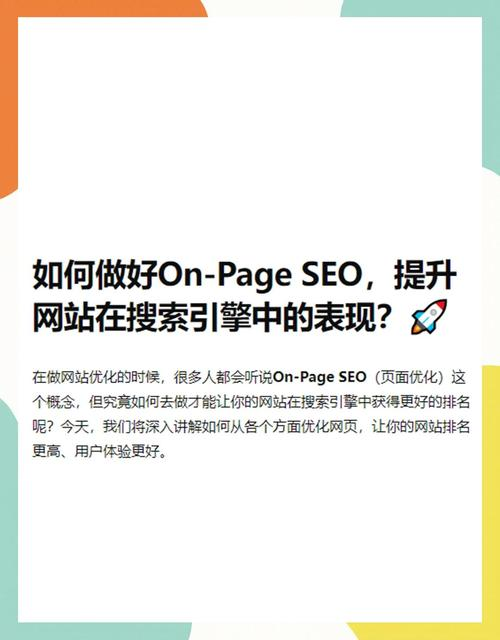
There are a number of ways to optimize web pages, and today you can share some of the ways to optimize web pages from the title of the site, the setting of its contents, the code, the label, etc。
1 set the title of the website。
The title design of the website is very important, and if the pages of the site are divided into 10 points, the title can account for 5 points. Of course, it's not just a title, but it's best to allow the title of the page to fit with the key words of the layout. The title highlights the subject matter and highlights key words。
It is also important to note that the title of each page should not be the same, especially if the title of the internal page should not be applied directly to the title of the first page in order to save time。
This is not recommended if the title of the page does not match the contents of the page. The search engine will judge the relevance of the page by title and content, and if the title and content do not match the search engine, the page will be considered to be of low quality, thereby reducing the number of hits and the number of entries on the site will be reduced simultaneously。
It is suggested that the following questions be considered in the title of the page:
1) what is the user group。
2) the ability of the title to attract users to the site and thus to generate traffic。
3) what are the types of keywords used in the title
4) how many characters are best used in the title。
2. Page content of the website。
The content is already at the core of website optimization, and many corporate websites have developed the habit of regular quantitative updates. However, it is not enough for the page to simply update content, and many enterprise websites have only made the first step in updating content, but little attention has been paid to the quality of content。
Many websites are quantitative, which is unreasonable, and, in the view of the search engine, a high-quality article is enough for 10 or even 20 ordinary articles. Moreover, the site has too many low-quality content and the search engine may penalize it。
Therefore, the quality of the content of the website must be fully guaranteed. The contents of the pages can be displayed in graphic form. You can also give a ranking to the content of the page, based on the number of hits. Attracts users to click articles to provide access。
3. Streamlined codes。
When the search engine enters the page, the first step is to climb the content information, so in order to facilitate the search engine capture to minimize the difficulty of identification。
At this point, one would ask, what does that have to do with streamlining codes? The relationship is great. The content information on the web page is generally in the "div" envelope, and if the code structure is used on four or even five layers of the complex embedded "div", the search engine takes longer to capture the content information in "div". It is well known that search engines do not like trouble. So this will require a reduction in the corresponding “div” nest to increase capture efficiency。
In fact, if the page of the site uses a lot of js codes or flash, it's very serious, and the search engine can't identify it, then the capture is empty, and the search engine considers it to be an empty page, thereby reducing the number of subsequent hits。
There is also the code for style css, which generally exists in a separate file form and some are embedded in the HTML code, but not recommended. Separate document formats are more conducive to searching engines and can be matched by one page to a web-based css file。
The comments of the search engine on the page code are also required, and the search engine crawls over the notes and the redundant notes can be deleted to reduce the difficulty of extracting the page content from the search engine。
4. Various labels in page codes。
Rational use of label optimization pages is also a very effective method, and the search engine gives a high weight to certain labels. The following are some questions about the use of labels:
1) h-label
The main purpose is to centralize the contents of the page, which can be broken down into h1 ~ h6, and the smaller the number, the better, the better the h label for each page。
2) art label
Mainly for pictures, the search engine is unable to capture the image content, but it can be retrieved through the att label of the picture, so the att label content can be inserted into the keyword。
3) keywords tag
If the search engine considers the subject matter of the page to be highly relevant to the keyword in the keywords tab, it calculates the ranking of the keyword in the keywords tab。
4) desCription tag
A summary of the subject matter of the website. Usually used to describe the subject matter of the page, along with the page title, the keywords tab。
Optimization of layout, layout of colour。
Unlike the above-mentioned optimisation method, this is primarily for user experience. The search engine places great emphasis on user experience, which is best reflected in the layout of the pages and the mix of colours。
The colour mix should not be too bright or too dark, but the layout of the page should not have anti-human designs。