Core elements:
In the light of the new situation, the media must take the lead, take the lead and keep the country on top of its agenda, set a global perspective, set up international-oriented institutional mechanisms and work patterns, innovate in the dissemination of ideas, content, forms, methods and means, tell chinese stories, spread the chinese voice, constantly strengthen the voice of international opinion and serve the party and the country more effectively。
Whether or not the chinese story is good, and whether or not the chinese voice is heard depends on whether or not the foreign language is willing to listen, understand, think and resonate. The construction of the language system should be used as a breakthrough in external advocacy, with special efforts being made to conduct in-depth studies, take ownership of the external dissemination of important issues such as roads in china and the chinese system, and take the initiative in the international news competition for hot spots。
In international hotspots such as world economic developments, relations between great powers, conflicts of civilizations, security against terrorism, climate change, cyber governance, regional disputes, etc., media outlets must speak out loudly and not follow western media blindly。
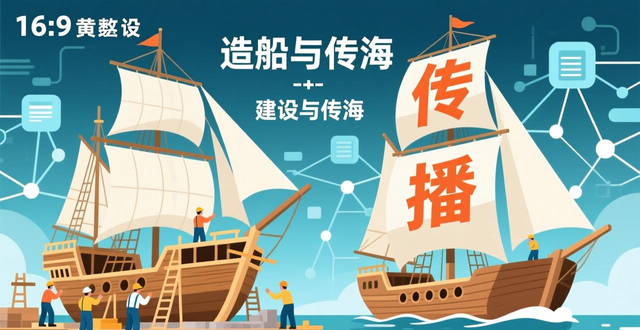
Channel building is an important component of emerging media communications. In this regard, the relationship between “shipbuilding” and “borrowing” needs to be addressed。
Long-term cooperation will be established with state-of-the-art institutions of higher learning and training at home and abroad, bringing in foreign personnel for further study, introducing quality training programmes, training a good group of international news commentators and “all media editors”。
The party centre, with comrade xi as secretary-general, attaches great importance to strengthening outreach and international communication capacities. General secretary xi stressed the need for careful outreach work, innovative ways of outreach, and efforts to develop new formulations of new concepts to accommodate both china and the outside world, to tell chinese stories and to spread chinese voices. The important instructions of the general secretary of xi have provided important follow-up and increased demand for a way forward for international communication capacity-building in the new context。
China is moving towards the centre of the world stage, with its capacity to participate in international affairs significantly enhanced, and its relations with the world have undergone a historic change, as the country's combined strength has grown significantly and its international standing has grown. At the same time, there is a growing and urgent need for china to defend its interests on a global scale, and the collisions with the outside world are increasing and public opinion is becoming more prominent. In the light of the new situation, the media must take the lead, take the lead and keep the country on top of its agenda, set a global perspective, set up international-oriented institutional mechanisms and work patterns, innovate in the dissemination of ideas, content, forms, methods and means, tell chinese stories, spread the chinese voice, constantly strengthen the voice of international opinion and serve the party and the country more effectively。

I. Innovative external language systems to increase the relevance and relevance of outreach
Words are vehicles of culture, tools of expression, bridges of communication. Whether or not the chinese story is good, and whether or not the chinese voice is heard depends on whether or not the foreign language is willing to listen, understand, think and resonate. The construction of the language system should be used as a breakthrough in external advocacy, with special efforts being made to conduct in-depth studies, take ownership of the external dissemination of important issues such as roads in china and the chinese system, and take the initiative in the international news competition for hot spots。
Innovative external linguistism has to capture the key to integration. It is important to take full account of the differences in cultural backgrounds, customs, ways of life and religious beliefs among overseas audiences, to find points of convergence between chinese and foreign interests, points of convergence and emotional resonance, to explore cross-cultural communication techniques, and to use language that can be easily understood in a manner that is acceptable to overseas audiences, with a view to creating a system of chinese and international languages that is clear and understood. To speak with facts, to speak with data, to reflect the great times with small cuts, to integrate china’s development achievements, paths and ideas into the stories of ordinary chinese, chinese families and chinese businesses, so that china can be perceived and touched by the world’s image。
Innovative foreign language systems must focus on the word “new” in order to breathe new life into the new context. New strategies for new ideas in the central party are to be introduced, explained and disseminated. Since the 18th congress of the party, the party's centre, with comrade xi as secretary-in-chief, has drawn wide international attention to such important ideas as the chinese dream, the “four comprehensive” strategic layout, the new relations of great powers, the community of destiny, the concept of good-faith surrounding diplomacy, and the “one way forward”. Since the publication of xi jinping, which was launched in october 2014, more than 5. 2 million copies have been distributed globally in a year, and more than 400,000 copies have been distributed abroad, creating the highest record of overseas publications by chinese leaders since the reform and opening up. This amply demonstrates the need to focus the content of the foreign discourse system on key concepts of party central governance and governance, leading the international community to a more comprehensive and in-depth understanding of china's road and chinese system through complete and accurate expression and interpretation。
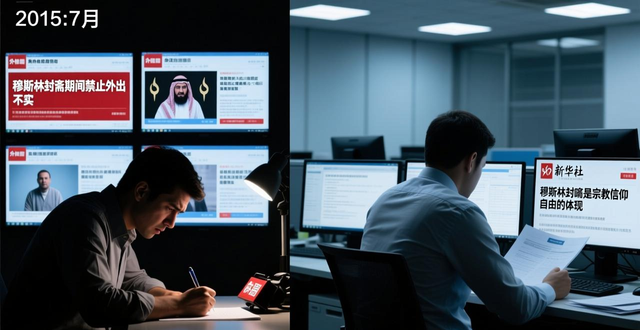
Innovative foreign language systems must be built around china's international public opinion hotspots, categorized and broken down. China's economic situation, ideology, political system, party leadership, network management, national religion, tibet's xinjiang and human rights issues have long been the focus of public opinion abroad. In july 2015, there were rumours from foreign media that my government had banned muslim fasting, and xinhua quickly organized an interview with a domestic branch, which effectively clarified false rumours by telling facts and stories, which were relayed by various western mainstream media。
Innovative foreign language systems are designed to highlight china's perspective around major international issues and regional hot spots, present china's views, express china's position, report on the fact that western media have deliberately avoided it, and make our own voices heard. In international hotspots such as world economic developments, relations between great powers, conflicts of civilizations, security against terrorism, climate change, cyber governance, regional disputes, etc., media outlets must speak out loudly and not follow western media blindly. In september 2015, the refugee problem in europe became the focus of world attention, and xinhua, while providing dynamic coverage, conducted in-depth interviews on the instability of the situation in syria, libya and other countries and the hardships of people's lives, revealing that the refugee problem is one that some western countries must be held accountable for throwing stones at their feet。
Ii. Expanding emerging media communications positions and furthering integration and innovation in media-wide international communication
Universal access to the internet is the most important change in the field of international communication since the new century. The global internet usage report released by the international telecommunication union in may 2015 shows that the global number of internet users will reach 3. 2 billion by the end of 2015, compared to 250 million in 2000. The advent of the information network era, which has made microphones available to all, has significantly lowered the communication threshold, changed the monopolistic position of a small number of powerful media in traditional international communications and provided a relatively level playing field for countries to communicate externally. The outreach media should seize this unique opportunity to focus on reaching out to emerging media opinion positions and taking over future high points in international communications。
Innovative content production. The emerging media disseminates content that is mobile, fragmented, personalized and prefers to be micro-dissemination and light applications. In terms of product patterns, media-wide construction has become the mainstream direction of international communication, especially with the spread of broadband networks and the promise of video, photo and motion pictures. The united states company cisco projects that by 2018 video traffic will account for 84 per cent of all united states network traffic. This requires the media outlets to shift their reporting concepts and to produce more light, quantifiable and visualized products that are better adapted to changing user needs. In september 2015, during president xi jinping's visit to the united states, xinhua produced three short videos in english entitled “taiwan china”, with a total of over 45 million views on the internet and new media. Specialized stories, such as reuters and deutsche welle, were positively evaluated for good dissemination。
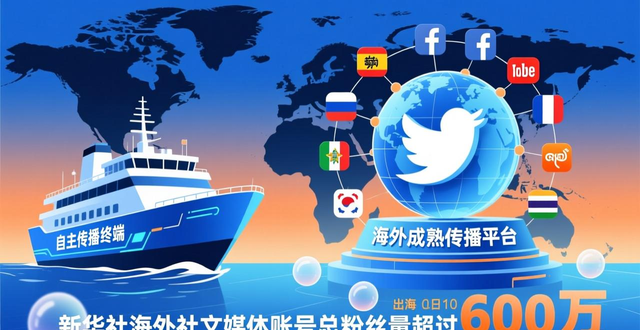
The second is to expand communication channels. Channel building is an important component of emerging media communications. In this regard, the relationship between “shipbuilding” and “borrowing” needs to be addressed. In recent years, my outreach media have established autonomous communication terminals, but access to news by overseas audiences has generally been dominated by the national media. According to the survey, the united states media account for 84 per cent of the main sources of information about china and 7 per cent of information through mainland china. This has inspired us to have a multiplier effect by strengthening outreach through mature communication platforms abroad. Since march 2015, xinhua has stepped up news coverage on internationally recognized social media, such as twitter, facebook, and yubaku, with a unified official account number, with a total of more than 6 million fans as of october. In addition, outreach has been extended to key social media outlets in the region, with more than 30 accounts in 15 languages, including french, spanish, russian, arabic, portuguese, japanese, myanmar, viet nam and thailand。
Three is to optimize the organizational model. As a result of the relatively detailed division of labour, traditional media have developed separate organizational structures and production processes, while media-wide communication integrates various reporting patterns and objectively requires integrated use of resources and flat management of organizational structures. Traditional methods of production are no longer adapted to changes in communication patterns, and it is necessary to adapt the process of mapping mechanisms by integrating the concept of development, creating a media-wide platform for unified command and control, promoting the in-depth integration of human and information resources, and achieving a single, multi-generated and pluralistic dissemination of information. In march 2015, xinhua established the operational command centre for social media overseas, with a project team of 137 operational cadres drawn from nine departments of the general service and seven foreign-based general branch offices. The integration of resources and reporting has been well achieved through the integrated planning of deployment by the operational command centre, the respective editing and processing of personnel, and the unified export distribution。
Iii. Building a comprehensive support security system to enhance the overall competitiveness of the outreach media
International communication capacity-building is a systemic undertaking that must be designed in an integrated and collaborative manner, with the full mobilization of resources from all sources, and provide a strong guarantee of support for the wider participation of outreach media in international competition。
There is a need to significantly strengthen team building. The creation of a highly political, professional and broad-based workforce is the basis for public outreach. Practice-oriented, grass-roots and performance-oriented, using a variety of methods, such as high-profile reports, crouching, rotational exchanges and grass-roots exercise, are needed to reach out to a wide range of editors, inform them about the situation in the country, create a source of ideas and develop spirituality. Long-term cooperation will be established with state-of-the-art institutions of higher learning and training at home and abroad, bringing in foreign personnel for further study, introducing quality training programmes, training a good group of international news commentators and “all media editors”. Internationalization, localization and the introduction of innovative skills must be vigorously promoted, and the presence of expatriates in the external sector must be continuously increased, especially in the mainstream media abroad, where they have a high level of professional experience。
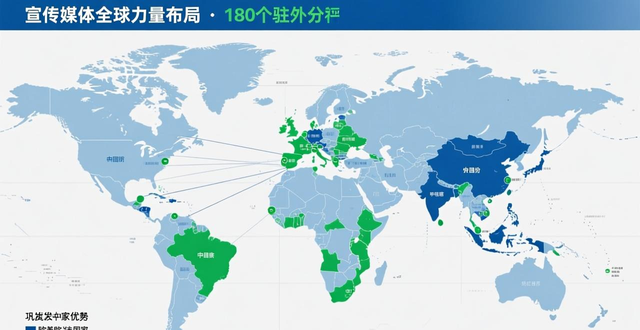
The second is to optimize the configuration of power. My outreach media have established a wide range of branches overseas, and xinhua alone has 180 branches abroad, but there is room for improvement in their use. It is necessary to fine-tune the global configuration around the overall external strategy of the central government, to strengthen outreach in the developed countries of europe and the united states, to strengthen staffing and resources in the major western countries, and to achieve new breakthroughs in communication channels and positions, based on the consolidation of my communications strengths in the developing countries. Strengthen the capacity of national and regional branches in strategically important and well-resourced countries and regions, taking into account the coverage of neighbouring countries and regions in a balanced manner, and avoiding excessive fragmentation。
The third is to actively expand overseas landings. Landing is key to the effectiveness of outreach. A professional overseas marketing team is to be created to actively develop local mainstream media and users of major social institutions, to better understand user needs, to promote marketable products and to achieve personalization and targeting. Increased communication cooperation with internationally recognized news agencies, television groups, network companies, search engines, social media and public relations companies, among others, is needed to actively use their communication platforms and distribution networks to deliver my outreach products to end-users and expand direct overseas coverage。
Fourth, technological innovation needs to be advanced. In the era of information networks, the important role of technological advantages in media competition has become increasingly prominent. Technology building is an important pillar of future development across major international media. It is necessary to firmly establish the core concept of competitiveness and to promote a shift in technology building from supporting to leading security. (b) follow closely the technological frontier of the information network and fully utilize the critical role of technology in building platforms, innovative products, service users and expanding markets. An open platform for technical cooperation should be built, with mutually beneficial and pragmatic long-term cooperation with leading industry and well-serving companies and research institutes, making full use of external resources to break technological bottlenecks and improve technological innovation and service levels。
In today's world, where multipolarity, economic globalization, cultural diversity and social informatization are developing, china's dependence on the world, its participation in international affairs and its influence on china are deepening. The media must play its full role as a bridge between chinese diplomacy and china, tell the chinese story more vividly, spread the chinese voice more effectively, and make a new contribution to the full realization of a small and prosperous society, the realization of the “two hundred years” of struggle and the realization of the chinese dream of the great revival of the chinese nation。
![新闻资讯APP排行,手机新闻APP排行榜前十名,手机看新闻哪个软件好[2026]](https://www.3z0.cn/file/upload/202608/26/1787681122214_lit.jpg)