Cloudy kobo is looking for sichuan black technologies
Cover journalists visited 21 municipalities in sichuan to look for local web-based red-temperature black technology products, reveal the stories behind their birth, and showcase the best of science and technology innovations。
The cover reporter, seo-dong, xiaoyang
In recent years, 3d printing has become a popular technology of great interest. It produces “printing materials” such as plastics, metals and the like, which are made into physical objects by stacking them over layers. Among the many “printing materials” in which metal powder materials have great advantages and prospects for development, 3d-printed titanium and titanium alloy powders for aviation, space and medical devices have been hot spots in the manufacturing industry because of their highly technical difficulties。
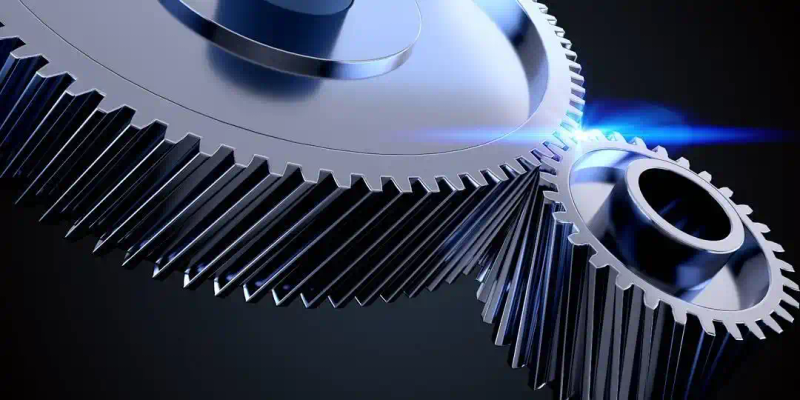
Since 2014, the steel climbing institute in sichuan has been conducting research on the use of spherical titanium powder for 3d printing, gradually breaking foreign monopolies, and has now reached an advanced level in the domestic industry, with products recognized by users。
On 21 september, the eighth china (mongyang) science and technology city international science fair will be opened. At that time, this small, grey and black particle, which is only a few dozen micrometres in size and is present in high-end industries, will be displayed。
01
Small, but critical raw material for the aeromedical industry
"we started making this product in 2014. In a laboratory at the steel climbing institute, the director of research and development of spherical titanium powder technology, zhao sanctuary, took a glass bottle from the shelf, which contained grey and black powder, which was a spherical titanium powder for 3d printing, and was only a few dozen micrometres in size。
According to the zhao triang, titanium metals have characteristics of light mass, high strength, and resistant to corrosion. In recent years, with the global development of 3d printing technologies, seemingly invisible titanium and titanium alloy powders have become key materials needed in the field of metal parts 3d printing, and although domestic enterprises have also developed them, their preparation technologies have been monopolized by foreign firms。
"it's hard to do it at the beginning of the experiment." according to zhao zhao zhang, 3d printing is a very high-level industry with many disciplines, including metallurgical, chemical, materials, etc., and the r & d process is very difficult and can only be developed, explored and adapted。
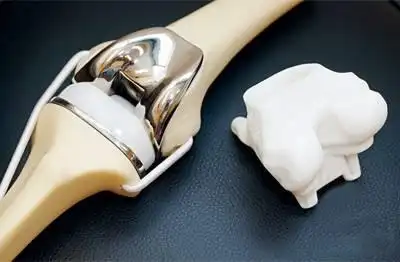
"3d printing, with the greatest advantage, is that it is possible to achieve directly by printing through 3d a number of complex products, such as alien parts, structural components, etc., without the use of moulds." at present, titanium and titanium alloy powder products are used mainly in aviation, space, medical devices, biomedical industries, such as aircraft, spacecraft, some important parts and components, as well as in the printing of human teeth, bones, medical implants, etc。
02
Autonomous research and development
In 2017, the institute of steel climbing established a process for the preparation of spherical titanium and titanium alloy powders, and the overall technology and product quality reached an internationally advanced level. In 2018, there was a breakthrough in the preparation of laser printing for spherical titanium alloy powder. By 2019, problems such as powder mobility had been resolved and products had been recognized by users。
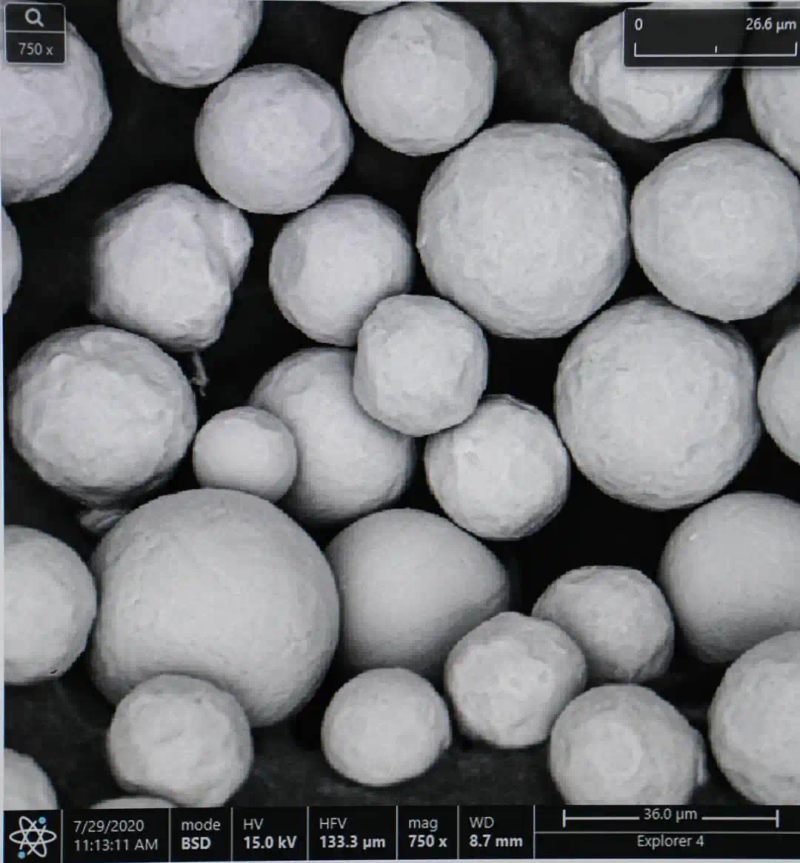
Spherical titanium powder for 3d printing under magnification
In the laboratory, zhao zhao xianxian has turned on the analyser to test a batch of spherical titanium powder. On the display screen, the image was amplified and a round titanium powder was clearly present。
According to zhao zhao zheng, for the current printing of 3d lasers with more sophisticated high-precision metal parts, 15 to 53 micrometres of spherical titanium powder are needed, and the project team is now working mainly around this aspect。
Dozens of micrometres of spherical titanium powder, if not amplified, is a pile of fine powder, how are they produced
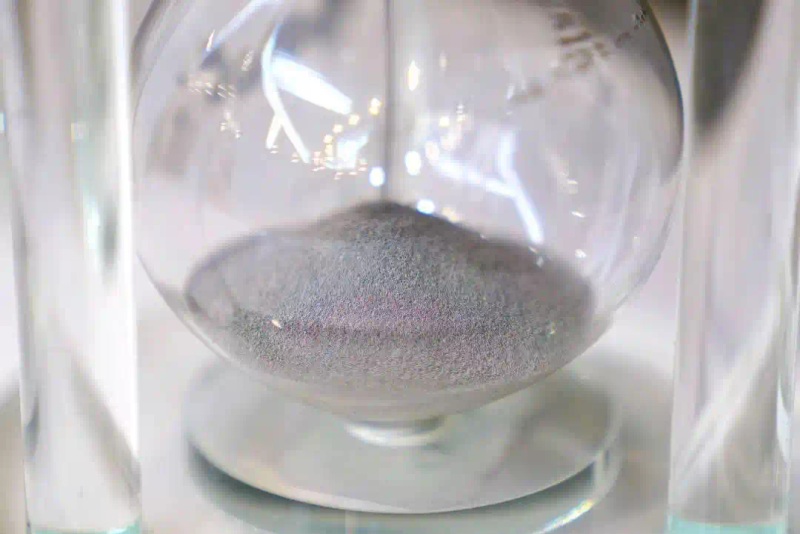
3d printing in real life with spherical titanium powder
Zhao zi cai explained the approximate production process: by heating the tampon bar through sensor wires, and then by high pressure gas, the melted titanium “breathed”, the titanium is broken into a small droplet and the drop is condensed into a round powder form. This method of production, known as electrode induction aerosols, is one of the main methods of global industrial production of titanium alloy powders。
"the titanium has a characteristic, which is that it can't be fitted with a tungsten because it can be contaminated." zhao zi cai said that one of the difficulties in the production process was aerosolization and the stability of the equipment, as well as the mobility of the powder. For this reason, the team took a long time from the main research and development to solve these problems one by one。
Zhao zhao xianxian said that, now, core equipment and some products involved in 3d printing were self-reliant for domestic enterprises because of the technology monopoly and blockade。
In order to accelerate the development of 3d printing technology, in 2018, for the first time we discussed the drafting of the " criteria for the measurement of titanium and titanium alloy powder plume rate " , steel climbing as one of the member units, together with the north-west non-ferrous metals institute, etc., and the drafting of criteria for measuring 15 to 150 Μm titanium and titanium alloy powder。
In the current market, the price of spherical titanium powder is approximately $1,500 to $2,000 per kilogram, with a wide range of prospects. However, although the institute has now achieved wholesale quantitative production and customer recognition of its products, at this stage it is primarily research-based and requires further improvement in product quality and gradual industrialization。
“although the 3d printing in the country is in its initial stages, it is developing rapidly.” zhao ziqiang said he believed that, as research and development progressed, the industry would eventually break the foreign technology embargo and that, in the future, 3d printing would be applied to more areas for the benefit of more people。
Koborg data, climbing flowers

The climbing flower, known as the chinese capital, is the country's largest raw material base, the world's first production base for acupuncture and the full-process titanium industrial manufacturing base。
At present, climbing flowers are deepening the construction of pilot zones for the development of strategic resource innovation in the west, making full use of the “steal climber fleet” to drive industries such as iron and steel to the medium and high end and to build a world-class industrial base. At the same time, through the enhancement of the capacity for science, technology and innovation and technology transformation, the alliance for technological innovation in the industries of new materials was established, and the centre for industrial innovation in the bi-city economic circle of the sensu region was established。
The 10th plenary session of the graffle markets council identified the need to accelerate the construction of the “two cities” and the creation of new provincial districts, with the aim of creating them as a unique and important point of focus for the economic centres of the two cities. It is planned that, by 2025, the new zone will essentially form the centre's urban core and sichuan and even chengsu regions, which will open up important portals, bringing together more than 20 research and development institutions from more than 20 provinces, more than 100 high-technology enterprises and a total industrial output of over $150 billion。
Over the next five years, the goal of scaling up science, technology and innovation will be to increase investment in research and experimental development (r&d) throughout the city at a rate not less than the rate of increase in the region's gross domestic product (GDP) by 1. 65 per cent by 2025; to increase significantly the cost of research and development in large and medium-sized industrial enterprises as a proportion of the enterprise's operating income; to achieve more than 75 per cent of the combined utilization of iron and steel, more than 65 per cent of the combined utilization of titanium and more than 40 per cent of the combined utilization of titanium, and to achieve industrial recycling of precious metals such as chromium, thorium and thorium; to generate more than 70 billion yuan from the operation of high-tech enterprises; to obtain 17. 9 patents for effective inventions per 10,000 people, the second highest in the province; and to achieve 180 scientific and technological personnel per 10,000 people。