Many people ask when they do overseas promotions: "what is googlesee's pay-off chain?" why do people say it works fast and others say it's risky? If you're doing pushovers, especially independent stations or b2b stations, this problem can't be bypassed. I will now take into account the experience of working as an english station, serving foreign trade clients and dealing with punishment cases over the years, to make this matter clear, to speak in human words and not to turn around。
What's the payout chain
First, the most straightforward definition. What's googleseo's payout chain? In short, by paying for other websites to make a link to your website. This link usually appears in the body of the article, the resource page, the press release or the blog content, and is intended to convey weights and raise the ranking of keywords。
From the official point of view of google, any “link obtained in exchange for money or equivalents to manipulate rankings” is an irregularity. The reality, however, is that there is a large amount of fee-paying across the internet, albeit at a low level. If you don't pay, people don't necessarily link you。
According to ahrefs, more than 90 per cent of the pages do not have any natural flow on google, while the top 10 pages have, on average, 100 extra-chain domain names. This illustrates the fact that links remain one of the core factors in the google ranking system。
Why do many people choose to pay
To be realistic, it is difficult to obtain the outer chain simply by nature. New sites, in particular, lack of visibility, media resources and automatic reference to content, are almost equivalent to lottery tickets。
We operated an english-language station for industrial parts, which was updated during the first three months, without taking the initiative to open the outer chain and after 50 keywords. The system then began to build an external chain, including resource-based site cooperation, input from industry blogs, partial fee-for-work cooperation, with six months of core words entering the top 10 from around 40, and increasing traffic from 200 to over 3,000 per month。
So many would choose to pay out-chains, not because they like to take risks, but because time costs are too high. In particular, foreign trade, ranked three months later, may have lost a large client。
Common forms of external payment chains
There are many out-chain forms of payment on the market, different from quality and operating techniques。
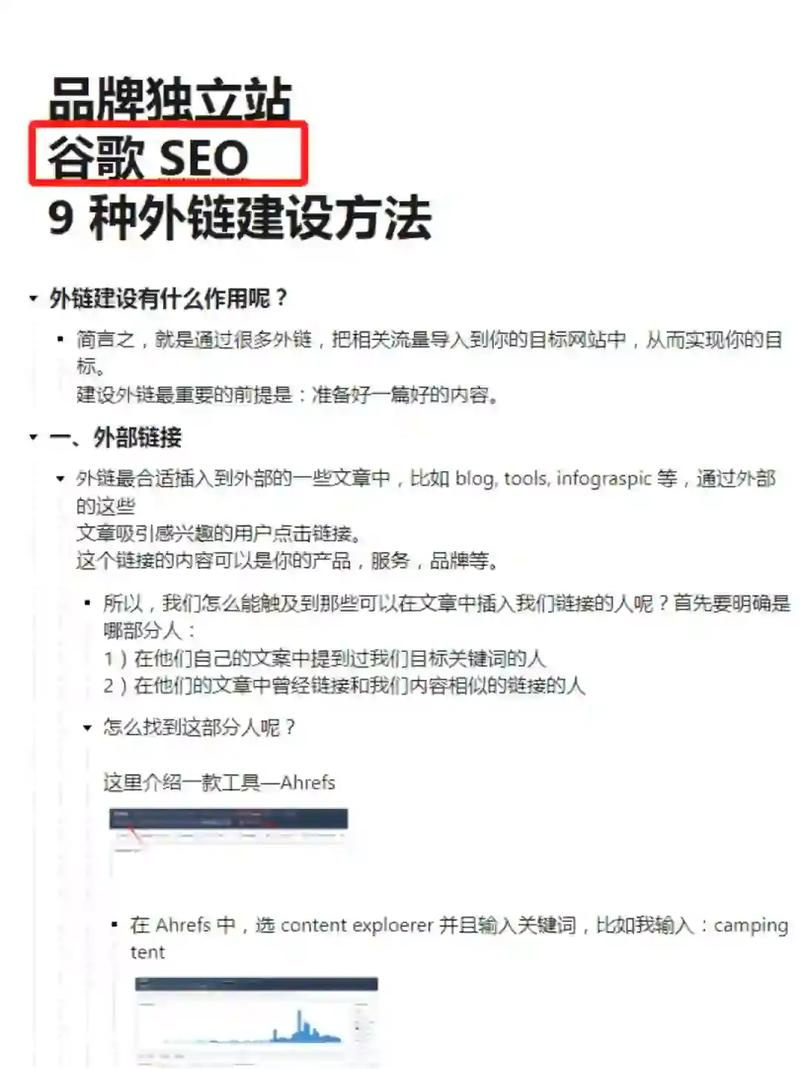
One common type of blog article is that of bloggers. You contact the industry website, you're issued a price list, ranging from hundreds to thousands of dollars, based on website weights and traffic. Insert your link in the article, which appears to be a normal contribution, but is actually business cooperation。
Press releases were also issued. Linked articles are distributed through media platforms to news websites at relatively cheap prices, but mostly with a decentralized weight, with an impact on brand exposure。
There are also resource-based links, such as industry catalogues, supplier lists, evaluation recommendations pages. Such links are often of good quality when they are real industry sites。
There are also a number of service providers dedicated to the construction of links, such as the gpb, which is responsible for high-quality off-site links in english, emphasizing relevance and authentic editing; the gnb, which prefers to help raise station weights, emphasizing overall optimization at the domain name level; and the gmb, which is more of a local business information display platform, suitable for brand exposure and local signal enhancement. These ideas are essentially centred around a core: building trust and authority through external sites。
Price spreads and costs
Say something specific. The english site has a high-quality blog outlink, with a real flow of more than 5,000 and das over 30, usually at a single price of between $200 and $800. Moving up, websites at the authoritative media level cost thousands of dollars。
In the case of mass press releases, dozens of dollars to several hundred dollars per wave, mostly of wide-spread network type。
We used to plan a client's budget for the outer chain, with a budget of about $10,000, spread over over 30 relevant industry sites, at an average of around $300. As a result, the core words have stabilized over the first three pages, with some long endings coming to the front page. This input ratio is acceptable in the foreign trade sector。
Where's the risk
Speaking of risks, it must be clear. Google is clearly opposed to fee-based links, which, if not properly operated, may trigger a loss of power in algorithms or even manual punishment。
There are several common problems:
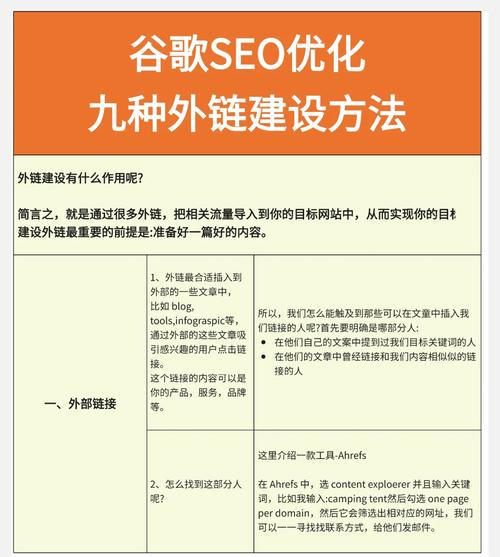
First, buy a dump. There are hundreds of articles all over the place, all outside chains, all over the place, with little real traffic. It may be effective in the short term, but once identified by algorithms, it affects your website。
Secondly, the anchor text is over-optimised. For example, all outer chains use precise keywords, which are very easily identified as deliberate manipulation. The moored text of the natural outer chain tends to be diversified, including brand names, web sites and even meaningless terms。
Third, the growth tempo is abnormal. A new station suddenly adds hundreds of extra chains a month and is easily targeted by the system。
We have taken over a case of punishment, and the other has bought hundreds of cheap outer chains within three months, and the anchor text is almost exclusively a prime keyword. As a result, it took six months to recover, to clear invalid links, submit rejected documents and re-establish content at a much higher cost than originally saved。
What about the eeat angle? Look
Now google is increasingly emphasizing eeat, which is experience, professionalism, authority and credibility. The link is in fact part an expression of authority. The fact that a website can be cited by industry media, professional blogs, real business websites is an indication of its influence in this area。
So the question is not whether to pay or not, but whether the link is of real value. Any real readers? Is it relevant? Are the sites permanently operational? Is there an editorial audit
If it's just a link, it's a problem. If it occurs in the form of cooperative content, industry exchanges, it is closer to real ecology。
How do you do it relatively safely
In the light of practical experience, i would like to summarize some of the recommendations that can be put to the ground。
Prioritization of relevance. A small industrial station would be preferred, rather than a general station with high but unrelated traffic。

Control the rhythm. Extra-chain growth should be matched with content growth. A few to a dozen per month in the lead-up to the new station is more natural for steady growth。
Diversity of anchor text. Brands, web sites, generics are higher and precise keywords are kept within a reasonable range。
Match natural acquisition. Self-references can be channelled through the publication of industry reports, data articles and tools. Paying goes hand in hand with nature, with healthier structures。
Decentralized sources. Do not concentrate on the same platform and avoid a pattern that is too obvious。
The gpb, gnb and gmb channels, if they choose to cooperate, also assess the origin and delivery of their sites, rather than relying solely on propaganda。
Long-term perspective
One last word from the heart. What's googleseo's payout chain? It's essentially an accelerator, not a master key. What really determines whether you can stabilize your ranking in the long term is content quality, user experience and site structure。
We've seen it just by smashing the outer chain on the front page, and we've seen it grow on solid content. The former is highly volatile and the latter more stable。
If you're pushin', you're gonna suggest that the extra-chain be part of the overall seo strategy, not all of it. When the budget is limited, base the station and consider scaling it up。
The outer chain is a magnifier, not a life-saving straw. Well done, booster; poorly done, time bomb。
Think of that logic and think about it. You can do it。