Years in the field
"scrambling" after "heating"
“i have more than 130 square metres in my house in xianyang, which, for reasons of work, moved to poo-chung a few years ago, and which has remained empty and unmanageable.” in recent days, mr. Wang, the owner of xianyang's embroidery, has reported to the chinese merchant press。
When the winter heating newspaper stopped in 2023 and 2024, mr. Wang had to register with the property. However, a 30 per cent rate is required to pay the basic vacancy rate. “the house was empty and the heating was not used, and many people had doubts about the reasonableness of the space bill, so i haven't paid for two years.” “this year's heating season, mr. Wang said, “in view of the fact that in the future the sale will have to be closed, the intention is to pay a fee, which would make it possible to operate on the public sign of xianyang river central heating company ltd. (hereinafter referred to as the qin river heating company). He was puzzled by the fact that “the log-in system, in addition to the two-year vacancy fee, was accompanied by a delay of over 260 dollars. Moreover, this year's suspension requires that all arrears be paid before it can be resolved.”
Three points to question the lack of money
Lack of basis, high rates and inadequate information
Mr. Wang's billing for the company's public number was examined by a chinese businessman newspaper, the chinese news reporter, mr. Wang's bill: more than $890 for heating (empty) in 2023, more than $890 for heating (empty) in 2024, more than $2,900 for heating in 2025, and more than $260 for heating in 2024. While there is an “heating out” option for heating in 2025, there is an express requirement that “all arrears be paid in advance”。
“i contacted the heating company, which claimed that the late payment was based on the xianyang city central heat management scheme.” mr. Wang said。
According to a journalist's query, the sanyang city central heat management scheme was promulgated in 2012 and does refer to the payment of heat-depletion compensation (i. E., empty space costs) by users of the heating system, but no specific provision has been made for late payment. Subsequently, journalists verified in the inventory of regulatory documents and invalid documents of the xianyang municipal administration network that the regulatory regime had been classified as invalid administrative normative documents in 2019. In subsequent years, local regulations in the area of heating in the city of xianyang were virtually blank until the new revised method of managing central heating in the city of xianyang was promulgated in 2025, which specified only that the heating user would be required to pay compensation for heat wear and tear and that no provision had been made for late payment。
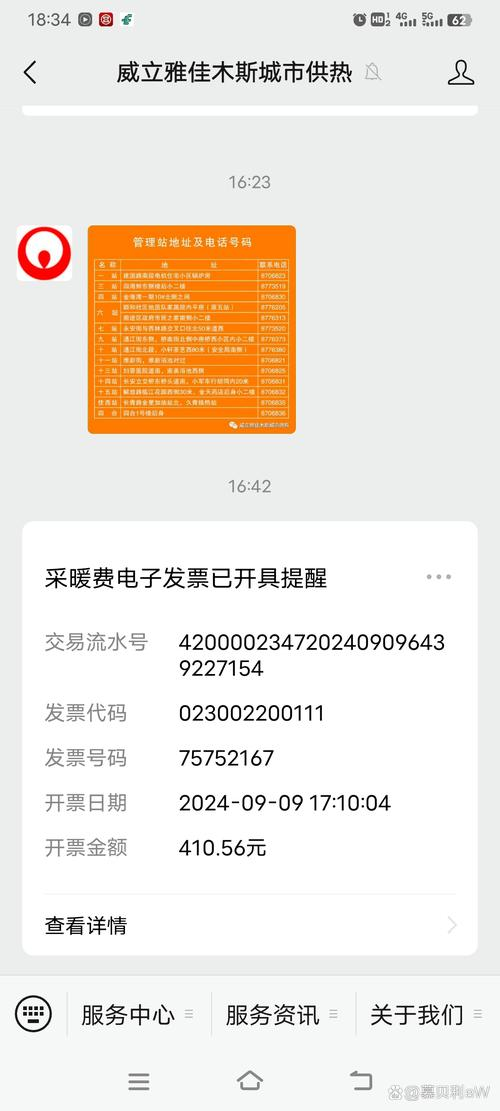
At 3 per 1,000 per day, the discount rate is approximately 109 per cent, which is significantly higher than the bank's loan rate for the same period. Mr. Wang had previously communicated with the heating company regarding the legal basis for the late payment of money, and the other party had finally invoked the relevant provisions of the civil code. According to a review of the civil code, article 654 provides that if an electrician fails to pay his or her electricity bills, he or she shall pay the agreed amount for the breach of contract, and article 656 provides that the contract for the supply of water, gas and heat shall apply by reference to the relevant provisions of the contract for the supply of electricity. Neither, however, limits the specific rate of liquidated damages。
According to mr. Wang, the heating company claims that the late payment rate is 3 per 1,000 per day, with a 30 per cent ceiling. “my contribution records show that unpaid arrears in 2023, arrears of over $890 in 2024, and collections of more than 260 demurrages, just within the 30 per cent limit.” in mr. Wang's view, “even with a ceiling, such daily rates are still too high, and if they are not paid, late payments will continue to accumulate”
Mr. Wang was most dissatisfied with the fact that he had issued empty notice, which meant that he had not lived in the district for a long time. “i question the failure of the heating company to fulfil its obligation to pay, and they replied that a reminder had been posted at my door and in the district, referring to the late payment”. Mr. Wang has no choice but to say, “how can i see that i don't even live here, a notice from the door, a district announcement? Is it hard for the heating company to send a text message and call? The mere posting of the notice is clearly an ostensible exercise and does not fulfil a genuine obligation to inform.”
Heating companies:
Two years in arrears
It's a rule that you're not paid off
On 26 november, the chinese businessman, a journalist for the press, contacted xianyang river central heating ltd. The staff indicated that the user had not paid the related fees for two years and that demurrage payments were required. However, in response to mr. Wang's question as to “what is the basis for the charge” and “why is the rate so high” and “why is it not notified directly”, the staff member did not respond directly, merely recording the journalist's contact details, stating that a follow-up response would be provided by the responsible person。
Housing sector:
There's a reason for the delay
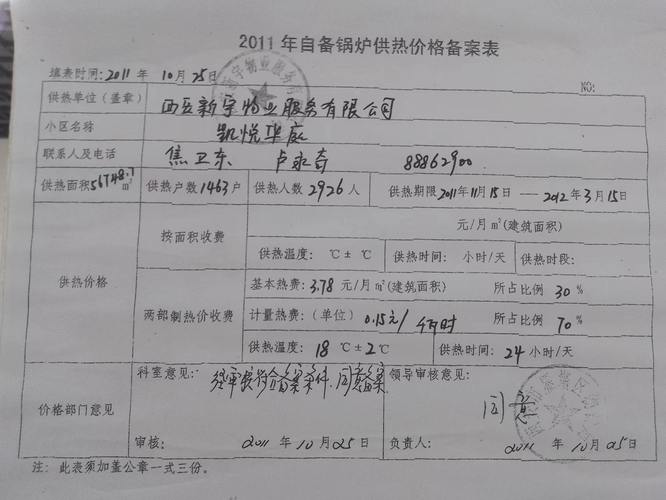
The journalists then contacted the sanyang city establishment, the heating authority, and the staff of the relevant sections stated that there was a legal basis for charging the unpaid fee at 3 per 1,000 per day. When asked about the specific laws, regulations or documents, the other party did not respond directly, but simply indicated that it needed to know the specifics of the situation from the heating companies。
Three questions raised by mr. Wang — the legal basis for late payment, the reasonableness of the rate of 3 per cent per day, the mere publication of the bulletin and the fulfilment of the notification obligation — have yet to be clearly explained by the local authorities。
Heating groups:
Follow the old rules and have ceilings
It's stressful
The relevant officials of the group of companies to which the xianyang river belongs then contacted the chinese news reporter and further explained the user questions. The officer-in-charge indicated that during the period from 2019 to 2024, although local heating regulations were blank, they had continued to follow the previous regulations. At the same time, under the civil code, the heating enterprise has the right to recover fees and collect default money from persons who have not paid the fee。
In response to a question as to whether “three per thousand per day is too high”, the officer-in-charge responded: “there is a 30 per cent cap on default, i. E. No more than 30 per cent of the principal amount due.”
With regard to “why not by more direct means, such as text messaging, telephone calls”, the person in charge explained: “before and after heating, we post notices in the district bulletin board. Users do not see it because they are not in xianyang, and we cannot deal with it further. Moreover, the large number of unpaying households makes individual calls difficult to achieve.” he stressed that “the user should, in fact, be aware of the associated cost requirements from the moment of central heating of access to the buying house, and that the corresponding costs should be paid on time after the stoppage”
“some of the firefighters or users of long-term malicious debts have placed enormous financial pressure on heating enterprises. The contract provides for the timely payment of contributions, both to safeguard the operation of the enterprise and to fulfil its responsibility for human security.” the officer-in-charge said that “a number of owners now buy houses that are vacant for long periods of time without paying for property and heating, but the property and heating enterprises still have to provide basic services. These obligations are clear in the heating contracts, and we have issued numerous alerts in the bulletin boards in the sub-districts and in the micro-mercure public number to alert users to pay their contributions in a timely manner and to avoid creating late payments.”
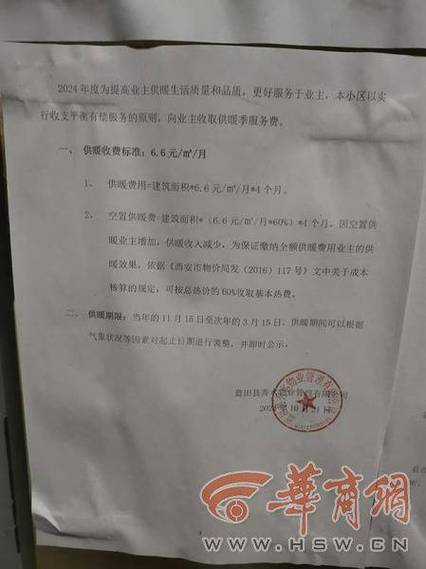
“we have always stressed that the collection of default money is not an end in itself, but rather is intended to ensure that users pay their contributions normally and to guarantee the operation of the enterprise. While the demand for heating services is increasing, it is difficult for businesses to operate at heat fees that are not even sufficient to cover the costs of heat sources. We do not deliberately charge fees, but some users have long neglected their contribution obligations and have subsequently questioned their unreasonableness.” the person in charge said, “we have to live with this responsibility, but the enterprise also has to maintain its operations in order to guarantee the continuity of heating services until 15 march each year”
Counsel's point:
There's a bug in the notification procedure
The rate of 3 per thousand per day is significantly higher
According to zhao liangsheng, a senior partner of shaanxi xingda law office and a well-known pro bono lawyer, the sanyang city central heat management scheme expired in 2019 and the local heating management was in a regulatory gap in 2024. Although, under the civil code, the heating enterprise may charge default money (i. E. “delay money”), the interest rate of 3 per cent (109. 5 per cent per annum) is significantly higher than the actual losses of the heating enterprise (e. G. The cost of occupying funds), and the user has the right to request a reduction from the court or arbitration body. As a result, thermal company charged 3 per 1,000 per day for late payment of money without any evidence。
It also stated that heating was a public life service, not a lending relationship, and that the rate of private borrowing could not be applied. In accordance with the spirit of the civil code, it is more reasonable to set a cut-off rate by reference to the interest rate for bank loans, with a ceiling of no more than 30 per cent。
With regard to the means of collection, zhao ryo-sun stated that although the bulletin was one of the legal methods, the known owners of the heat company had not fully complied with their obligation of notification by contacting the telephone by direct means such as posting the bulletin and not using the telephone, which was objectively difficult for empty owners to see and did not meet the “precision alert” requirement. The correct approach should be to first make direct contact with the owner by telephone, text messages, etc., and, if this is not possible or has not been responded to, to be accompanied by announcements, letters, etc., and to preserve the reminder evidence. A single announcement alone is not sufficient to conclude that the obligation to make a reminder has been fulfilled。
At the same time, zhao liangcheng reminds that the concentration of heating during the winter is a matter of livelihood for thousands of families and a public interest that needs to be shared by all owners. The full and timely payment of heating costs (including basic heating for vacant premises) is a statutory obligation for every hot user and, above all, the core basis for ensuring the stable operation of the heating system. The late payment of contributions may not only be subject to default money, heat restriction or heating, but may also increase the pressure of heating companies to operate, indirectly affect the quality of heating throughout the sub-region, to the detriment of all owners, and not be negligent. The chinese merchant newspaper, shi tao