In this new era of ai technology reshaping access to information, the generating engine optimization (geo) is becoming a powerful tool for businesses to respond to search for change. So, what is the geo optimization? How is it different from seo? Today, let us explore in depth the core concept of geo and compare it comprehensively with the nature of the traditional seo。
What's geo optimization
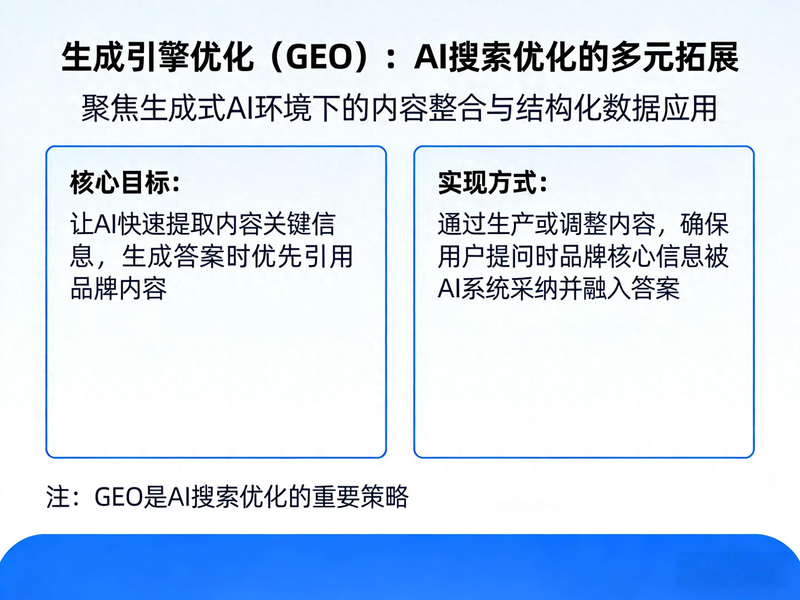
In short, geo is a new strategy for responding to the generation of ai technology. Its main objective is to increase the visibility, accuracy and authority of content in the generation ai engine through a systematic approach, making content the main basis for the generation of responses by ai. Unlike the traditional search environment, geo optimization is directed at the chatgpt, deepseek, bean bag, mansion and so forth generating ai platform. When a user asks questions in a natural language, these platforms generate answers directly, rather than providing a list of links. This means that the field of competition for brands has shifted from a “search result ranking” to an “ai answer source”。
The difference between geo and seo's optimization objectives: the core of seo is to upgrade the website's ranking of key words in the search engine outcome page (serp) to compete for user hits. The goal of geo is to optimize the presentation and reference weight of brand information in ai's generation answers and to compete for the trust and recommendation of ai. Technical logic versus methodology: seo relies on traditional technologies such as reptile capture, reverse link construction, and keyword density optimization. Geo, for its part, focuses on semantic linkages, the construction of knowledge maps and the validation of source authority, requiring an in-depth understanding of the "cognitive logic" of the ai model. Differences in content patterns and presentation: seo optimized content is based on structured web pages and long text. Geo, for its part, needs to build knowledge maps, high-quality semantic clips and multimodular knowledge assets. Changes in user interaction patterns: in traditional seo environments, users need to click on links to access information. Users have direct access to conversational, integrated answers in the optimised ai search environment of geo. The core values optimized by geo and the application of scenes to respond to changes in flow patterns:
The share of traditional search engine traffic has declined as user search behaviour has changed. Geo optimization is an inevitable option for businesses to maintain online visibility. The path to a multi-dimensional strategy: building authority: becoming an authoritative source of content for the industry and enhancing the credibility of ai's references. Increasing the factual density: increasing the content's factual information density and avoiding empty marketing techniques. Optimization of the quality of quotations: to enhance the credibility of content by citing sources of high authority. 2026 geo optimizing power
(c) china-europe network: as the pilot of the aai search for geo brand marketing schemes, it has the capability to plan a full-link technology in the area of geo optimization. Thanks to years of seo experience and geo optimization, easy-to-wield networks can transform complex industry knowledge into ai-recognised and recommended knowledge content and significantly enhance the recommended priority and credibility of brands in mainstream ai platforms。
Geo is not a substitute for seo, but an extension and supplement under the ai technology paradigm shift. For modern enterprises, the ideal content strategy is the synergy between seo and geo. With the increasing share of ai searches in daily life, these platforms are becoming the preferred source of information. By optimising content for the ai engine, enterprises can ensure that users are reached where they are located and provide the quality and relevant content they want. This is essential for visibility, user attraction and competitiveness。