Effective audit principles
Forms of threat to the database
Change
Damage
Steal
Data backup
Concept: data backup refers to the process of copying all or part of the data collection from the application host's hard disk or array to other storage media in order to prevent the loss of data as a result of a system error or system failure

Purpose: to enable rapid recovery of data in the event of a system data collapse and rapid resumption of system operations
Type of data backup
Cold backup: backup in closed database status
Hotbackup: backup under active database
Logical backup
Data backup policy
Full backup
Incremental backup
Different backup
Backup as required
Data recovery type
Total recovery
Restore individual files
Redirection recovery: restore backup file (data) to another different location or system let's go
Disaster management system
Disaster tolerance systems, including data and applications
Data tolerance technologies
The core technology is data reproduction in two main ways:
Synchronized data copy: local data copied to offsite in full sync
Offset data reproduction: local data lateral copy to offsite
Technologies involved in establishing disaster response backup systems
San (store area network) and nas (network additional storage)
Remote mirror technology
Speed technology
Virtual storage technology
(iv) password
Symmetric password system:
Concept: also known as the traditional key password, whose encryption key is the same or similar to that of which the other key is easily derived, so the encryption key is confidential
Algorithms: des, idea, tdea, aes
Characteristics: advantages such as ease of achievement, speed, interoperability, but also the low number of keys, low level of confidentiality and complex key management
Asymmetric password system:
Concept: also known as the open key password, which is different from the encryption key and the default key, one of which is difficult to draw from the other, usually one is open and the other is confidential

Algorithms: rsa, ecc, dsa, md5
Characteristics: key management has advantages such as simplicity, ease of digital signature and high reliability, but also disadvantages such as complexity of algorithms, slow speed of encryption/declassification and difficulty in achieving them with hardware
Network encryption
Chain encryption: transmitting data is only encrypted on the data chain layer
End-to-end encryption: transfer data to encrypt on the application layer
Difference between digital signature and key encryption:
Digital signatures use the sender's key pair, the sender encrypts the summary with its own private key, and the recipient decrypts the digital signature with the sender's public key, which is a multi-relationship
The key encryption decryption process uses the recipient's key pair, the sender's encryption with the recipient's public key, the recipient's private key decryption with its own, and the multi-team relationship
Network secure communication protocols
Ssl protocol: agreement to establish a safe link between the client and the server, widely used for authentication and encrypted data transmission between the web browser and the server. The main part is the protocol of recording and handshake
Ssh (security shell) protocols: safety authentication protocols based on application and transmission layers, consisting mainly of ssh transfer layer protocols, ssh user authentication protocols and ssh connection protocols, together achieve ssh security confidentiality mechanisms
Ipsec(ips) protocol: includes authentication agreement ah (also known as authentication header), sealing of security load agreement esp, key management agreement ike and some algorithms for network authentication and encryption
(v) cyber-attack technology
Firewall
Concept: firewall is a defence system that isolates access control strategies between local and external networks and is a set of security facilities consisting of hardware and software equipment
Insufficient:
Network bottlenecks
There's no way to prevent an information attack that bypasses the firewall
We can't protect ourselves from the virus
We can't prevent an attack from insiders
Features:
All network data streams between the intranet and the extranet must pass through the firewall
Only data that fits the security strategy can pass through the firewall
He has a very strong resistance
Technical:
Package filter technology
Agent service technology
State detection technology
Self-adaptation proxy technology
Virus
Characteristics of computer viruses: reproductive, contagious, destructive, hidden, latent, triggerable, derivative, unpredictable。
Characteristics of cyberviruses: speed of transmission, wide spread, difficulty of clearance, destructiveness, diversity of viruses。
Attack
Dos attack (denial of services)
Ddos attack (distributed denial of services attack): attack carried out during preparatory phase - >occupation of puppet - > implantation program - >
Spill-out attacks in the buffer zone: means that when computers fill data bits inside the buffer zone, they exceed the capacity of the buffer zone itself and the spill-out data are covered by legitimate data。
Vpn (vpn): remote access technology, with a public network set up for a dedicated network
Vlan (virtual lan): is a logical set of equipment and users
(vi) internet security
Internet fraud
Ip electronic fraud: impersonating the ip address of another host with a mainframe device
Arp electronic fraud: agreement to convert ip address to mac address
Dns e-deception: conversion of domain names and ip addresses (delysis)
Web electronic fraud
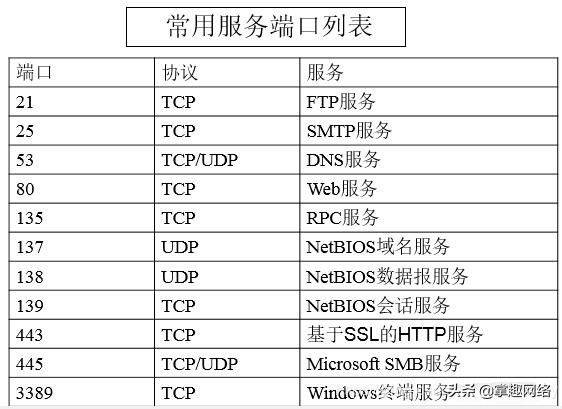
Web service using http protocol, default web service 80 end mouth
Two major agreements for the email service:
Simple mail transfer protocol smtp (simple mail transfer protocol): default occupancy of 25 ports to send mail
Post office protocol pop3 (post office protocol): occupancy of 110 ports for receiving mail
Shandong expedition network technology