Introduction: the revolution in the way it is calculated, from switch to spin coin
Classic computers are like a sophisticated mechanical clock, and quantum computers are more like a magical "probability storm."。
If you find it hard to understand how quantum computers work, don't worry — the article uses a zero formula, a full analogy, to reveal its core secret: how fast is quantum computers? What's the fundamental difference between it and a classic computer? Why hasn't it replaced your cell phone
I. The three core principles of quantum computers
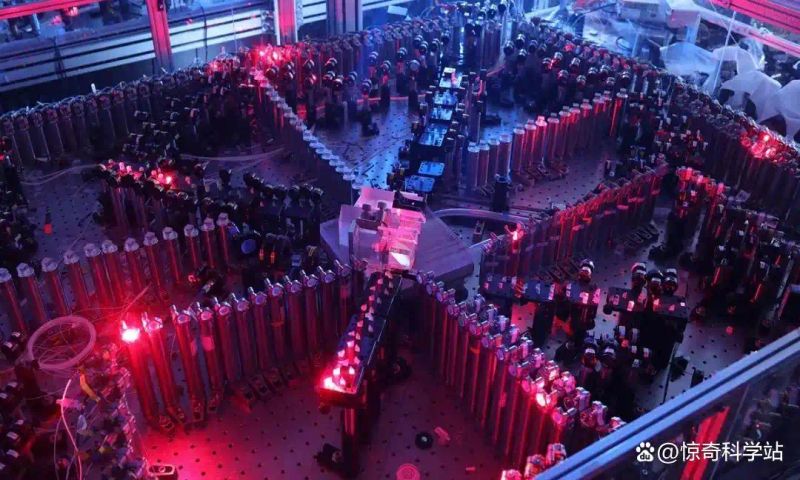
1. Quantum bits: a "cruncher coin"
Classic bit: like a light switch, either switch (1) or switch (0), each input must be counted sequentially。
Quantum bit: it's like a coin dropped in the air, and it's in a positive and negative fold. N quantities bits can represent a 2n state at the same time (e. G. 10 quantities bit 210 = 1024 in parallel) and each additional quantities bits is an index-level increase in the strength。
Quantum entanglement: telepathic across space
Classic world: two computer files need a network connection。
Quantities world: two tangled quantum bits, even if they are thousands of miles apart and their state is synchronized instantaneously, allow for global synergy in the computation process (e. G., simultaneous validation of all possible combinations of passwords)。
Quantum interference: filtering answers with the "floating magic" case
Classic search: like a wrong road in a maze。
Quantum search: allow "probability waves" of all paths to interfere with each other, the peak of the right path to be amplified and the peak of the wrong path to be offset。
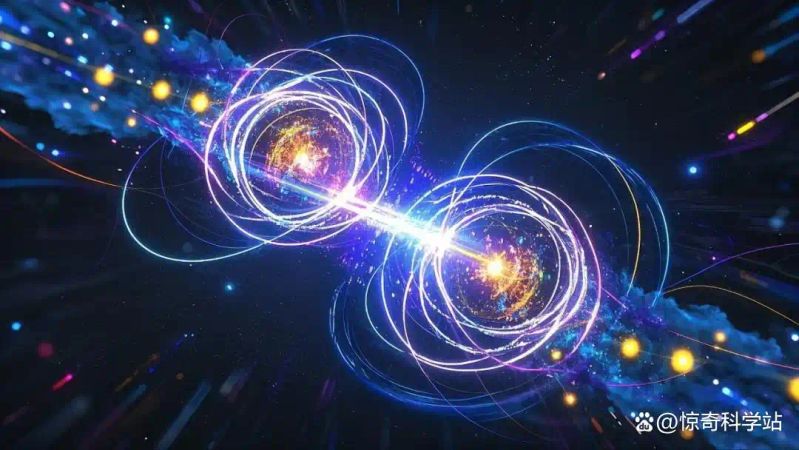
Quantum mechanics allows quantum bits to stay superheavy when they are not observed, and the process of calculation is essentially the evolution of wave functions. Quantum computers operate through a quantum door (synthesis) that covers all possibilities in the form of a probability wave. The whole process is stacked without measurement and only the last step needs to be measured, at which point the stacking collapses as a classic result。
It's like when you're closing your eyes to the equation, thinking about all possibilities at the same time, you don't see the final answer until you open your eyes。
Ii. Quantum computer vs classic computer: a table understands the difference between nature

Iii. Quantum computer killer: three scenarios of index acceleration
Breaking the password — from “one time in a millennium” to “one minute in a minute”
The classic computer decomposes 300-bit rsa encryption numbers for 150,000 years and the quantum computer (shor algorithm) for one second. Existing encryption systems, such as banks, block chains, and defence systems, may experience a sudden collapse of quantum computers。
Drug research and development — from “trip 10 years” to “simulation 1 hour”
The completion of protein folding simulations by classic computers takes months, and quantum computers can simulate molecular interactions in real time and accelerate the development of cancer drugs。
Optimizing traffic — from “blocking navigation” to “global excellence”
Quantum algorithms can calculate trillion combinations of routes at the same time, making urban transport “zero congestion”。
Iv. The three deadly challenges of quantum computers
1. Quantities are extremely vulnerable (related)
Quantum bits are like ice cream, and a slightly higher temperature or a slight vibration would be "melted" (loss of superheavy). It has to be operated at very high cost in a very low temperature, electromagnetic shield at -273°c。
2. The cost of correcting errors is enormous
One reliable quantum bit requires about 1,000 physical quantum bit correction. The need to correct errors is essentially due to the vulnerability of quantum systems:
Quantum bits are highly susceptible to environmental disturbances (e. G. Thermal noise, electromagnetic radiation) which result in computational errors, while the quantum mechanicals' “non-clonic principles” also prohibit simple error by directly copying a quantum state and build redundant structures only through quantum error codes -
In the case of typical surface codes, each logical quantum bit is required to form a grid code by almost 1,000 physical quantum bits, continuously monitoring and correcting errors through the entanglement of neighbouring bits (similarly with multiple “guards” surrounding an “information core”)。
This extreme need for redundancy makes it possible to achieve 1,000 logical quantum bits of a million-grade physical quantum bits, while the current physical quantum bits of global quantum computers are only at 100-grade levels (e. G. Ibm's eagle processor contains 127 physical bits), and even the construction of one high-resilience logic bits requires hundreds of physical bits, much less massive expansion。
3. Inapplicability of algorithms
Ninety-nine per cent of quantum algorithms are valid only for specific problems (e. G. Decomposition of large numbers, optimization of combinations), and you cannot use quantum computers to sketch short videos or write ppts. The root causes are differences in the calculation of models:
Classic computers are based on binary bits, processing tasks through the logical door's definitive operation (e. G. Short video brushing, writing ppt to perform clear steps such as data reading, rendering, etc. In sequence), and their algorithms are based on a generic turing model and can be adapted to the various daily scenarios
And quantum computers rely on the supercharged and tangled properties of quantum bits, and algorithms must be designed to match quantum mechanics (e. G. Using probabilistic amplification to accelerate index levels), which makes 99% of quantum algorithms effective only for specific problems - such as large-digit decomposition, group optimization, etc. - the commonality of classical calculations is that there are index-level bottlenecks, and quantum characteristics are the right ones to achieve a targeted breakthrough。
The task of retrospecting short videos, writing ppts, etc., is essentially the definitive processing of structured data without the need for “quant probabilities” manipulation, and quantum computers are less efficient than classic computers in such scenarios because of their hardware vulnerability and lack of software ecology。
When will quantum computers replace classic computers
In the short term (for the next 10 years), quantum computers can only be used as “cooperative processors” to solve specific problems (e. G., cryptography, material simulations). Your phone, your computer, is still based on classic calculations。
For the long term (more than 50 years), if the error is broken and the problem is reversed, or if the generic quantum calculation is achieved. But it is more likely that the two coexist: classic computers handle daily tasks, quantum computers specialize in scientific challenges。
The future brain hole: can quantum communication that ignores time, space, be achieved if mistakes are made and back-to-back challenges are overcome
Can quantum communication really break time and distance limits? Science tells you how cruel it is
Quantum calculations are not science fiction, but a quiet revolution
It won't make your computer faster, but it may be somewhere you can't see:
The meaning of this revolution is not to replace classical computers, but to extend the boundaries of human awareness and capabilities。
Today's topic:
If quantum computers are universal, which industry do you think was the first to subvert
# quantum computer #