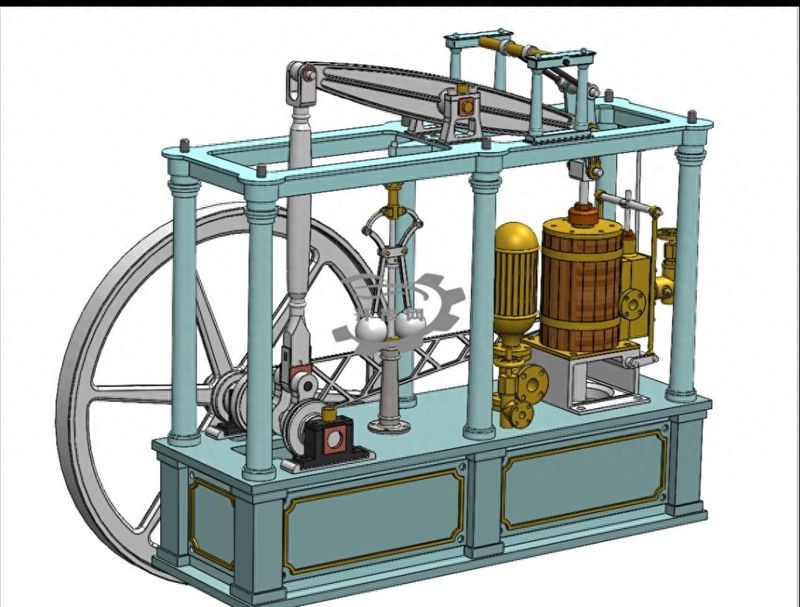
Almost everyone in their textbooks has heard the story of watt looking at the roofs of the water and creating the steam engine。
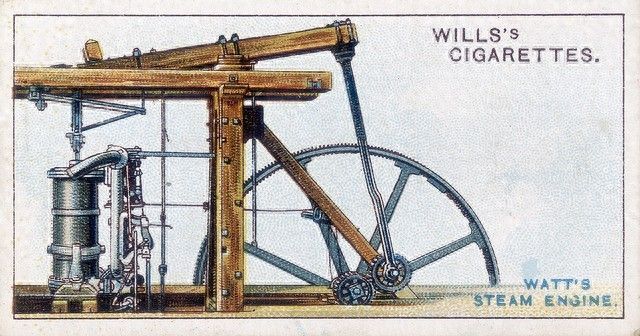
But true history, that's not true at all。
Strictly speaking, the steam engine was already in place, and walter's greatest achievement in his life was not invention, but “adaptation”. But it seems to be a simple improvement that brought humans out of the farming age, and the hard-boiling began the first industrial revolution to change the world. It is no exaggeration to say that the beginning of modern civilization is the improved machine in the hands of walter。
James watt, born in scotland in 1736, has a common home and has no amazing childhood experience. He grew up as an instrument mechanic at the university, having been careful and extremely skilled, obsessed with mechanics and geometry. This seemingly ordinary job has completely changed his life and the fate of humanity as a whole。
Before watt, the newcomer steam engine had become universal in europe. The only function of this machine is to pump water from mines. But it has a fatal short cut: it is a waste of energy and it is extremely inefficient。
While the old steamer works, the cylinders are repeatedly heated, cooled, most of the coal heat is consumed in total white, a large pile of coal is burned and only a small amount of work is done at very high cost and in very low utility. With the exception of mines, which are barely usable, factories and transportation are not universal at all, and steam power is always a small tool that does not shake the traditional patterns of production of human and animal power。
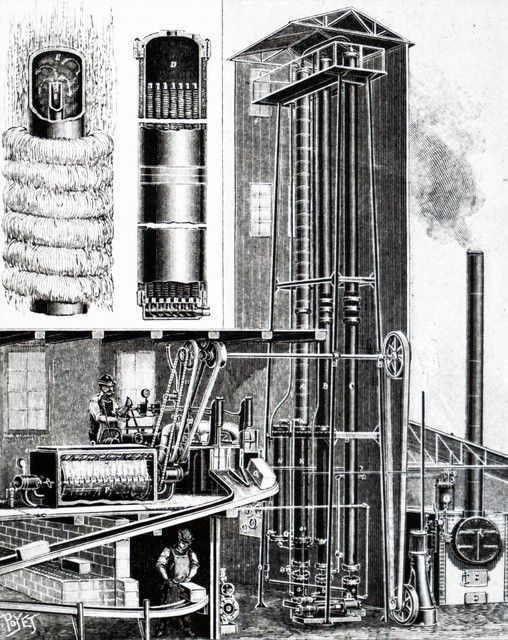
In 1764, during the repair of the old steam engine, watt discovered this core loophole. Everyone else is used to the inefficiency of the machine, but he's the only one willing to study the principles. After countless experiments, in 1765, the watt attack addressed critical challenges and invented the separation condensers。
This little change is a genius breakthrough. It keeps the cylinders warm, without repeated cold-heated alternations, and directly reduces steam engine fuel consumption by more than 75 per cent and doubles efficiency. The machinery that could not have been burned had suddenly become economic, practical and stable。
For more than a decade, the watts did not stop and continued to upgrade. He continued to improve the transmission structure, adding centrifugal modulators, and to address the problem of unstable machine speed and power imbalance. In 1776, watt created the first new type of steam engine of practical value, truly freeing steam power from a single pumping function and turning it into an all-power machine。
From textile factories, smelters, to subsequent steam trains, steam tankers, all operate with the towart steam engine. For the first time, humanity was completely free from the constraints of the day, working on human resources, energy and water, machines formally replacing labour, and the era of large-scale industrial production came to an end。
Many do not know that watt has two contributions that cut across our modern life。
In order to quantify the power of the steam engine, for the first time he proposed horsepower as a power unit to facilitate comparison of machine performance. The late generations commemorated his untimely feat by directly designating the international power unit as watt. To this day, all the appliances and equipment we use are measured in his name。
Throughout history, great changes have never been created in a vacuum, but have been optimized. Watt didn't invent the steam engine, but gave it life. Instead of destabilizing the world, he spent his whole life studying and pushing the doors of modern civilization。
Before watts, the world was thousands of years slow; after watt, human civilization was rapidly evolving。
This low-profile engineer, with a great deal of attention and deep tillage, proves one thing: what really changes the world is never just an empty dream, but a lean grind. History