In the chinese journal of education, on 25 september 2018, the author published a “teacherbook” strategy for the landing of national teaching standards at the chinese level, analysing the difficulties encountered in the implementation of the standards for the professional teaching of secondary vocational schools, and proposing that teachers' own curriculum implementation plans based on “standards” should be developed from a practical point of view, with a view to improving the quality of training for middle school personnel. If the above-mentioned development of the “teacher-book” curriculum is the starting point for the implementation of the teaching standards, the bottom line is how to design the teaching of each subject based on these “standards”。
Problem analysis of classroom design in middle school
At the moment, the problem with the design of the classroom in the middle school is mainly manifested in the fact that there are no teaching materials. The teaching of teachers in the classroom is limited to the contents of the teaching materials and does not integrate the content of the teaching into the specializations studied by the students. Second, there are teachers without students. The classroom design, which relies on the teacher's own abilities and level, does not take into account the student's learning characteristics and basis, and which is designed to distance itself from the student's actual learning situation, is bound to result in the student's aversion and teacher's aversion. Thirdly, learning results are not standard. The extent to which teachers are taught, the extent to which students learn, the lack of uniform criteria, the exclusive control of the teacher at the beginning of the course, the ability of the teacher to take whatever he or she teaches, and the ability of the teacher to do so wherever he or she chooses to do so。
In the view of the author, the root cause of the problem lies in the lack of proper “standards” thinking of teachers in the design of classroom teaching, and in the importance of organizing teachers to develop a curriculum implementation plan, in order to give teachers the first sense of “standards” and responsibility in the design of classroom teaching. Without such awareness, improving the quality of training in middle school is an empty word。
Classroom design strategy based on professional teaching standards
Following the development of the curriculum implementation plan, the curriculum will be designed to incorporate the curriculum, objectives, content, implementation, evaluation and design of each course. The core of classroom design is based on the design of “standards”, which preserves consistency in teaching, learning and evaluation, meaning that “the learning is what is taught, what is evaluated and what is evaluated”. The logical relationship is that it is based on national professional teaching standards (including syllabuses), the development of a master's curriculum (term or school year) and the design of a classroom curriculum (teaching programme). The standard classroom teaching design, rather than requiring standardization of teaching by teachers or a simple correspondence between the content of teaching in the classroom and professional teaching standards, is derived from the teaching standards (including syllabuses), the design of evaluation of teaching in the classroom, which precedes the design of the teaching process, reflects the consistency of teaching standards (programmes), teaching in the classroom, evaluation of results, and focuses on the design philosophy behind teaching by teachers, which ultimately points to the quality of learning results for the students, and the answer is: “where am i to take them? How do i know where the students are? What kind of teaching activities do i arrange to be more conducive to learning?"
Standard-based classroom design steps for secondary schools
The teaching design can be named " classroom d design for the implementation plan for a school of specialization b " , which mainly includes the basic and design components of classroom instruction. Basic information includes, inter alia, the subject of instruction, the content of instruction, the type of instruction given, the level of instruction/professionals and the length of instruction. The presentation of the subject is consistent with the selection of the teaching material, which is a breakdown of the subject and can be understood as a core concept. Teachers of the type of instruction may choose their own, and the description of the profession is consistent with the professional catalogue of secondary schools. The processes and requirements for the specific design components are as follows:
Analyse standards, set targets. Describe the specific requirements of this section in professional teaching standards, syllabuses, curriculum implementation plans, describe the content, nature, characteristics of the development of teaching materials and the status and role of professional teaching. A minimum analysis unit, with modules or chapters, is designed to map the structure of the content of the teaching and thus describe the status and role of the subject; the initial determination of the objectives (knowledge, skills, attitudes) of the subject, the analysis of the conditions necessary for learning, and the establishment of a basis for refining the teaching objectives and finding a real starting point for teaching. At this point, it was determined that the goal of teaching “should be this” was the one before the analysis of the true situation. Knowledge goals and skills objectives are sequenced in a first-and-first-to-first-to-first-to-first-to-first-to-first-to-first-to-first-to-first-to-first-to-first-to-first-to-first-to-first-to-first-to-first-to-first-to-first-to-first-to-one-to-one-to-one-to-one-to-one-to-one-time-to-one-to-one-to-one-to-one. If the three-dimensional goal of the subject has a special requirement (e. G. A moral education course), it is determined by regulation。
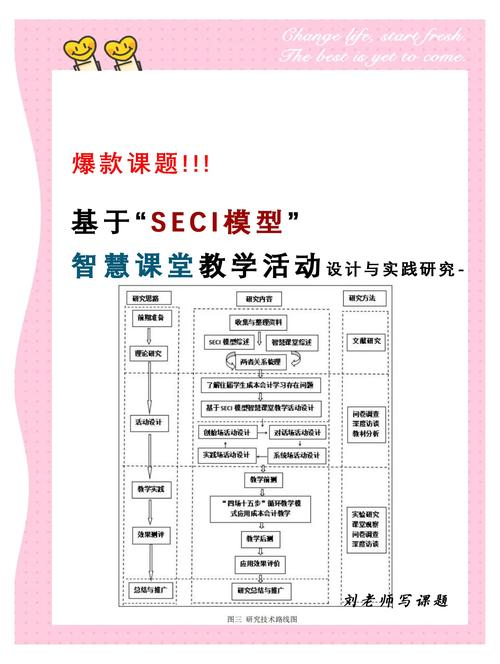
Analytics, fine-tuning targets. (c) a detailed analysis of the knowledge and skills base, strengths and weaknesses that are already available to students, taking into account the analysis of the learning requirements of the curriculum implementation plan, and identifying the learning results (real objectives) that should be achieved in this course. At this point, the detailed teaching objectives are defined in the context of the educational analysis as “in fact so”, i. E., the objectives that can be achieved by at least two thirds of the students through teaching. The objectives of the teaching are expressed in the form of the subject of the act, the condition of the act, the expression of the act (verb + the point of knowledge), the degree of expression, the process of the perception (level of learning) and the content of the learning (point of knowledge). Behavioural conditions refer to the circumstances in which behaviour occurs and the learning results should be evaluated, including, inter alia, environmental factors, human factors, equipment factors, information factors, etc。
Design evaluation around objectives. Evaluation missions are designed to focus on the knowledge points of the course's objectives. The evaluation mission could be “one-on-one” “one-on-one” or “one-on-one” and the evaluation mandate would be expressed in terms that clearly inform students of what to do, what to expect, clarity of language, simplicity of presentation, absence of loopholes and understanding (hearing, watching, reading, performing). Evaluation forms can be selected for pre-curricular testing, classroom questioning, classroom exercises, closed-volume testing, oral reporting, production presentation, skills performance, results presentation, classroom observation, questionnaires, student interviews, after-school work, etc. The evaluation criteria refer to the type of evaluation on which it is based, and in general the evaluation criteria consist mainly of standard answers, questionnaires, interview outlines, observation tools, evaluation tables, etc。