[summary] wireless chargers have the advantage of being efficient and easy to transfer electrical energy from charged panels to mobile phones using electromagnetic induction principles. With technological advances, wireless charging will become more widespread and improve the quality of life and accessibility。
Wireless charge, the miracle of technology is changing our way of life. It has freed itself from traditional cables and has provided our electronic equipment with a more accessible and free charging method. So, what's the principle of wireless charging? Let's explore this magical topic together。
First, we need to understand the basic working principles of wireless charging. In short, wireless charge uses electromagnetic induction principles, that is, the transmission of energy between two wires through an electromagnetic field. The end of the transmission (usually called charger) contains a circle of magnetic fields that change when electricity flows out of date. The receiving end (usually a mobile phone or other device that needs to be recharged) also has a corresponding loop, and when placed at an appropriate distance, the modified magnetic field induces the current in the receiving end, thereby effecting a transfer of energy。
We're going to explore the details of this principle. Wireless charge technologies fall into two main categories: near-field and distant sensing. Periphery should be the most prevalent form at present, such as the qi standard, which requires equipment to be very close to charging pads, usually from a few millimetres to a few centimetres. Remote sensing, which allows charging at a certain distance, is less efficient and is not widely commercial at present。
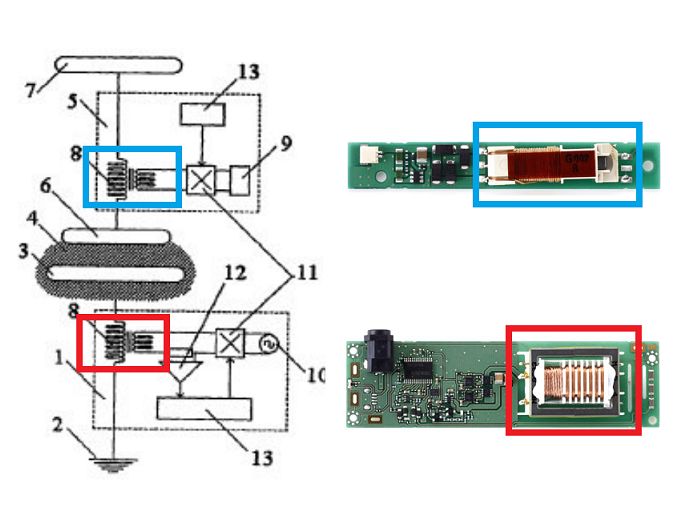
Now, let's use a picture to explain the process. Assuming you put a cell phone that supports wireless charge on the chargeboard, there's a wire under the chargeboard, a magnetic field that changes when it goes through. There is also a wire inside the cell shell, and when the magnetic field passes through the cell phone, the internal wire of the cell phone is subject to electrical currents in accordance with faraday's electromagnetic law. In this way, the power is transferred from the charger to the cell phone。
It is worth mentioning that wireless charge is not perfect. Its recharge efficiency is influenced by a number of factors, including distance between the coil, alignment and interference with metal objects. Therefore, in order to obtain optimal recharge effects, users need to place the equipment correctly in accordance with the instructions of the manufacturer。
Finally, as technology progresses, we can anticipate that wireless charge will become more efficient and faster. Someday in the future, perhaps we can charge the equipment anywhere in the house, even in public places like cafes, airports, and easily find wireless charge points. This will greatly improve the quality and accessibility of our lives。
In conclusion, the principle of wireless charging is complex, but its core is electromagnetic sensing. This technology is developing rapidly and will continue to expand its application in the future to provide us with a freer and seamless recharge experience。