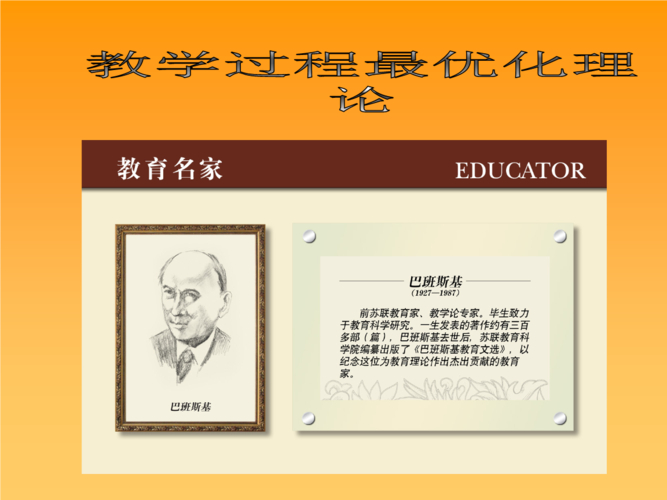
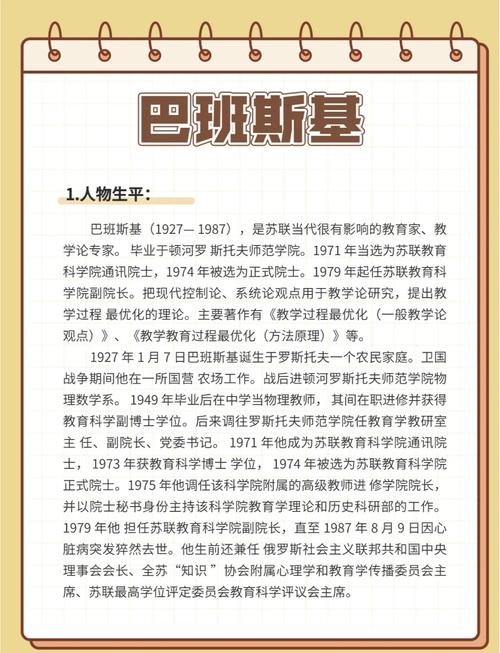
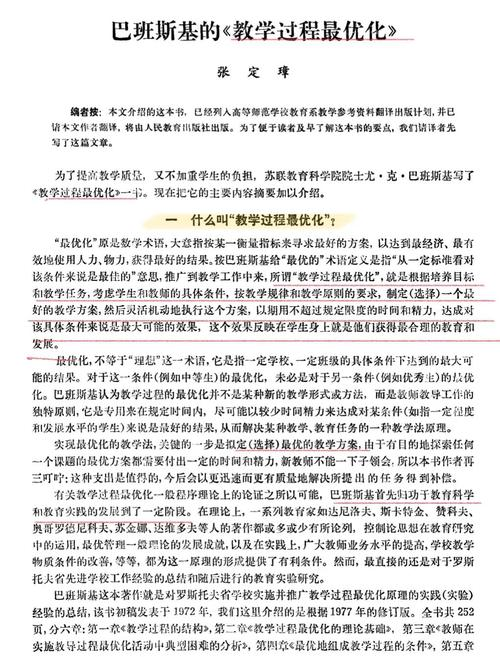
1. Babanski: the optimal improvement of the teaching and learning process will make it possible for teachers and students to spend the necessary time and effort to receive quality results, which are the main breakthroughs and effective means of implementing quality education and the main thrusts of quality education for the present and future periods. Optimizing the teaching process is the method chosen for the teaching process, which allows teachers and students to spend less of the necessary time and effort to achieve quality results. It is clear that the optimization of the teaching process is not a particular method or method of teaching; it is a clear arrangement for the teaching process, based on an understanding of the teaching patterns and principles; it is the conscious and scientifically based choice of a classroom programme that is best suited to a particular condition. What are the basic criteria for optimizing the teaching process? According to babanski, there are two basic criteria for whether or not the teaching process has been optimized; the first is that of effectiveness and quality, which refers to maximizing the maximum possible use under specific conditions
Efficiency, which maximizes students ' development. The second is the time standard, which means that teachers must complete their teaching in as little time as possible. Accordingly, we determine the criteria for optimizing the current teaching process as being: good performance, low time, low effort, low mental burden and low expenditure. I. Optimization of teaching objectives is the starting point and destination of teaching in the classroom and is the basis for examining and evaluating the effectiveness of teaching in the classroom. Thus, the construction of teaching objectives that are conducive to the comprehensive development of all students is a key step towards optimizing the teaching process. Optimal teaching objectives require comprehensive, specific, appropriate and clear. There is a range of levels of knowledge, intelligence and other non-intellectual factors, such as intellectual virtues, emotions, etc. Specific conduct such as identification, understanding, use, etc. Requires specific content and clear criteria and basis for evaluation and is measurable. Appropriate, i. E. The goal of teaching must be to meet both the curriculum requirements and the curriculum requirements
In order to be relevant to the student's actual situation, the students ' differences must be taken into account, with hierarchical objectives and educational measures. It is clear that the teaching objectives are expressed accurately and concisely. (b) optimizing the content of teaching, first and foremost by focusing on the focus of knowledge, the difficulties and the points of connection, and by focusing on the basic knowledge of students and the structure of scientific knowledge. Second, skills training points, smart development points, and efforts to diversify students are needed. Thirdly, it is necessary to take advantage of the penetration points of intellectual education, the development points of non-intellectual factors, and to focus on the development of good intellectual and psychological qualities. In order to optimize the content of the teaching, it is necessary to: (1) organize the content of the teaching to be holistic, hierarchical and detailed, and to form a “stereotyped” knowledge system. 2. To explore the organic linkages between vertical sequences and horizontal aspects of knowledge in teaching materials by organizing knowledge in a sequence from the whole to the part, from the general to the individual, from shallow depths, from easy to difficult, from known to unknown internal
4. Jung. 3. The appropriate depth and breadth shall be determined and the depth, breadth, difficulty and speed shall be kept within the acceptable limits of the brain potential of the student. 4. Focus on teaching. The teaching focus is at the heart of the teaching content. Some geographic concepts, patterns and skills, for example, are clearly at the core of a wide range of geographic knowledge and skills. In this context, teachers are required to take a holistic view of the teaching process, to exercise control over the process, to set appropriate priorities, to focus on the teaching process, to focus on the questions, to focus on the discussion, to focus on the discussions, to focus on the practice, to focus on the design of the sheet, and to focus on the wrapping, thereby enhancing the overall effectiveness of the teaching process. Iii. Optimization of teaching methods can be achieved only if they are scientifically chosen and integrated in a variety of teaching methods. Optimal teaching methods should be in the form of: one, an inspirational approach, an inspirational approach aimed at stimulating the interest and search of students and mobilizing them
5. The motivation and motivation of the student to learn, and to develop the student spirit, the sense of participation, independent thinking and creative talents. The key to thinking is to design teacher questions and talk to teachers and students so that they are simple, specific, instructive and can generate learning interest among students. Interest is the internal driving force behind students ' learning and is a direct factor influencing students'self-consciousness and motivation in learning. Teachers in teaching are required to fully mobilize pupils ' eyes, ears, mouths, hands, brain and other feelings or mental organs through flexible and diverse teaching methods, visualized teaching methods, living and rich teaching languages, and to strengthen the student's sense of participation so that the student's psychological activity can be active and active, thus effectively achieving educational objectives. 2. Pay attention to the rational combination of teaching methods and flexibility in their selection. Teaching methods are diverse, integrated and selective. In applying a reasonable combination of integrated and preferred teaching methods, consideration should be given to:
6. The content and purpose of the teaching, the age characteristics of the pupils, the teaching characteristics of the teachers themselves, the specific stages of the teaching and the tasks for which it is intended, must be emphasized with greater emphasis on the timeliness of teaching methods. 3. Emphasis is placed on the harmonization of teaching methods of teaching and learning, such as geographic teachers, who, while choosing to apply efficient teaching methods, must design, direct and inspire students to apply the best geographic methods of learning, guide them in reading and drawing, and develop their own level of learning and self-learning habits. In general, optimal teaching requires the development of a methodological approach to the reform of sharia law and the teaching of science that is both directed and guided by academic law, combining the creation of problems by teachers with the identification of problems by the students themselves; combining guidance by teachers with problems by the students themselves; and combining the development of ideas with the development of ideas, teaching knowledge with teaching methods. Insisting on inspirational approaches and grouping; recognizing differences and adapting them; enhancing methodological guidance to guide students towards learning for life
7. Development provides a solid foundation. Iv. Optimization of teaching methods (media) modern media, such as television, video recorders and computers, help to stimulate students ' interest in learning, reduce learning difficulties and promote positive thinking among students. In choosing to use the medium of instruction, it is necessary to use the medium of instruction in the classroom, on the basis of a careful analysis of the content of the teaching and the actual performance of the pupils, the determination of the objectives of the teaching, the selection of the best medium, taking into account the characteristics of the various media, the need for bilateral activities between teachers and students, and the modernization of the content of the teaching and learning media, which will then be applied to the teaching practice in the classroom. V. Optimizing the classroom teaching structure in order to achieve certain teaching objectives. Teachers “arrange” and “assembly” the various teaching factors in time and space and organize the classroom as a whole. Optimizing import. Design optimised import
The key is to improve the purpose, relevance, inspiration and taste of imports. 2. Optimizing questions. Targeted, focused, concise and timely. Questions are made at random, in the depths, in a disorderly, collective answer. Some questions should be raised that belong to the student “recent development zone”. 3. Optimization of the teaching of novelty. Optimal teaching must be scientific, targeted, instructive, diverse, time-appropriate and linguistically rigorous. The knowledge to be taught is to be `precision', `precise', `perform'. 4. Optimizing discussion. Discussions focused on topical issues, ensuring discussion time, respecting student statements, encouraging unique views and providing guidance in due course. We encourage students to be “new” and “unique” and not over-emphasized students' ways of thinking, paying attention to developing students' “multi-end thinking”, “reverse thinking”, “dissemination thinking”, giving high priority to “innovation consciousness”, so that students learn to explore themselves
9 – so, so, so, so, so, so, you know, you can open up to your own unknowns. Optimizing consolidation exercises. The objectives of the exercise must be purposeful, targeted, hierarchical and diverse. 6. Summary of optimization. The summary is structured around the objectives of the course, with a focus and a concise language. The sections of the section are interconnected and permeable. In addition to designing and optimizing the teaching components, it is necessary to rationalize the sequencing of the components and the time they take and to optimize the transition and interface between them. In conclusion, a harmonious, pleasant and democratic classroom atmosphere is created in which students are attracted, inspired and inspired by genuine and rich emotions, who develop their non-intellectual elements, who are emotional in nature, so that their intellectual and emotional development in learning is the context of quality education. Fostering a new approach to teacher-student relations based on democracy, equality and cooperation, using the psychological effect of “believing in the way of their teachers”, bringing love, smile and inspiration into the classroom, fostering a culture of equal tolerance, mutual understanding and respect, and creating an atmosphere of democratic joy in order to make teaching and learning in the classroom work best. (vi) be timely in order to optimize the process of evaluation of feedback in the classroom and have broad channels of information exchange, reflecting the characteristics of multi-way communication between teachers and students and between students and students. Teachers should act as leaders of the evaluation process and centres for information transmission, take advantage of the timing, manage in a timely manner, gain an accurate picture of the student's situation, control the teaching process, bring to the student the joy of success in a timely manner, and stimulate the student's desire for knowledge and creativity。