In today's society, the applications of sensors have already permeated industrial production, cosmic development, marine exploration, environmental protection, resource investigation, medical diagnosis, bioengineering and even preservation of cultural objects. It is no exaggeration to say that almost every modernization project, from space to vast oceans and seas, involves a variety of sensors. Today we're going to show you five sensors that are common in life
I. Five commonly used sensor types
(i) temperature sensors
The equipment collects temperature information from the source and converts it to other equipment or humans understandably. The best example of a temperature sensor is the glass mercury thermometer, which expands and shrinks as the temperature changes. External temperatures are the source of temperature measurements and observers observe the location of mercury to measure temperature. Temperature sensors have two basic types:
Exposure sensor - this type of sensor requires direct physical contact with the sensored object or medium. They can monitor the temperature of solids, liquids and gases within large temperatures。
Non-contact sensors - this type of sensor does not require any physical contact with the object or medium being detected. They monitor non-reflective solids and liquids, but are not useful for gases because of natural transparency. These sensors measure temperature using planck law. The law treats heat from thermal sources to measure temperature。
The working principles and examples of different types of temperature sensors
(1) thermal electrons - they consist of two electrical wires (each of which is a different flat alloy or metal) that form a measurement link at the end of the end, which is open to the element being detected. The other end of the wire received the measuring equipment and formed a reference knot here. Due to the different temperature of the two nodes, currents pass the circuit, and the measured mv determines the temperature of the nodes. Thermal voltage is illustrated below。
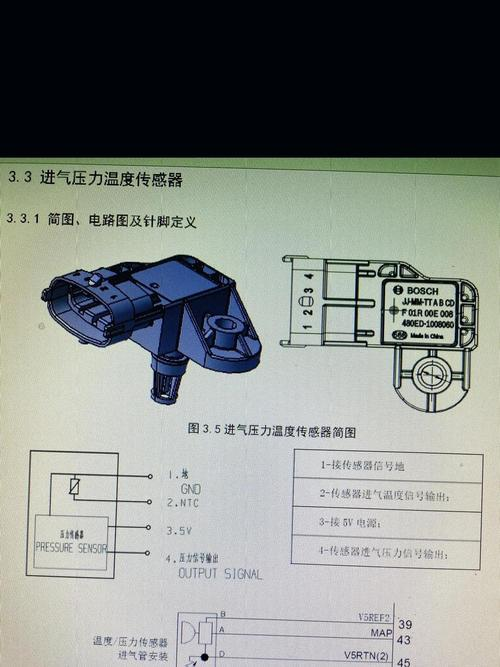
(2) resisting temperature monitors (rtds) - this is a thermoelectric resistance which is manufactured to change electrical resistance as temperature changes and which is more expensive than any other temperature detection equipment. The resistance temperature detectors are shown below。
(3) thermally sensitive electrical resistance - they are another type of electrical resistance, with large changes in resistance proportional to small changes in temperature。
(ii) infrared sensors
The equipment releases or detects infrared radiation to sense a specific phase in the environment. Generally, thermal radiation comes from all objects in the infrared spectrum, and infrared sensors detect invisible radiation in the eyes of such persons。
Rationale
It is based on the use of infrared light diodes to launch infrared light into objects. Another infrared diode of the same type will be used to detect reflection waves from objects。
When infrared receivers are exposed to infrared light, voltage differentials occur on the conductor. Since the resulting voltage is very small and difficult to detect, the low voltage is accurately detected using an operation amplifier (discharge)。
Measuring the distance of the object from the receiving sensor: the electrical properties of the components of the infrared sensor can be used to measure the distance of the object, and when the infrared receiver is exposed to light, a difference in the electrical position occurs on the guide。
(iii) ultraviolet sensors
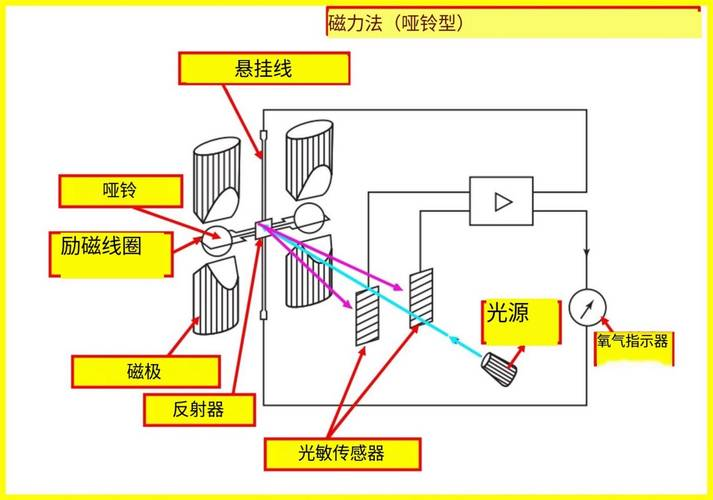
These sensors measure the strength or power of the uv input. This electromagnetic radiation is longer than x-ray but still shorter than visible light. An active material known as polycrystal is being used for reliable ultraviolet sensing, and ultraviolet sensors can detect environmental exposure to ultraviolet radiation。
Rationale
Ultraviolet sensors receive one type of energy signal and transmit different types of energy signal。
In order to observe and record these output signals, they are directed to electrical meters. To generate graphics and reports, the output signal is transmitted to the modular converter (adc) and then to the computer via software。
(iv) touch sensors
Touch sensors act as transformable resisters based on the touch position. Touch sensors are used as a map of variable resistance。
Rationale and work
Some conductive materials oppose current flows. The main principle of linear position sensors is that when the amount of material to which the current must pass is the longer the current is the opposite. The electrical resistance of the material therefore changes by changing its position in contact with the complete conductive material。
Usually, software is linked to touch sensors. In this case, memory is provided by software. When sensors are shut down, they can remember "the location of the last contact". Once the sensor is activated, they can remember the “first contact position” and understand all values associated with it. This action is similar to moving the mouse and positioning it on the other side of the mouse pad to move the cursor to the far end of the screen。
(v) approaching sensors
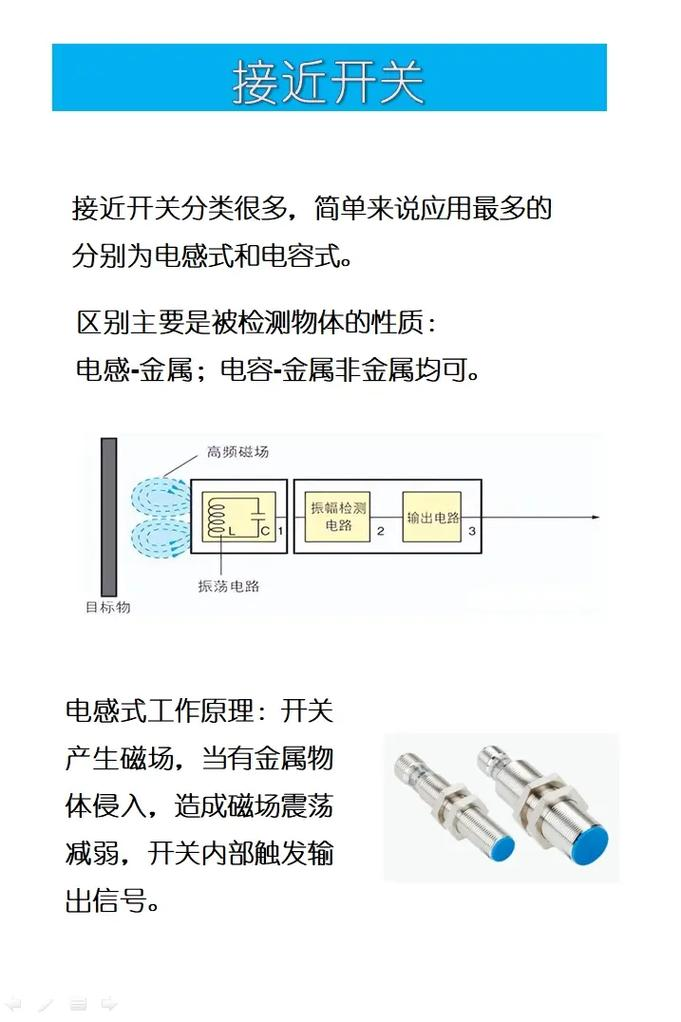
Near-sensor detection of the presence of objects at virtually no point of contact. Because of the lack of contact between the sensors and the object being detected and the lack of mechanical parts, these sensors have a long operational life and high reliability. Different types of proximity sensors are sensory proximity sensors, capacitive proximity sensors, ultrasound proximity sensors, photovoltaic sensors, hor effects sensors, etc。
Rationale
Near the sensor to launch an electromagnetic or electrostatic field or an electromagnetic radiation beam (e. G. Infrared) and awaiting a return signal or change in the field, the sensored object is referred to as a target close to the sensor。
Sensor approach sensors - they have a oscillator as input to change loss resistance by approaching the conductor medium. These sensors are the preferred metal target。
Capacitive proximity sensors - they convert to detect electrostatic capacitation on both sides of the electrodes and the subterranean electrodes. This occurs by approaching a nearby object with a change in oscillation frequency. To detect targets in the vicinity, oscillation frequencies are converted to direct current voltage and compared with predefined thresholds. These sensors are the preferred of plastic targets。