From the mba think tank encyclopedia (https://wiki. Mbalib. Com/)
File management
What is archives management
Archival management refers to the organization, classification, extraction of materials resulting from the design of the subject, the implementation of the subject, the results of the subject, etc., in the course of the subject study, in order to document, regulate, direct the subject study and regulate the management behaviour of the research process。
Scope of archives management
This is mainly in the context of the administration and application of instruments emanating from administrative bodies。
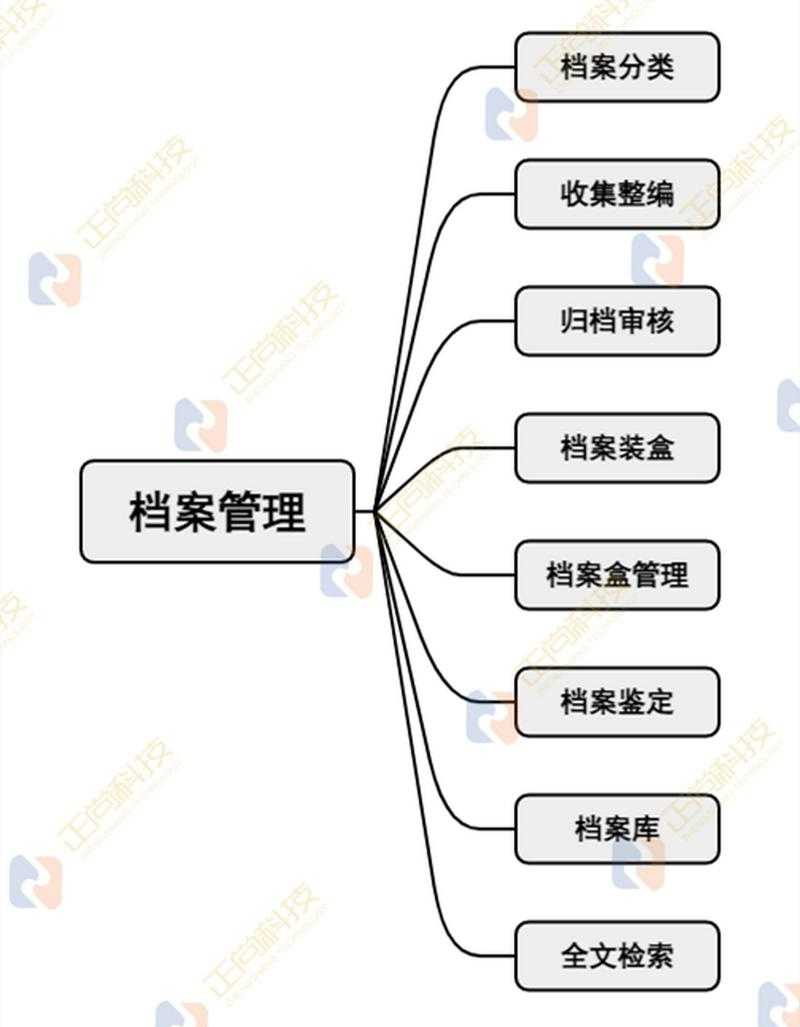
Archives management process
File generation
File generation — point collection
Archives classification - case creation
Archives catalogue -- catalogue
Archiving - paper-writing, micro-storage, electronic storage
Archiving—entry, preservation and maintenance, storage management, confidential archives
Archives clean-up - inventory, identification, destruction, transfer
Archiving applications - directory transfer, calibration, application
Archives classification
Classification - appropriate categories in the table according to the nature of the contents of the file contents
Case preparation - creation of brief case names by file
Archives
A catalogue of the archives is drawn up on the basis of their contents and form characteristics, and their subject matter and characteristics are to be recorded according to their catalogue
A standard format for the description of national archives has been developed in the ead format, taking into account the description of national archives, in order to present the entries that are included in the various levels of profile
Sort files
1. Source principle (principal of policy)
2. Complete principle (principle of refect desfondos)
3. Original order principle (principle of original order)
Archive description level
1. Repository
2. Full and full
3. Documents series and side documents series
4. Case files
5. Cases
Key to archives management
I. Status of the computerization of archives management
The development of social modernization, office automation, paperless and so on has led to a significant change in the way archives are generated, such as the drafting, issuance, catalyzing and archiving of documents, which must be preceded by machine-reading documents, which naturally exist in machine-reading form and which differ greatly from paper-based archives. This change bodes well for archives workers to face more machine-readable disk-based archives. A wide range of information searchers are concerned with the content of the information, which may come from different machine-readable forms of archives. It is incumbent upon the archivists to provide these archival information in a systematic manner. The time has come to provide valuable archival information. It is essential that there be a selective process whereby the computerized form of archival information is systematic, authentic and valuable in order for users to have access to better services. Thus, the electronicization of archival information is an inevitable trend in the development of archives use。
1. Lack of uniformity in modern development management software in society。
The fact that archives use a variety of computer models and specifications, that the software developed cannot be used interchangeably, and that there is no computer-based management software system that can be used for both document retrieval and archival information management, and that, because of the lack of inter-operability, computers cannot be used to complete information management and to publish information editing results quickly, constrains the electronicization of archival information。
2. Standardization of the archives management base needs to be improved。
The electronization of archival information management is premised on the standardization and standardization of basic work. However, for historical reasons, the collection has a poor base of operations. The low quality of the files, in particular the lack of compatibility of the rules for recording the various types of archives and the poor portability of the systems; and the lack of uniform standards for the automation of archives, focusing solely on a single library or a particular professional system, to enable the full implementation and promotion of uniform standards, also constrains the electronicization of archival information。
3. Technical standards for archives management, organizational work process standards are not taken into account by the technical characteristics and developments of computer information processing, and an increasing number of archived “documentary materials” are diskettes, cd-roms and the existing archiving, classification, recording standards and related provisions are not fully adapted。
4. The quality of personnel working on file information management needs to be improved。
Electrification of archival information. First, there must be modern people and managers must have a high level of knowledge and advanced technology, which cannot be satisfied only with normal computer operations. At present, many archives offices lack modern high-tech skills, of which archives, information-processing complexes are much more scarce, and most archivists are under-skilled. There is even modern illiteracy. Despite the introduction of modern equipment, it was not possible to function adequately and electronicize archival information。
Ii. Strengthening the investigation of arms management
1. Establishment of a web-based archival system。
Building an integrated digital application platform within the system. Establish a sound internal service network and a public service network to serve as a web site, making the archives website a window for the promotion of archives and the development of archival information services. To promote standard-building for the computerization of current files, and to procure the necessary hardware equipment to provide the hardware base for the system, in accordance with the system construction requirements. Improve the technical and application level of the archives management software to create the conditions for ensuring the exchange of archival information and the sharing of archival information resources. Develop strategies to ensure the originality, security and reliability of archival resources。
2. Strengthening the management of electronic documents is key to the informationalization of archives
(1) the low stability and vulnerability of the vectors of electronic documents, with the establishment and development of the computer information management network, has led to an increasing number of important documents being transmitted online. The conversion of document formats prior to the internet, in accordance with the unified requirements of information management, ensures to some extent the reliability and interoperability of data, and those electronic documents of preservation value that are not transmitted to the computer information management network should be catalogued by the electronic documentation unit and transmitted to the archives section using web-based technology. The network could be used to create a dedicated archiving subsystem attached to the information management network by means of a dedicated electronic file delivery line between the business management bodies and archives. An electronic document of preservation value, both online and offline, is transmitted to the archives via this system. The archives department, in consultation with office automation and information management, submits formal requirements for the archiving of electronic documents. Regardless of the means used for archiving, it must be catalogued in a uniform format by the electronic document formation unit and transmitted to the archives department, which cannot download it from the web itself to ensure that the electronic document formation department is responsible for the authenticity and accuracy of its data. Electronic documents received by archives should always be placed on cd-rom, preferably without magnetic inventory storage。
(2) electronic document archiving involves a wider range of issues and constraints, which are difficult to accomplish by the archives department alone, and should be combined with electronic document formation, archives, computers and information management. Electronics form departments familiar with management operations and understanding the natural patterns and historical links of electronic documents. They are the primary bearers of archiving and have the most say in the validation of the value of the work; they have the principles, methods and global knowledge of archiving, which can play a critical and integrated role; and they are the computer and information management units that form electronic documents, as well as specialized technical units that design and maintain information management networks and manage electronic information, and are central to the institutionalization and standardization of electronic document filing. The functions of the three departments should be used to infiltrate each other, to avoid short-term situations and to build on their respective strengths, to integrate electronic documents into the archives and to form better quality electronic documents together。
(3) technical processing of electronic documents for archiving and implementation of an electronic document management strategy. The necessity of archiving new types of document materials requires archivists to reach out to existing areas of document work, to provide guidance on the receipt, disposal and even storage of the large volume of electronic documents generated, to protect the original information of electronic documents and to understand the context of the regrouping of document information. In other words, through technical processing, electronic documents that have been archived are replaced by “read-only” documents, i. E., documents that can only be read unwritten, thus recognizing and protecting the original structure of electronic documents and ensuring their reliability and social utility as paper-based documents。
(4) solving the preservation of electronic documents in archives. Electronic documents with chemical magnetic materials as carriers are theoretically capable of long-term preservation. Because its message reads uncontacted and without wear. The information recorded in the electronic file on the media layer is sealed in a plastic protection layer, free from external magnetic field and direct exposure to dust, water and harmful gases in the air. However, because of the short time in which the electronic document was formed, there was a lack of physical storage validation. The issue of the long-term preservation of raw information in electronic documents is therefore an important one to be studied and explored in depth by archival practitioners. Currently, for permanently stored electronic documents. Regular reproduction is required to prevent information losses。
Measures to be taken for the development of information on archives management
Improved electronic document archiving and enhanced information management of archives. In accordance with the requirements of archives management, the digitization and conversion of archives of different types (e. G., paper and photographic, audio- and video archives) enhances the accumulation, identification, recording, archiving, etc. Of electronic documents in the unit, ensuring that the resulting electronic documents of preservation value are authentic, complete and effective. To study technical methods for the receipt, preservation and use of electronic archives and to develop methods for electronic archives management。
2. From stabilizing the archives team to improving the quality of operations, archives personnel must move from a mercage to a professional one. The human factor is the main factor in ensuring the orderly, normal and sustained development of modern archival systems. In the field of archives management, there is a lack of complex personnel with knowledge of software development and expertise in archives; improvement of the quality of the workforce as a whole, creation of conditions for targeted learning and updating of knowledge for different jobs, adaptation to external guidance and internal basic management; establishment of a competitive mechanism to overcome human inertia and develop the full potential of subjective mobility, the use of their skills and the development of places where they can be used; and creation of incentive mechanisms for rational job creation. The scientific quantification of work, reflecting a large and small volume of work within a unit, specialized and non-specialized, contributes to staff motivation and creativity。
3. Moving from a modern management approach to a more modern one, with shared resources, to a more modern one. The archives are organized around the priorities of the department and the hot spots of interest. With the current rapid development of information technology, an era of networking and digitalization has emerged. How archival systems recognize “networked management” and “digitized archives” for information-sharing and co-construction purposes. To that end, modern management must be carried out in such a way as to allow for the choice of archives management software and to promote it with caution. Software selected needs to be standardized, universal and highly inclusive
Archives management system
Overview of the purple light archive management system
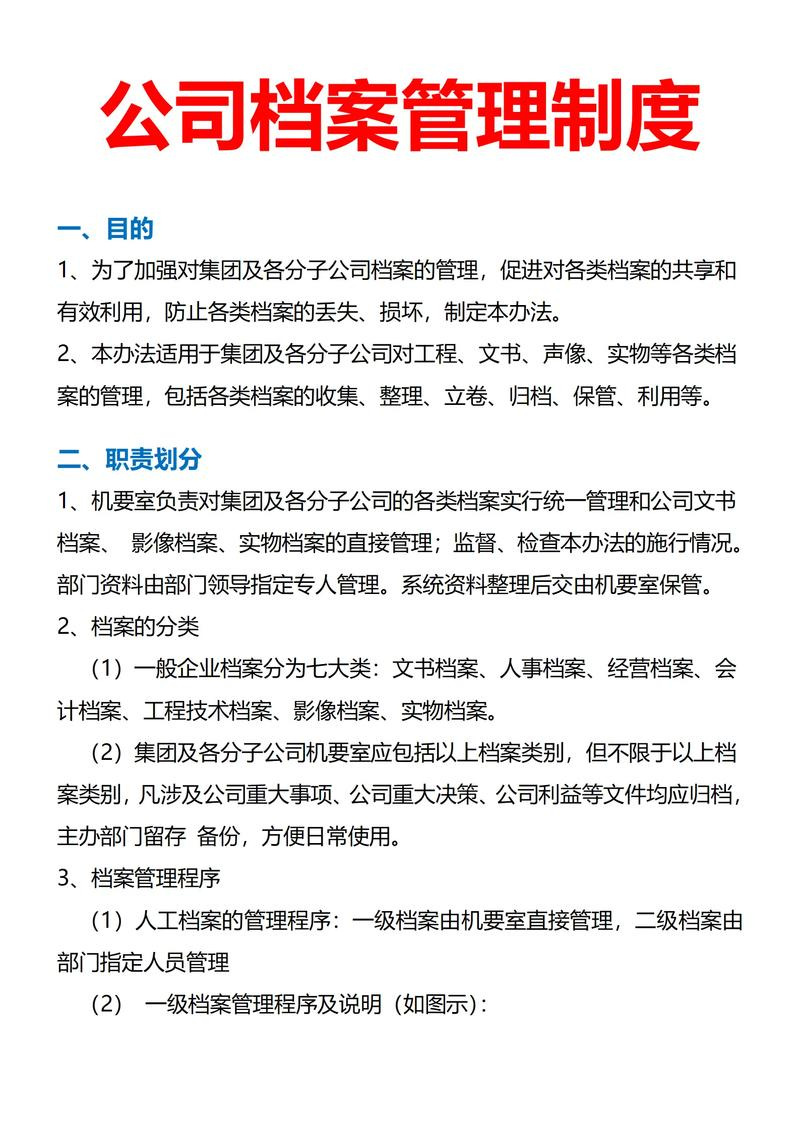
The purple light archive management system was developed by purple software systems ltd. The enterprise archives management system is a combination of more than 20 successful experiences of purple light in the archives field and a series of technologically advanced archives management products that meet the requirements of modern archives management in enterprises, drawing on the internationally common oais model. The system supports the normative management of the archives of enterprises by providing them with the necessary automation and intelligence management tools for their collection, management, preservation and utilization in the course of their operations。
Features of the purple light archive management system
1. Advanced technological means of safety and practicality take the form of well-structured and technologically advanced; highly expansive and responsive; easily integrated and seamlessly connected; and security-oriented and operational stability. Support multiple archival collections to support online transfer, online collection, offline collection, etc. 3 the solution for the collection of project files for engineering projects addresses the challenges of project archives management through the provision of a variety of features, such as archiving templates and offline collection, for the large number and long duration of project archives. 4. To meet the different types of organization that are adapted to the different forms of organization of each unit, the system provides for centralized, decentralized and organized forms such as grouping, boxing, and meeting project-level management needs. 5. Automation of the filing process and the use of flexible and fast, intelligent writing, automatic sequencing, numbering, grouping, boxing, etc. Maximize the automation and efficiency of the archives. 6 the unique 3d storeroom simulation technology is modelled through 3d storerooms, which enable archivists not only to manage and use the archives more visually, but also to perform warehouse inspections, temperature monitoring, etc。
Scope of application of the purple light archive management system
The system meets the requirements of enterprise archives management, knowledge management and easy access. The system applies to all levels of enterprise。
Importance of archives management
In a narrow sense, it is the archives business, a series of operations of the archives and archives around the archives, and the management of the archives using scientific principles and methods to serve social causes. The work of the institutional archives is an integral part of the work of the organs, a sine qua non for improving the efficiency and quality of their work, and an important part of the preservation of their historical integrity。
I. Archives as a basis for the conduct of the work of the organs
The archives are a record of past work and history and can provide a basis for documentation of the work of the organs. The archives are evidence of history and a first-hand reference material. In the first place, it is created directly in social practice, rather than by humans, which objectively documents history and has the most reliable evidence. Secondly, it retains true historical traces, such as the handwritten manuscripts of the parties concerned; the written signatures or instructions of the heads of the authorities or the persons concerned; many documents bearing the seals of the hair-producing organs or individuals; and some materials in the form of photographs, audio- and video tapes, which are evidence of the validity of the files. There are also documents, such as contracts, contracts, etc., which are produced for the purpose of memos, and whose probative effects are stronger and more visible。
Ii. Archives as an active part of education box
In recent years, our archives have entered a new period of historical development in which the archives sector at all levels has been free of ideas, reformed and innovative, gradually shifting its focus to the provision of access to archives for the construction of socialist material and spiritual civilization. Through the promulgation of the law on archives of the people's republic of china, our archives have been re-established in accordance with the law, and the macro-management of archives has been comprehensively strengthened. The use of various types of archives at all levels and at all levels is well advanced. The archives play an important role in the service of society。
In view of the importance of archives, it is essential that, as archives practitioners, we protect and manage the archives, exercise our responsibilities in accordance with the law, receive them regularly, keep them properly and facilitate their use, in particular by:
To preserve the true face of history
2. To be faithful and devoted to the cause of archives
3. Be committed to the people
4. Good practice of confidentiality
5. A high degree of awareness and perception of the rule of law。
At the same time, it is important to liberate thinking, reform and innovation, to contribute more to the work of the archives, with a sense of commitment and commitment。