Now, whatever we do is about recycling and environmental protection, and when we use water for the purpose of recycling, circulation filters are the best option, and today's mini-editor shows you some of the working principles and features of our circulation filters, which you can look at。
When water enters through the water vent, the thick filter filter filter filters the impurities of larger particles, and then enters into the thin filters, at which point it filters out smaller pieces of dirt. The impurities are usually piled on the inner side of the fine filter, so that both the inner and the outer side form a pressure difference。
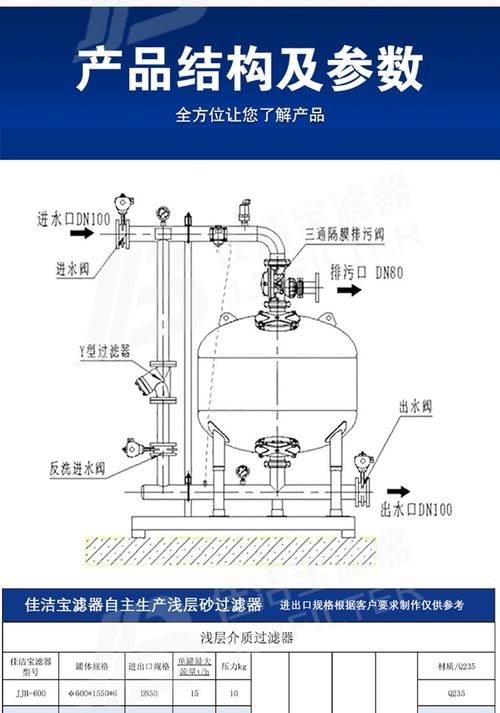
When the circulatory water filter is installed, specialized technicians are required to debug and set the time for the filter to be cleaned and converted. When the pressure difference reaches the predefined value, it is automatically cleaned, when the water purification process does not break, when the cleaning valve opens, when the water pressure in the cleaning room and in the vacuum cleaner is significantly reduced, when the pressure from the filter to the suction tube is poor, and when a suction tube is created between the suction tube and the snorting chamber, a suction process is formed。
The combination of the sorbent axle movement and the rotation movement completely cleanses the entire filter surface. When the filter starts work, and after the pre-set cleaning time has been reached, the electrical air gives the control valve, the motor signal to the water, triggering the following actions: the motor is rotated, the filter core is washed, and the control valve is drained, and the process lasts for several decades. Once the cleaning has been completed, the system returns to its initial condition. Don't look at the process as complicated, but it's short, it's about 10 seconds。
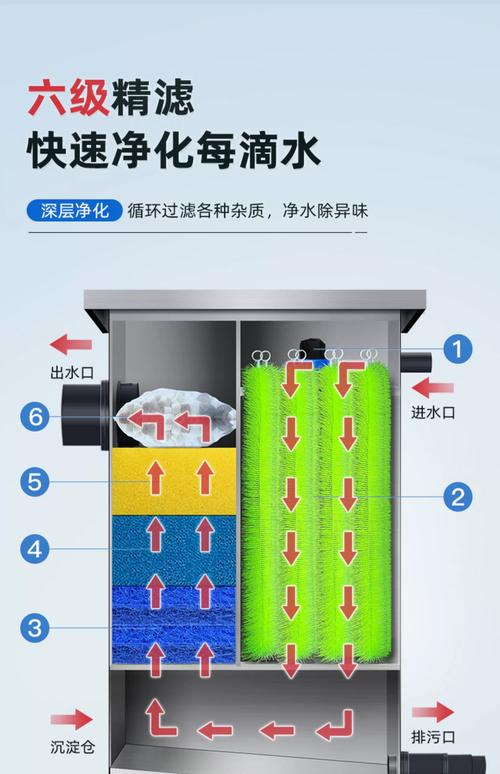
Cycle water filters have multiple characteristics. For example, it has a wide range of applications that can be used in many water treatment sites and meet the needs of various work environments. Advantages of preservative, resistant materials are used, and the design process is advanced, so filters can be used for long periods without maintenance. In operational terms, it's very simple. There's no need for manual recycle filters
Metallurgy: cascading water, high-pressure phosphorus water, water rinsing, cooling water filtering, by-film, nozzle protection, etc. Electricity: gas turbine cooling water filtration, grey water recovery filtration, dust nozzles protection, cooling tower water filtration, etc.
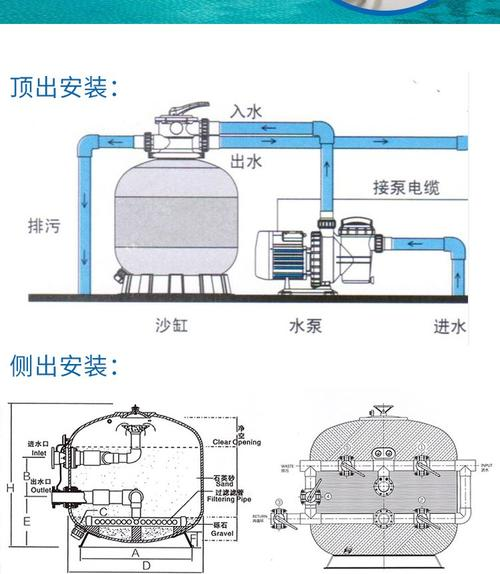
Raw water: lake water, river water, reservoir water, well water, rainwater, sand during groundwater extraction, algae, organic filtration, etc. Agriculture: spraying, drip irrigation treatment. Other: construction, iron and steel, oil, chemicals, electronics, electricity generation, textiles, paper, food, sugar, pharmaceuticals, plastics, automobiles, etc
These are some of the working principles and characteristics of our circular water filters, which are presented for you, and it is hoped that you will be able to refer to the fact that if water resources need to be recycled, the circulation water filters are very important, and that they can help us to use them better by understanding some of our circular water filters。