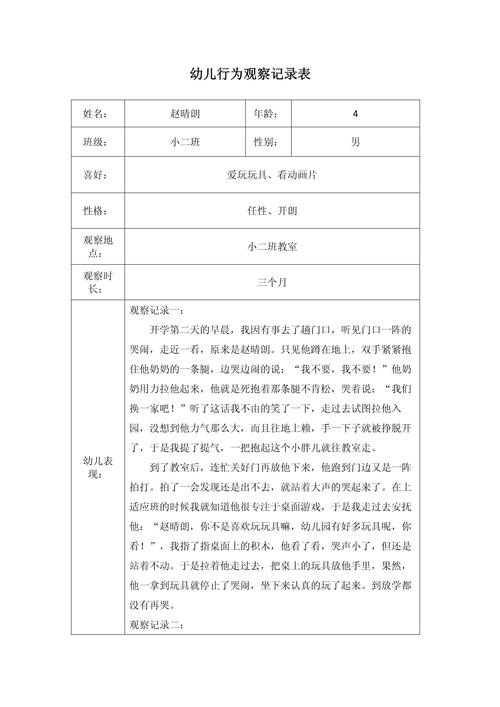
Key elements: i. The guide provides directional guidance for observing and understanding the meaning of children and helps us to understand and understand the value orientation and content of learning and development for children. 2. Provide a clear framework for our purposeful and systematic observation and understanding of children. 1. There is a need to keep in mind its areas and objectives and to create a holistic image of children's learning and development in their minds. The “typical manifestations” under the objective point to the different dimensions of observation, understanding, assessment of a child's learning and development in a different dimension, and an integrated assessment of the multiple information. 1. Life and play in one day are manifestations of a child's real development and are the best opportunity to observe. 2. Objective documentation and description of children's behaviour is a prerequisite for evaluating children and for curriculum planning. 1) to document and describe the performance of young children in an objective manner, which is also the basis for teachers' understanding of young children and the development of strategies for their next education. Objectively recording and describing rather than explanatory, judgemental notes. 2) focus on documenting meaningful behaviour in observations. A better understanding of the reasons behind performance, interest and learning characteristics. Observers are not passive and capture meaningful behaviour in a timely manner as a basis for further observation or curriculum planning. A behaviour related to the purpose of observation is meaningful. B asks for openness to learn about the real thoughts of young children and to promote and deepen the meaning of young children's behaviour. C. Create an uncompassionate environment based on observed meaningful behaviour, allowing young children to explore new materials and interact with their peers for further observation. Discussions with colleagues are a very good way to improve the quality of observation records, with different people looking at the same issue from a different perspective, reflecting on others ' criticisms and continuing to practice in order to improve their level of observation and recording. 3. Positive analysis and perspective of young children. It is a process in which children can demonstrate any one of their abilities, and we observe and understand that children need to be good at discovering their progress at every point in that process. Progress can be found through three scenarios of child performance, using a methodology described in the living early childhood learning indicators: a: an initial move towards a learning indicator (precedent); b, an advance towards a learning indicator (in progress); and c, an achievement of a learning indicator (achievement). The guide states that the most important thing in the game is to observe young children with patience and respect. Young children's abilities and learning patterns vary from one person to another, and young children's learning and exploration often take place unexpectedly, giving them sufficient time and tolerance as long as they are not at risk. And it would be better not to interfere too much in the games of young children. With my guidance, he has a certain confidence in me by showing his will, so even in the game, let the child choose and play by himself, he looks at me with his confused eyes, receiving a positive look and participating freely. Knowing young children, life is a good opportunity, and their true performance is often reflected in the most customary life activities and games. To look for a few drops in life and play, to observe and analyse the records and help him adapt more quickly to the new life and learning atmosphere。
Ihvk 2018-01-16:49
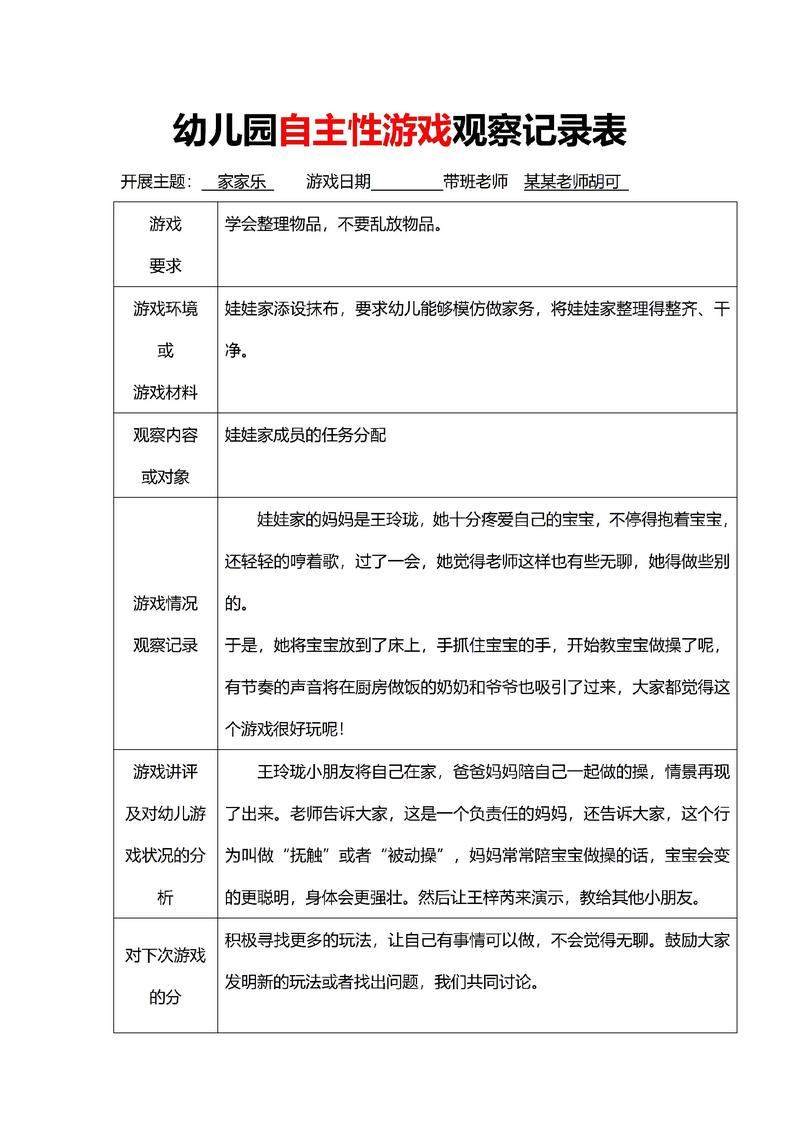
The baby knows the hint: the answer is to contribute to a friend, for information only。