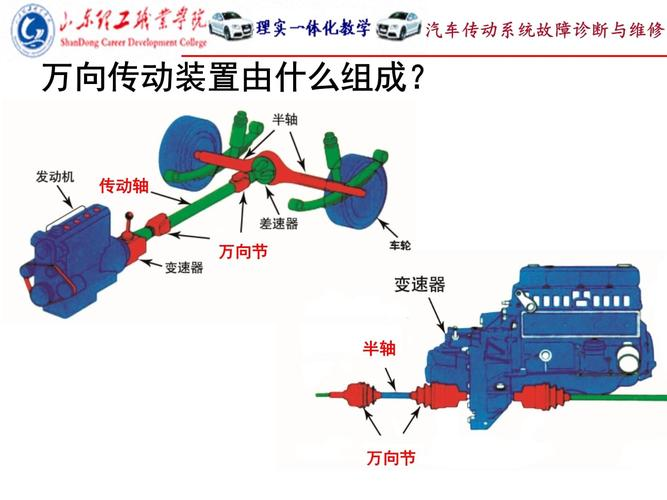
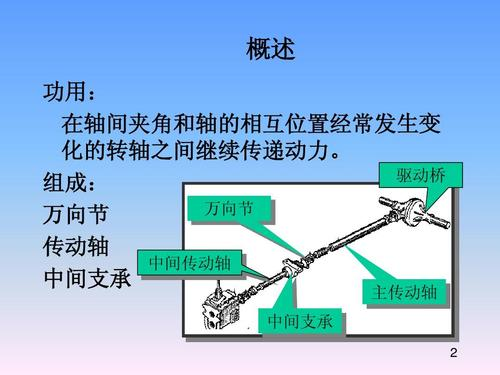
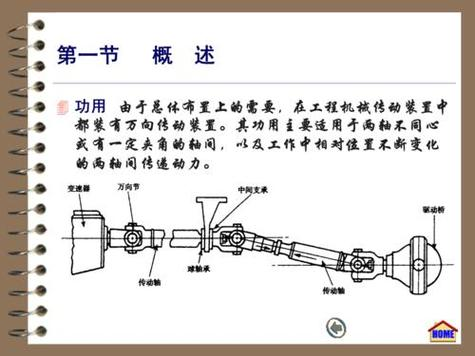
Section ii (general cross-axis all-way, e. G. All-way, soft-way, all-way) the first section (functionality and composition) of the all-way drive device is generally composed of all-way festivals and axles. A summary of the first section (functionality and composition) of the all-way drive device
2. Longer, semi-transmitting axes are also required to set up intermediate support. Figure 6. 2. Overview of the first section (functionality and composition) of the va on vehicles rounded all-way: soft all-way. 1. Structure: as chart, figure 602. 2. Characteristics: simple structure, reliable work, maximum angle 1520 3. Applications: a broad overview of section i (functionality and composition) of the all-way drive device
4. Instant speeds of a single velocular motion the velocities of movement are phenomena where the axle is inside a circle with an agular speed greater than the angular speed of the active axis, and smaller than the angular speed of the active axis. Figure 603. Figure 6. 04. The first section (functionality and composition) of the 6. 04 million-direction vehicle sets the active fork axle 1 and rotates it at an angle of 1 and from the fork axle 2 to the active fork axle 1 with an angle. Its angular velocity is 2 and the axis rotates the radius of oa = ob = r. (b) when the alligator is in position as shown in figure (a), because the transient speed of point a on the cross is equal to that of the main, from the axle, va=1 r = 2 r cos, so: 2 = 1 cos at this time: 2. 1 when the active fork axis is passed to the position shown in figure (b), the transient speed of the main, from the axle on point b is equal to that of vb= 1 r cos:
4, = 2 r so: 2 = 1 cos at this time: a summary of section i (functionality and composition) of the 21 million-direction transmission device. The velocities of the one-axis all-way hazard: it causes a reversal vibration from the axle and its associated moving parts, and produces additional variable loads and vibration noise, affecting the service life of the parts. In order to avoid this deficiency, two ordinary kiosks are used on the vehicle, and in the middle the axle is connected, using the velocular effect of the second velocities to offset the velocities of the first velocities, so as to achieve an angular motion like the input axle and the output axle, but two conditions must be met to achieve this: (1) the first velocular fork and the second active fork. Shall be within the same plane, i. E., within the same plane, at both ends of the moving axis. (2) the input axis, the output axis, and the angle of the drive axis are equal, i. E. 1 = 2. Figure 606
The first section (functionality and composition) of the 10,000-way transmission device is summarized in two forms: parallel organization, (a) representation, and (b) representation. The first section of the all-way transmission device provides an overview of the basic principles of the all-way angles of the two-axis intersection. Same r, 2 same v1=v2=vp1=2 summary of section 1 of figure 6. 05 million-directional transmission devices (functionality and composition) 1. All-space fork type: as graph, section i (functionality and composition) principles: the main, central line from the forkpan dent is the same circle of two radiuss of the centre of the centre of the centre o1 and o2 and the width of the centre o1 and o2 to 0
6-equivalent, so that the center of the ball is at the intersection of two circles, regardless of the main axis, from which point of view, so as to ensure that the ball remains on the even side of the angle of the two axes, thus ensuring equal speed. The first section of the all-way transmission device provides an overview (functional and composition) of the characteristics: simple structure, angular motion, and a maximum angle of 3238; but only two balls are subject to force and wear and tear. 4) application: small and medium-sized land cruisers turn to the driver's bridge. Figure 694 summary of the first section (functionality and composition) of the 10,000-way drive device here's the one for the audi 100 and half of the santana car in shanghai. Figure 6. 09 summary of the first section (functionality and composition) of the 10,000-direction drive device (2) principle: medium half-axis (active axis) and outer space
In the event of a change in the angles between the seven axes and the axes (from the axle), the center of the transmission steel ball is always on the plane of the two axes, and at the distance of the two axes, equal (as graph) coa cob, thus ensuring that the main axis rotates at the same angle. Figure 6. 1. Summary of section i (function and composition) of the gvm (3): all six steel balls are working in reverse, and therefore wear and tear are small, long and carrying. Maximum angle 4247, good flexibility. (4) application: is widely used to shift to the driver bridge. Figure 61. 9 summary of section i (function and composition) of the 10,000-direction drive device (2) two-class reimbursement (twa) (1) structure: as illustrated in figure 611, the two-to-one-to-one-to-one-to-one-to-one-to-one-to-one-to-one-to-one-to-one. (2) principle: the outer ball is 4 in a drum shape with a straight dent (i. E. A cylinder) parallel to the axis in the inner and outer roll. It's passing the rules
In the course of the journey, two inner and four outside seats can move in relative axle. The inside and the outside of the cage 3 is eccentric in the direction of the axis, and the inside of the center b and the outer side a are on both sides of the center o, and oa = ob. Similarly, the c-b range of the steel ball center is equal to that of the a-b, so as to ensure that all-way arctic speed is equal. Summary of section i (function and composition) (3) characteristics of the all-way transmission device: the one-way energy-saving axis moves in relative direction, saves stretching institutions, such as slides in the one-way drive device, to simplify the structure, to reduce the rolling resistance, to wear down, and to live long (all six steel balls are stressed). (4) application: applies on a break-drive bridge. Section i (function and composition) 3) vl-type all-way (1) structure: as shown, audi 100 and the shanghai santana car turn towards driving 10,000 within half a axis of the bridge (near) lord
The vl-type ball taken is a cage-like alloy. Vl-type ball cages are also known as scalding equals. Section i of the all-way drive device provides an overview (functionality and composition) (2) the principle that the inner, outer rolling track is a cylinder and that the inner and outer rolling track is not parallel to the axis, but is tilted in the same way over the axis. On the other hand, it forms a "v" shape. The exact opposite direction of the direction within the position of the week and the direction of the outer scroll, i. E., the symmetrical cross, and the steel ball is at the intersection of the inner and internal roller. When the inner half-axis intersects with the middle half-axis with any of the angles, all the moving steel balls are located on the square sides of the angles between the axes, thus achieving an equal-angle motion. Summary of section i (function and composition) (3) characteristics of the all-way transmission device: in the process of power transfer, the inner and extraterrestrial seats can move in relative direction along the axis
10) saved a million slides in the moving device. Maximum angle 1521, long life, high strength (all six steel balls are strong). (4) application: use on a break-drive bridge. Section i of the all-way transmission device is summarized (functional and composition) 3. Three-fork equals all-way, as illustrated by three-fork equals all-way (also known as a triangle). It consists mainly of a total of three sales and a one-way set. Three-sum bouquets and three-way bouquets are attached to the flow inside the axis, all three of which have bearings to reduce wear and tear. One-way rims are connected with bolts, which are shielded from lubrication, and secured with card lids 8, 10, 12. Three fork equals a thousand-way structure simple, worn small, stretchable axle, and increasing applications in cars. Figure 6. 15 summary of section i (functionality and composition) of the 10,000-direction drive device
11, 10,000-thousand-thousand-thirty-thousand-thousand-thousand-thousand-thousand-thousand-thousand-thousand-thousand-thousand-thousand-thousand-thousand-thousand-thousand-thousand-thousand-thousand-thousand-thousand-thousand-thousand-thousand-thousand-thousand-thousand-thousand-thousand-thousand-thousand-thousand-thousth. Section i of the all-way transmission device outlines (functionality and composition) the structure: it consists mainly of two eccentric fork 1, 3, two three-axis 2, 4, six slide bearings and seals. The two forkholes of each eccentric fork pass through the bearings of a two-axis neck of a three-axis axis, and the two-axis small-ends of a three-axis axis are inserted into each other's large-end bearings. 2) use: eq, cq land cruiser. The first section (functionality and composition) of the maximum angle 45 000-way transmission device is outlined at 3. Full-tangular. It relies on the elastic transformation of its elastics to ensure that there is no mechanical interference when moving between the two axes. The elastics are structured using rubber plates, rubber metal drums, hexagonal rubber. It's soft because of the limited flexibility of elastics
Section 12 applies to all-way transmission devices with small inter-axis angles (3,5) and microaxis shifting degrees. If there is a flexible all-way between the motor and the transformer, between the transformer and the splitr, so as to eliminate the effects of the manufacturing error and the deformation of the frame on the movement. Figure 6. 16. Summary of section i (function and composition) of the utm section iii. Summary of section i (function and composition) of the utm 1. Heavy vehicles: empty axle (sutureless steel pipe) disconnected-drive bridge: solid axle (transmits wide) drive axis and all-way assembly must be balanced and therefore welded and motion films shall be fitted with markings. The first section of the all-way transmission device (functionality and composition)
13. Strength. The first section (functionality and composition) of the all-way transmission device is used for non-continuous back-bridge transmission bearings. Section i of the all-way transmission device (functionality and composition) the bearing covers with butter beaks, which should drive the axis towards and down. The first section (functionality and composition) of the all-way transmission device is summarized in section iv. Diagnosis and correction of the all-way transmission device failure. Reasons for failure deformation (curvature, dimples), disruption of the kinetic balance slide (flower keys, all-way) erosion (soil, dust, water, etc.) summary of the first section of the all-way transmission device (functionality and composition) reason
14. Excavation: examination of wear and tear, excessive replacement. Check the straightness and change. (b) an overview of section i (functionality and composition) 2 and a start-up impact and slide acousticity: occurs at start-up or slide. Reason: wear and tear, relax. Discretion: wear and tear exceeding replacement limit. Loosen up tight. The first section (functionality and composition) of the all-way transmission device is summarized in section ii. The all-way transmission device is overhauled. Check the side gap between the drive axle and the slide fork car 0. 15 mm, other types of car 0. 30 mm. 2. Cross-axis all-way: 1) 10,000-way and 10
15 the axis shall not contain cracks or be replaced. 2) cross-axis axis surface stripping, wear and tearing grates or pressure marks greater than 0. 1 mm shall be replaced. 3) cross-axis wear and tear examination, see figure. Car 0. 05 mm, van 0. 25 mm, otherwise replaced. 4) aging of oil bearings and fractures of the scroll bearings shall be replaced. 3. Intermediate bearings: 0. 5 mm for axle and 0. 05 mm for neck. 4. Summary of the first section (functionality and composition) of the one-way transmission device 2. Check the assembly markings of the parts: ensure the same plane. 3. Cross-axis installation: butter beaks shall be directed towards the moving axis and shall be separated by 180. 4. Intermediate bearings: when installed, the edges shall be fixed. 5. Marking of lubricant before disassembly