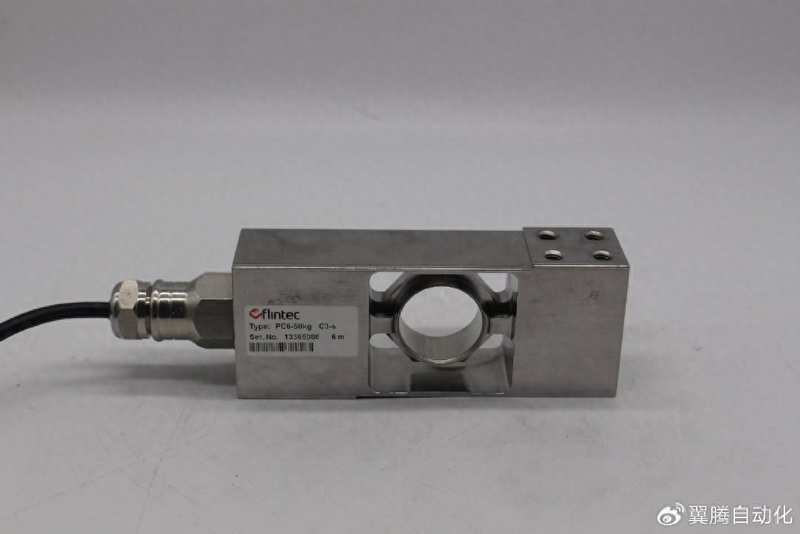
First, pull pressure sensor profile:
Pressure-thrust sensors are also called electrical resistance variant sensors, which are part of the heavy sensor series and are a device for converting physical signals into measurable telecommunications output. Extensive use is made of measurements in industrial weighing systems, platform scales, electronic scales, hook scales, ration scales, etc。
Two, pull pressure sensor principle description
The pressure sensor is intermediated by elasticity, which causes its resistance to change by force-activated resistors on both sides of the sensor and is converted to electrical signals by the corresponding circuit, thus achieving the latter control. Its advantages are its high accuracy, its wide range of measurements, its long lifespan, its simple structure and its high frequency characteristics。
Three, pull pressure sensor-related parameters
Quantified load (kg) 100, 150, 200, 250, 300, 500, 1000, 2000, 5,000; accuracy level c2; insulation electrical resistance (m) ≥ 5000 (100vdc); combined error (%f. S) 0. 03; incentive voltage (v) 9-12 (dc); sensitivity (mv/v) 2. 0±0. 02; temperature compensation range (°c)-10 +40; non-linear (%f. S) 0. 03; pressure sensor use temperature range (°c) - 35 ~ 65; lag (%f. S) 0. 03.
Zero point temperature effect (%f. S/10°c) 0. 03; repetition (%f. S) 0. 01; sensitivity temperature effects (%f. S/10°c) 0. 03; creeping (%f. S/30min) 0. 02; safe overload range (%f. S) 150; zero output (%f. S) ±1; limit overload range (%f. S) 200; input resistance (one) 350 ±5.
Four, pull pressure sensor properties
(1) linearity: the extent to which the actual relationship curve between the heavy sensor output and the input amount is alleged to deviate from the proposed straight line. Defines the ratio of the maximum deviation between the actual feature curve and the proposed line within the full range to the full range output value。
(2) sensitivity: sensitivity is an important indicator of pressure sensor static properties. It is defined as the ratio of the increase of the output to the increase of the corresponding input giving rise to the increase. S for sensitivity。
(3) delay: the sensor is slow to fit its input output curves between small and large (positive process) and between large and small (reverse process). For input signals of the same size, the sensor's positive and reverse process output signal is not equal in size, and the margin is referred to as the delayed margin。
(4) repeatability: repeatability is the degree to which the characterization curve is inconsistent when the pressure sensor changes repeatedly in the total range of the input in the same direction。
(5) drifting: the drift of a sensor means that, in the event of a constant input, the output of a heavy sensor varies over time and the secondary phenomenon is called drift. The reasons for drift are twofold: the sensor's own structural parameters; and the surrounding environment (e. G. Temperature, humidity, etc.)。
Products are widely used in more than 10 new and intelligent high-end areas, such as industry, machinery, medicine, textiles, automobiles and transport; they are matched by a high degree of innovation capable of providing flexible and cost-effective solutions to clients in the area of process heavy control and measurement。