China pink net, on the one hand, and on the other hand, economic and social development, on the other hand, how can we move together? The minister of science and technology, wang zhi, at the scientific conference on “climate and science and technology innovation path choice”, stated that science and technology were key to ensuring that both were achieved simultaneously, and that carbon peaks would be measured and generated a range of scientific findings, scientific approaches and technological innovations。
According to the former vice-president of the chinese engineering institute, the carbon peaking, carbon neutrality and twin goals are based on china's national circumstances and scientific justification. They are not only road-driven, operational, but will also lead to a series of technological advances that will lead to new investments, new industries, new transport, new buildings, new energy sources, and other new forms of development. They will contribute profoundly to economic and social progress and the construction of eco-civilization in order to achieve economic, energy, environmental and climate win-win and sustainable development。
I. Co2-top carbon neutralizing "test and trigger" superreflective paints
Thermal insulation paint is a water coating that can effectively prevent heat transfer and reduce surface temperature, and is widely used in buildings, textile cloths, ship decks and space military fields because of features that improve the working environment and reduce energy consumption. Studies have shown that by increasing the average reflection rate of solar light in urban buildings around the world by 0. 1, equivalent to a 40-160tco2 reduction, paints with heat insulation are important in mitigating the urban heat island effect and improving environmental pollution。
Scientists have invented a white coating that can cool the surface, even when the sun comes down, below the ambient temperature. In recent days (april), a new study published in the cell-physics science report demonstrated a radiation cooling technology that could be used for commercial paints, with low manufacturing costs and a passive reflection of sunlight reaching surface 95. 5 per cent. In contrast, commercial “heat-resisting paints” on the market today reflect only 80% to 90% of solar radiation and do not produce less than ambient temperature。
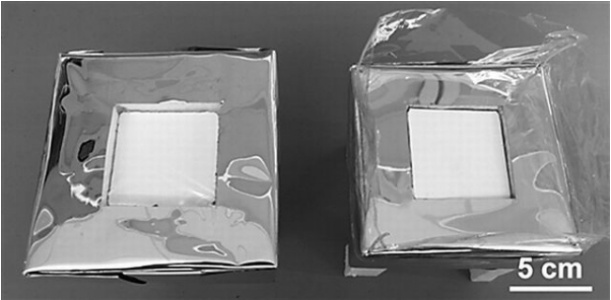
Figure 1 white paints source: cell-physicoscience report
In summer and climate-friendly areas, most buildings rely on traditional air-conditioning systems to transfer heat from indoor to outdoor. These systems require energy consumption and the release of excess heat, thus transforming cities into “hot islands” and exacerbating the climate crisis。
Researchers used calcium carbonate fillings to develop commercially applied radiation cooling paints. Calcium carbonate has a large lacuna, thus helping to reduce the amount of ultraviolet light absorbed by paint. Researchers also use 60 per cent of high particle concentrations to promote sunlight dispersion and achieve efficient broadband dispersion using wide particle size distribution rather than single particle size。
In order to prove whether these changes have improved the radiation cooling capacity of paints, the researchers conducted a two-day cooling test in silafah. At night, paint samples are 10°c below ambient temperature and at least 1. 7°c below ambient temperature when the sun is at its highest point. (in direct sunlight, cooling power exceeds 37w/m2. The team then carried out a second test, one of which was drawn with new paints and the other with white paints of the same thickness. Infrared cameras show that this calcium carbonated acrylic acid coating is at lower temperatures under direct sunlight than commercial equivalents。
Researchers expect that the technology may benefit a wide range of industries, including residential and commercial buildings, data centres, warehouses, food storage, cars, outdoor electrical equipment, military infrastructure and multifunctional vehicles. This paint can be painted directly on buildings to reduce cooling costs。
Ii. Research applications for powder materials in insulation paints
Thermal insulation paints are classified from the characterization principle in three main categories, insulation-conductive insulation paints, reflecting-type insulation paints and radiation-type insulation paints。
(1) resilient insulation paints
Resilient-type insulation paints are coated with a high reflectivity of thermal radiation (sun radiation, infrared radiation, etc.) in the system to avoid the absorption of solar radiation by equipment and buildings and to achieve insulation (figure 2)。
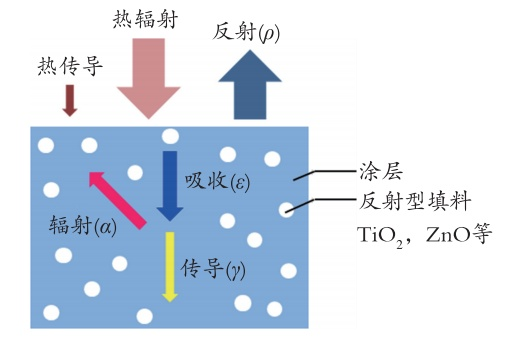
Figure 2 reflection-type insulation coatings
Generally, the lighter the coating colour, the higher the reflection rate of solar radiation. Traditional reflective insulation paints are predominantly white and generally use high white tio2, zno, heavy calcium powder, etc. As paints. This type of paint can reflect more than 80 per cent of solar radiation and even 95 per cent of the paint。
(2) radiation-type heat insulation temperature coatings
Radiation-type heat insulation temperature coatings are paints that proactively reduce the heat transfer of base materials in the form of heat discharges. It is done by adding to the coating system paints that can efficiently emit thermal radiation, or by burning these materials directly into ceramic coatings. When the coating absorbs the heat, it can re-launch the heat back into the environment at a certain wavelength of infrared radiation, thus achieving the effect of cooling insulation (figure 3)。
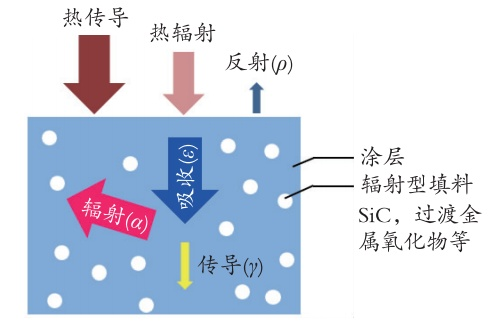
Figure 3 radiation-type insulation temperature protection paints
The radioactive type fill consists mainly of materials such as sic, palestone (the main ingredient is mg2alsi5o18; can contain elements such as na, k, ca, fe, mn), transitional metal oxides (e. G., mno2, cr2o3, coo, cuo), which absorb heat and continuously collide crystals and keys through molecular vibrations and rotations, and re-launch the absorbed heat back into the environment. The radiation-type insulated insulation temperature coatings are characterized by “active cooling” compared to reflective insulation temperature coatings。
(3) insulated heat insulation coatings
Insulated heat insulation coatings are coatings primarily for the purpose of reducing internal heat transfer within coatings, which are based on the principle that heat transfer rates in the air are much less than the conductive rates in solid materials, by mixing functional fillings of small density, high air hole rates and low heat coefficients (e. G., hollow glass microcorns, platinum powder, calcium carbonate microballs, silicate gels, etc.) into the coating system, thereby reducing the heat conductivity of coatings to achieve the purpose of insulation temperature protection (figure 4)。
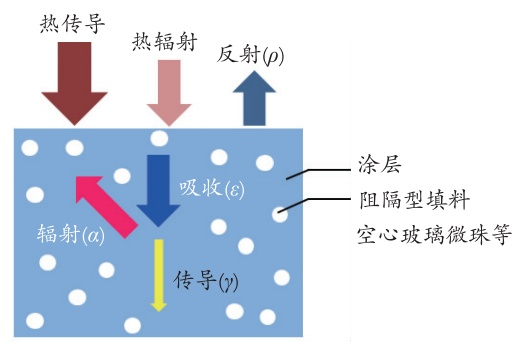
Figure 4 heat-retarded heat insulation coatings
When the heat in the environment is transmitted to the surface of the base material by means of transport, radiation and convection, thermal transfer from the surface to the interior of the base material is achieved mainly by heat transfer. Insulated heat insulation temperature coatings force heat to pass through the air in the coating gas hole by filling in the coating system at a high level, thus significantly reducing the heat coefficient of the coating. If the air hole diameter of the insulated filling is small enough (to the nanoscale), the heat coefficient of the insulated filling is even smaller than that of the normal air, such as siliconagel, fibreaerogel, etc。
Iii. Insulation coatings with calcium carbonate
(1) an insulation coating
Zhao yan, among others, invented an insulation coating with a composition and quality ratio of 20 to 25 per cent of deion water; 0. 1 to 0. 15 per cent of preservatives; 1 to 1. 5 per cent of dispersants; 0. 1 per cent of wetting agents; 5 to 8 per cent of skating powder; 7 to 10 per cent of titanium powder; 10 to 12 per cent of calcium light carbonate; 5 to 8 per cent of silicate lime; 30 to 35 per cent of phenylpropyl emulator; 5 per cent of cylinal glass; 1 per cent of dispersants; membranes; fluids; and increased density. The coatings directly reduce the object's surface by about 10-15°c and reduce the use of air conditioning, thereby providing power-saving functions and meeting national energy-saving emission reduction requirements。
(2) an insulation coating for external walls
An insulation coating for exterior walls is made of 4-9 pvc resins, 6-10 calcium carbonate, 3-5 ethanol, 15-25 acrylate emulsions, 1-4 zinc borate, 1-3 stabilizers, 2-5 ethyl acetic anhydride, 5-7 ethanols, 6-8 pvc resins, 1-3 carbon black and 4-8 aluminium silicate. The coatings of this invention have a good insulation and are effective in preventing uv exposure and are energy-efficient and environmentally friendly。
(3) an insulation coating with super-resistible properties and its preparation methods
The invention revealed an ultra-resistible insulation coating, which included the following components: dispersive, wetting, blowing agent, preservative, cloud-shell powder, carbon black, calcium carbonate light, hydroplastic polyurethane resin emulsion, membrane aids, hydroethyl cellulose, pigmentation, thickening agent, modified titanium dioxide compound and water, super-resistible insulation coatings, adding large diameter tablet-like calcium carbonate to the coatings, and allowing for further enhancement of the insulation properties of the coatings due to better shielding。
Concluding remarks
Thermal insulation paints are evolving in the direction of multifunctional and high performance as new materials and high technologies emerge. At the same time, the standard system for thermal insulation coatings has been progressively refined, detection techniques are becoming more advanced and the type and function of the fillings are constantly being upgraded, and the quality of the products is therefore fully guaranteed. It is believed that, in the near future, the application of thermal insulation paints will be broader and will bring about a dramatic change in the overall energy-saving industry and will continue to contribute to curbing global warming。