The electronic tube, as an early telecommunications amplifier, is made of the cathode electro-launching components, control fences, acceleration fences, anodes (screen poles) wires that are enclosed in glass containers (usually glass tubes) and welded on the tube. Use the electric field to inject electro-modulation signals into the control grid in the vacuum and to obtain signature data for different parameters after magnification or feedback oscillation in the anode. Early application to electronic products such as television and radio amplifiers. A low noise, high stabilization factor electronic tubes are still used as audio power amplifiers in some high-prevalence sound devices。
The tubes have three basic poles, the first being the “cathode” (for k): the cathode is, of course, negative, it is the place from which the electrons flow, it can be either a metal plate or a light itself, and when the wire heats the metal sheet, the electrons leave, scattered in a small vacuum glass bottle. The second pole is "plate" (represented by p), which is basically the metal sheet at the outermost edge of the electrode, where the eyes see the deep gray or blackest metal plate of the electron tube, usually the screen pole. The screen is connected to a positive voltage, which attracts electronics (using the principle of heterosexual suction) from the cathode, as the end point for e-departure travel. The third extremely “bracket” (gird, represented by g) is constructed as a circle of thin wires, as a fence, between the cathodes and the screens, through which the flow of electronics must go to the poles, through electrical voltage between the poles, which can control the flow of electronics, acting as a water tap, with circulation and blocking functions。
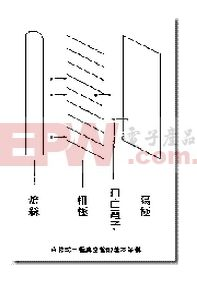
The working principles of the electronic tube
In short, the filament heats the cathode to produce electron clouds, which move down the screen to the polar level at a very high pressure, and also fences between the cathode and the polar level, where the barbed-up voltage controls the amount of electrons flowing to it。
When an electronic tube is removed, it is painted in the attached map and it is known from the following figure that when the light is lit and the temperature of the light rises, albeit in a vacuum state, the temperature of the light is transmitted to the cathode metal plate in a radiation-heated manner, until the temperature of the cathode metal plate reaches the temperature of the electron evaporation. At this point in time, the electron is negative, and with a positive voltage on the screen, the electron is attracted towards the polar metal plate, which forms an electronic stream through the fence. The fence is like a switch, and when the fence is extremely non-powerful, the flow of electrons stabilizes through the pole to the pole, and when a positive voltage is added to the pole, which attracts the electron and enhances the speed and power of the electronic flow; on the other hand, negative voltage is added to the pole, and the principle of homophobic electrons must be bypassed to reach the pole, and the full number of electrons may be blocked if the fence is large。
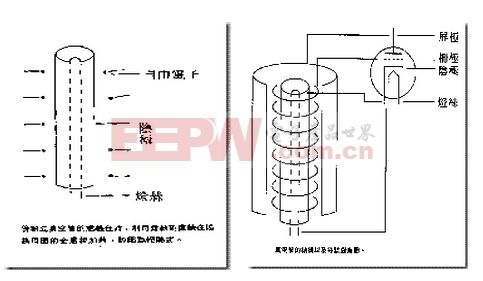
The flow of electronic flows is easily controlled by the use of a fence, which connects the input signals to the poles and adds an appropriate bias and a blockage on the poles, thereby enabling the signal to be amplified. Electronic tubes, like transistors, have many forms of magnification (in fact, transistor amplification takes the form of an extension of the tube) that combines different electronic materials, such as electrical resistance, electrons, transformers and capacitors, to create rapidly changing electronic products。
In the walls of the tube, you can see a thin membrane like mercury. Attached to the glass wall is the design to extend the life of the electronic tube. With the exception of very few low-pressure tubes (not low working voltage, but low-pressure gases inside the tubes), most of the tubes must be vacuumed to function properly. The foot of the electronic pipe is metal and, although sealed with glass, there is still a leak between glass and metal. Metal plating within a glass tube (i. E., an aerobic agent) functions with the gas and exists to absorb the gas in order to maintain the vacuum within the electronic tube. This thin layer of metal oxidizes and becomes white, which means that the electron tube is leaking, so when the electrode is broken, the varnish becomes white, so when the old tubes are purchased, care is to be taken of the varnish, as good as mercury, and when they begin to be pale and stripped, the tube is old。
The difference between the principle of electronics and transistor
Maybe many people think that transistors have a lot better places than electronic tubes. For example, the components of a transistor are unconsumpted, and transistor life is generally 100 to 1,000 times longer than that of an electronic tube. 2 the transistor consumes very few electrons, only one tenth or more of the electron tube. The 3 transistor tubes do not require preheating and work as soon as they are activated. This is not possible for electronic tubes, and it will have to wait a while before they can hear the sound and see the picture. It is clear that transistors are highly advantageous in military, measurement, record-keeping, etc. The 4 transistor tubes are solid, 100 times more reliable than the electron tubes and resistant to shock and vibration, all of which cannot be matched by electron tubes. In addition, transistor tubes are particularly suitable for use as switches。
However, the sound quality of electro-channel power is clearly better than that of transistor power。
Transistorization sounds like high, medium-high frequency (mhf), low frequency (lf) feels less, transistorization sounds harder, especially when the low frequency is not soft enough and the high frequency sounds sharp and dry, and it sometimes sounds like the high frequency section has mutated. These phenomena are even more evident when frequency increases and volume increases. But transistor applications are dynamic and fast, especially for music that is more dynamic. The sound of guns and lightning is certainly better than the electro-channel。
So if you're going to get a family movie theater, then it's best to choose the transistor. But if you like to enjoy pure music (including songs), then choose an electronic tube, which sounds softer and warmer。