Labour values and utility values in product targeting - based on modern enterprise competition
Thesis keywords: objectization; labour value theory; utility value theory; competition paradigm; monopoly
Abstract of the paper: the value of labour is the cornerstone of marxist economics and has an unshakeable and solid standing, and the value of utility is merely indicative of the ratio relationship of exchange. In our economics research, there is a completely negative attitude towards the value of utility. While useful value theory is inherently wrong, it provides some guidance to enterprises in their competition, namely that the main element of enterprise competition is no longer a matter of working time, but rather the value and usefulness of the product, and that consumer valuation of the usefulness of the commodity is the main source of competitiveness in the market. For our enterprises, it is necessary to target products and produce goods whose usefulness is recognized by consumers, for which innovative competition is our only option。
One of the main differences between marxist economics and western economics lies in the different interpretations of commodity prices, which are seen by marxist economics as the expression of value, which is based on value, value, the condensation of labour in general; while mainstream western economics considers prices as the total utility of a commodity as a proportion of the efficiency that a unit currency can buy, the value of a price as a ratio to the usefulness of a commodity, and the effect as a price basis for a commodity. It is argued that the two theories explain the price of goods at different levels, and that the value theory of utility reveals price at the phenomenonal level, while the value theory of labour describes price at its essential level and the value of labour is more profound than the value of utility. Both theories, however, provide some guidance for competition in modern firms, especially when the targeting of products is a prominent feature of commodity production, the issue of effectiveness is even more important for enterprises, which can use these two values to develop appropriate competition strategies in the market。

I. Thesis of labour value and effectiveness
The labour value theory begins with classical economics and ends with marx's capitalism. The founder of classical political economics, william d. Col., first proposed the principle of working time to determine the value of goods, and the pioneer of the agronomy school, agilbeh, put forward the idea of all goods being exchanged at the same price as the amount of work they contained。
Adam smith put forward a more holistic idea of labour values based on his predecessors. First, the smee survey value begins with an exchange of value, stating that: “a person who owns a certain goods but does not want to consume them, but rather to exchange them for other goods, the value of which, for him, is equal to the amount of labour that he can buy or dispose of. Thus, labour is the true measure of the value of all commodity exchanges. Secondly, he exported the true content of the value from the value of the exchange, pointing out the value of the exchange, which was “the real price of any item, i. E. The price actually paid for it, is the hard work and trouble in obtaining it. Third, smee points out the relationship between value and price: “at the same time and in the same place, the true price of everything is in the right proportion to the nominal price. Finally, he observed that market prices were not entirely consistent with values, “market prices for commodities are sometimes higher than their natural prices, sometimes lower than their natural prices, and sometimes identical to their natural prices. It is only that smee does not have a deep-seated study of the specifics of labour creation and the commonality of work and the measurement of the value of goods. In his value theory, li kato pointed out that there were two sources of value for commodities: the scarcity of commodities and the amount of labour needed to obtain them. Here ligatu obscures the concept of value, so it is impossible to explain the essence of value。
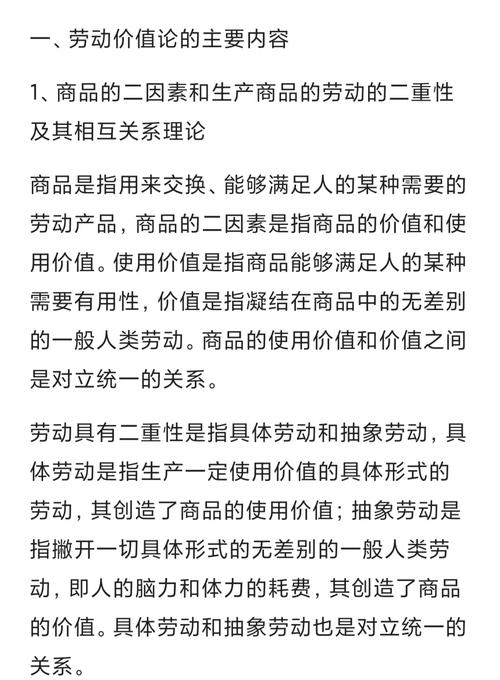
On the basis of a critical reference to the achievements of previous generations, marx systematically and completely addressed the content of the labour values doctrine. In his discussion of the value of labour creation, marx explained the duality of labour as a factor of commodities and the relationship between value use, value exchange and value through a discussion of the duality of goods. Marx points out that there must be a common essence in the exchange of goods of value, which condenses human labour without distinction. “these things are now simply an indication that their production costs human labour and accumulates human labour. These things, as the fruit of a society they share, are values — commodity values. `although there are differences in specific types of labour, their essence is the same and they are abstract human labour without distinction. “all kinds of work are no longer the same, they are all the same human labour, abstract human labour”. :
There is little uniform theory and ideology of utility. The ancient greek thinker serophine first introduced the idea of the theory of utility in his economics. In his view, wealth was useful and it was pointed out that there were two uses of the item: use (i. E. Utility) and exchange. Aristotle, the ancient greek philosopher, offered intuitive measures of value, the underlying causes and nature of value. In his view, the purpose of the “economic” was to obtain something of use, such as the necessities of life that nature provided for human beings; real wealth consisted of such use. Say stressed that effectiveness was the basis and source of the intrinsic value of wealth and that the value of the item was determined by its usefulness. Since value is determined by the usefulness of the item, which in turn is produced by the production of three factors, land, labour and capital, the value is produced together. The effect here is the value of wealth, the objective existence, the use of value。
The term utility has not been consistently interpreted, although it has been drawn to political, economic, legal, moral and other disciplines by scholars who are at the same time with the borderline system. By using the research methods of the natural sciences to explain the profound meaning of utility, it has laid down its place in the framework of economic analysis. The concept of marginal utility is inspired by the independence of leon valla and william evans and carl mengel, respectively. Valla used its usefulness to create a generally balanced economic model. On the basis of the concept of marginal utility, he created the theory of relative price or exchange of value, suggesting a pattern of decreasing marginal utility, thus drawing consumer consumption behaviour into the human economy analysis, giving an accurate account of the important differences between total utility, degree of utility or marginal utility. Menguell describes its relationship to value on the basis of marginal utility and goes on to summarize that all acts producing subjective satisfaction are productive activities, introducing a subjective value theory that the determining factor in the value of goods is neither the amount of labour or other necessary means of production, nor the necessary quantity of the elements of the product, but the importance of these satisfactions as we know them. Thus, the subjective value theory, that is, the assessment of utility becomes the value base of goods and the idea of western economics. Marshall's demand code in his local equilibrium analysis — falling prices and more products purchased by consumers — uses utility as an analytical tool to base commodity prices. In later western economics, marshall's idea of balanced analysis was inherited, and the philosophy of utility became the dominant theory of price decisions in western economics。
Analysis of the two theory of value
Philosophically, value is the object's meaning to the subject and the subject's subjective assessment of that meaning to the object, so value is a sphere of relationship. The philosophical value of a commodity is the meaning of the commodity to the human person and its value to the human person. The value of nature is that of the usefulness of nature to human beings, that it is created by nature, that the value of goods is not generated by nature, that it is created by human labour, that it is to make products more responsive to human needs and that it is more responsive to human needs and thus more valuable, and that it is proportional to the volume of work, because the greater the work, the greater the value, the value, the value, of the use, of such goods, of human beings. Thus, the value of labour values is the condensation of human labour, the magnitude of the value of a commodity can be measured by the labour condensed by it, and the value of labour is transformed from philosophical values。
The utility theory has also evolved since its inception, going through three stages of development: from absolute utility values to relative utility values, from subjective utility values to objective utility values, and from base to sequence utility theories. The utility has different connotations over time, which objectively are the value of the use of the commodity, and the utility of the use of the use of the value of the product is that of the satisfaction that the goods bring to consumers. Some scholars believe that the value of use differs from that of effectiveness, that the value of use is objective and that the effectiveness is subjective, but that the usefulness should be both objective and subjective, that is, objectively useful to humanity, that it constitutes a value of use, that it is subjectively useful to different individuals and that it constitutes an evaluation of effectiveness。
In our theoretical research, it is generally considered that the utility theory is entirely wrong and completely rejects it. In essence, utility theory cannot fundamentally explain the basis of prices, but it can interpret prices from a market and human perspective. The utility theory reveals the external causes of the exchange and the proportional relationship, while the labour value theory explains the underlying causes of the exchange。
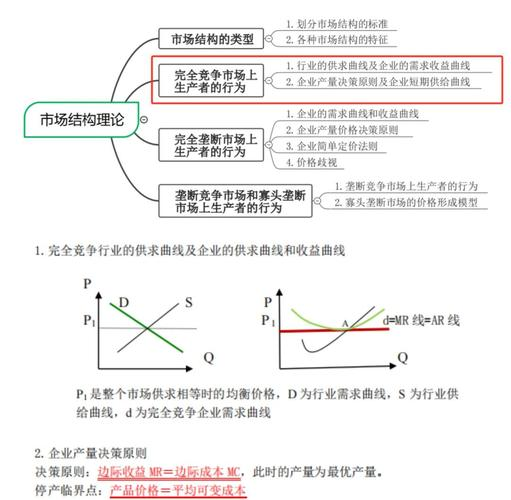
The use of utility as a basis for value is based on the fact that it affects the price of goods in the market, the use of value or the size of the utility determines the price the exchanger is willing to pay, the effect is high and vice versa. The relationship between utility and price can be illustrated in figure 1 below。