Document description: forklift construction and working principles
Forklift construction and working principles
17 december 2010
Forklift construction and working principles
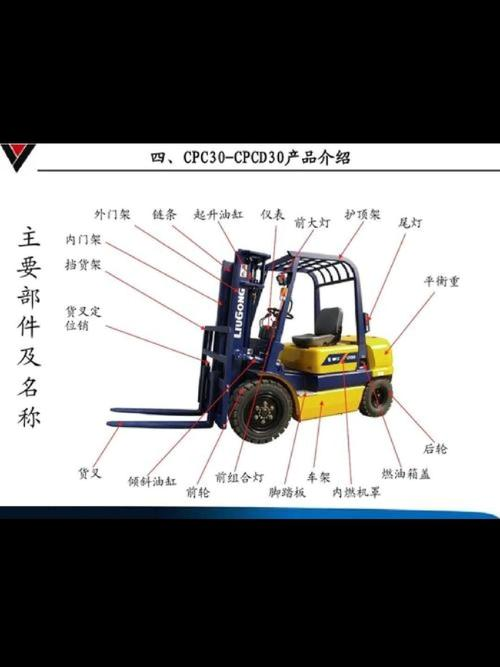
Forklifts are of a wide variety, but whatever type of forklift, they consist essentially of a power component, a chassis, a work component and a major part of electrical equipment. Different types of forklifts were formed as a result of differences in the structure and location of the four main units. Forklifts are the most common form of forklifts, for example. (refer to other types of vehicles below)。
(i) dynamic component
Forklift power units function as a power source for handling cargo and tyre chassis operations for the forklift, generally
The rear of the forklift and the balancing of weights。
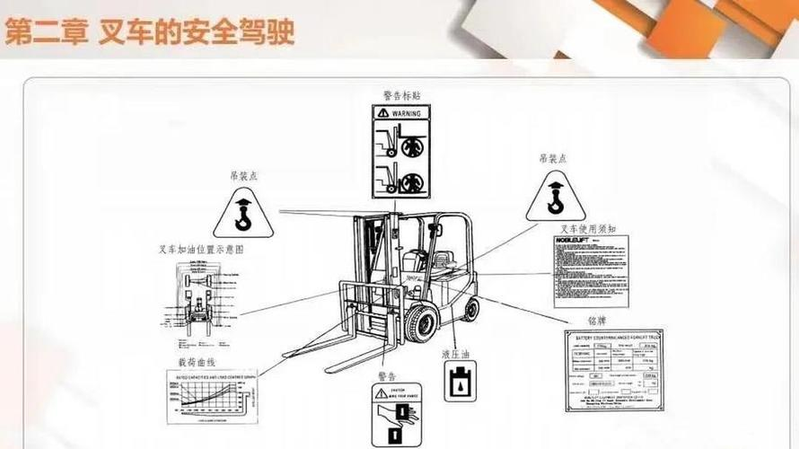
The power unit of the electric forklift, which is a battery storage and direct-flow string motor, has the closest driving properties to the requirements of the constant power soft properties and is better towed than the internal combustion engine. In addition, operations are smooth, air-free, easy to repair and simple to manipulate; operating costs are lower and the vehicle is used for a longer period. Shortcomings are the need for charging equipment, high basic investment and longer recharge times (see table 2). General 7-8h, quick charge 2-3h) with short continuous working hours after a charge, and high demand on the surface of the road due to the fear of shock vibration by the battery. Owing to battery capacity limitations, electric motor power is low and speed and ramp capacity is low. Thus, battery-driven forklifts driven by an electric battery are used mainly in warehouses and workshops where the corridor is narrower, the removal distance is not long, the surface is good, the weight is smaller and the speed of the vehicle is not too fast. Forklifts can only be used in flammable stores or where air is required to be clean. The internal combustion engine in the refrigerated warehouse had difficulty starting. Forklifts with batteries should also be used。
The mechanical characteristics of the internal combustion engine do not meet the requirements for the constant power softness of the original motor of the forklift, and its output power increases with the speed of rotation. Therefore, the internal combustion engine must be equipped with an increased output rectangular mechanical transformer, liquid rectifier or hydraulic transfer device before it can be used. The main advantages of an internal combustion forklift and a battery forklift, in contrast, are that they do not require charging equipment, that they are long-duration, have a high capacity to climb the slopes, have low requirements to the road and have low basic investment. An ideal enabling performance can be achieved if the right mode of movement is used. Shortcomings include noise and vibration during operation, exhaust gas, high number of overhauls, higher operating costs and a shorter life span for the vehicle. Therefore, when the primary mass is generally above the medium tonnage, preference should be given to the use of internal combustion forklifts。
Forklifts with internal combustion are the most common, with diesel engines being used forklifts of more than 3 t starting. This is due to the low consumption of diesel fuel. But diesel engines are heavy, noise and vibration. Forklifts with smaller weights, which are small in size and light in weight but are fuel-intensive, are expensive, have more harmful components in the exhaust gas and are prone to fire. There are also forklifts abroad that use liquefied petroleum gas engines, with low fuel prices and lower emissions。
In recent years, domestic and international forklifts have increasingly used liquid petroleum gas machines as power units, mostly dual fuel forklifts cars, whose power installations can be fueled by gasoline or diesel or by liquefied petroleum gas. Germany has an annual growth rate of 160 per cent forklifts using liquid petroleum gas, and the united states and japan are increasing. There is a growing opposition to vehicle tail gas pollution. Thus, in industrial vehicles driven by internal combustion engines, including forklifts, the use of liquid petroleum gas machines has become more widespread. This is because the use of liquid petroleum gas machines not only avoids air pollution, reduces public hazards, but also reduces engine wear. Extension of engine life. It could also reduce fuel costs。
(ii) cylinder
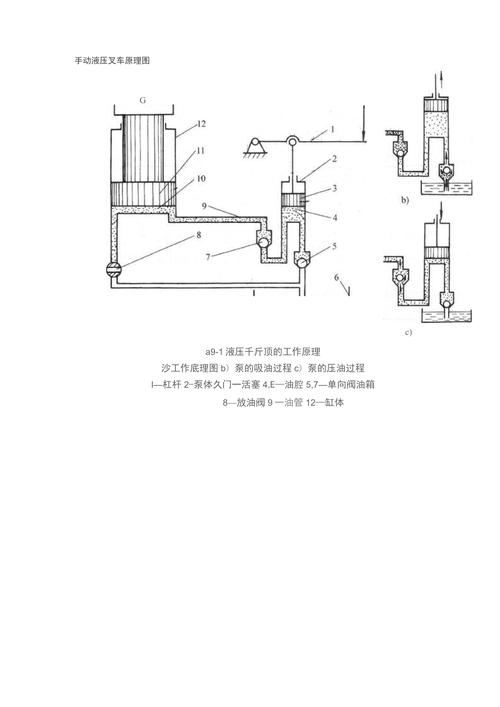
The chassis accepts the power of the power unit, gives the forklift power and guarantees its normal movement. It consists of a kinetic system, a drive system, a shift system, a brake system。
The transmission system is a device for receiving power and passing it to the driving system。
(a) mechanical transmission systems consisting of frictions, gear transformers, all-way transmission devices and primary transmission devices and differentials installed within the drive bridge; the liquid mechanical transfer system replaces the friction clutch with a liquid rectangular, the rest of which is the same as the former。
The driving system is a device to ensure that the forklift is rolling and supports the whole forklift. It consists of slabs, bridges, wheels and hangers; the front bridge of the forklift is a drive bridge, which is intended to increase the front axle of the bridge when it is loaded and moved,