On the evening of 8 april, the commercial film office organized a manual rain surge operation at 32 person-stations in seven districts, which resulted in a cumulative number of 1237 live ammunitions and 203 rockets. With the combined effect of natural and artificial rainfall, the city has been reduced to medium rainfall, with heavy rainfall, with the largest rainfall occurring in the town of zhongbing village (33. 7 mm) in the commercial district, with a significant success in artificial rainfall。
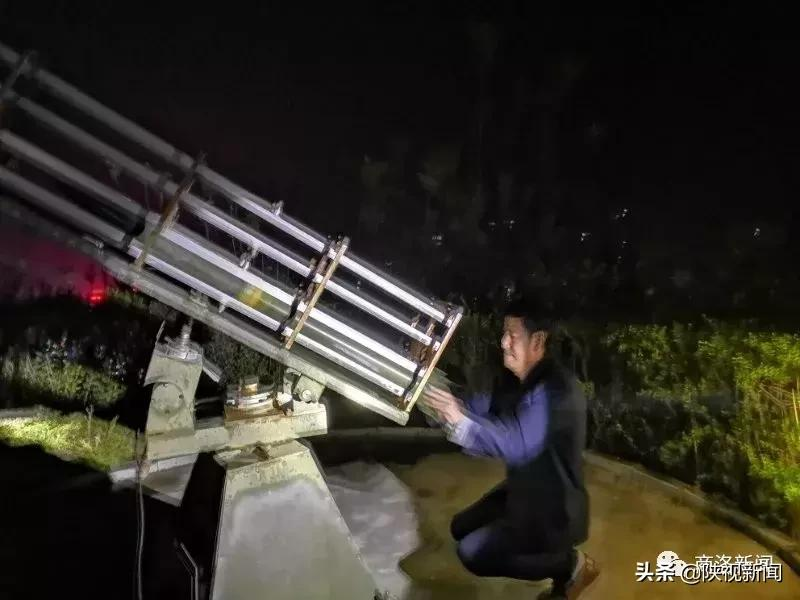
After the operation, the town automatic weather monitoring stations monitored 51 stations with rainfall greater than 10 mm, 6 stations with rainfall greater than 20 mm and 2 stations with rainfall greater than 30 mm, with the maximum precipitation being the town of zhongbing village in shahejo, commercial district (33. 7 mm)。
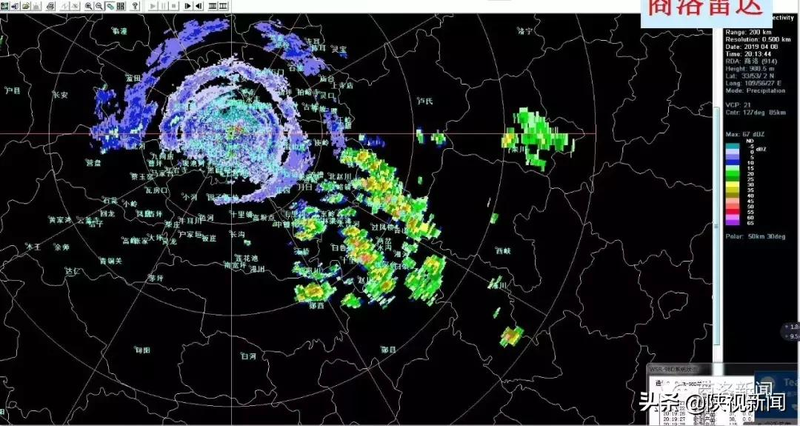
Since march, it has been known that the city has suffered from low rainfall, which, together with the current upturn in temperature and the high light, has resulted in more rapid soil loss across the city. Most of the agricultural land in the city is currently experiencing moderate drought, forest fire risk levels have risen to level 5 (extremely dangerous) and, in recent times, high temperatures, high winds and high forest fire risk levels。
On 8 april, at 0800 hours, the city people's office issued a circular requiring the districts to prepare for operations ahead of time, to monitor weather changes closely, and to perform manual rain surge operations at night. On 8 april, between 2000 and 0700 hours, the city's entire population received low to medium rains and heavy rainfall, which were beneficial for reducing the level of forest fire risk, mitigating the current drought and cleaning the air。
Weather forecasts for the next few days
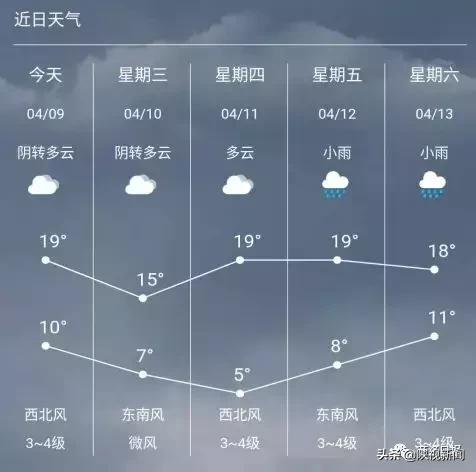
The weather is changing. Watch out
Kopp's little knowledge
Artificial rainfall is the selection of the right time, depending on the physical properties of the different clouds, to sow dry ice, silver iodide, salt powder, etc., with aircraft and rockets into the clouds, so as to bring down or increase precipitation in the clouds, so as to relieve or mitigate the drought of agricultural land, increase reservoir irrigation or water capacity, or increase the amount of electricity generated. Let's look at the principles and methods of artificial rainfall
Artificial rainfall principle
Artificial rainfall uses cloud and precipitation physics to increase cloud droplets or crystals to a certain extent, landing on the ground and creating precipitation by sowing rainfall agents (salt powder, dry ice or silver iodization, etc.) into the cloud. Simply put, it is by artificial intervention that the droplets condensate into rain, which is the principle of artificial rainfall, which in essence complements the necessary conditions for rainfall in nature。
Artificial rain conditions
There are two conditions for the formation of precipitation: the need for sufficient water vapour in the clouds and the need for adequate condensation of nodules. Thus, the method of artificial rainfall is to introduce artificial condensed nodules into the clouds. Catalysts are generally sent into the clouds by aircraft, rockets, artillery, balloons and ground-burning silver iodide in high-flow areas. The use of humid substances such as salt powder, urea, calcium chloride, etc., in warm clouds at zero temperatures translates water vapours into heavy droplets of rain. For cold clouds with temperatures below zero, such as artificial crystal iodized silver or dry ice, liquid nitrogen, etc., increase the number of crystals in cold clouds and increase precipitation efficiency。
Artificial rainfall methods
Artificial rainfall is generally carried into the clouds by means of aircraft, rockets, artillery, balloons and ground burning of silver iodide in high-flow areas. The aircraft generally flew up to about 6,000 metres in the clouds to sow catalysts. Rockets and cannons directly shell the right part of the mine cloud, with warheads loaded with silver iodide into the cloud. The balloon is equipped with silver iodized flares, which rise into the cloud and burn above zero degrees, releasing the catalyst。