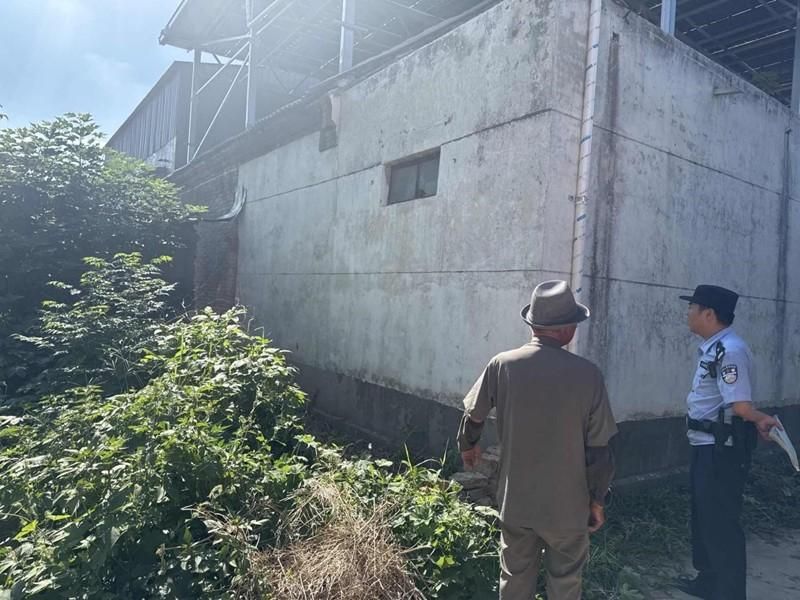
There's a lot of internet connections
This artificial rain didn't hit except at high temperatures
Everything's down
So about artificial rainfall
How much do you know
01
Artificial rainfall principles
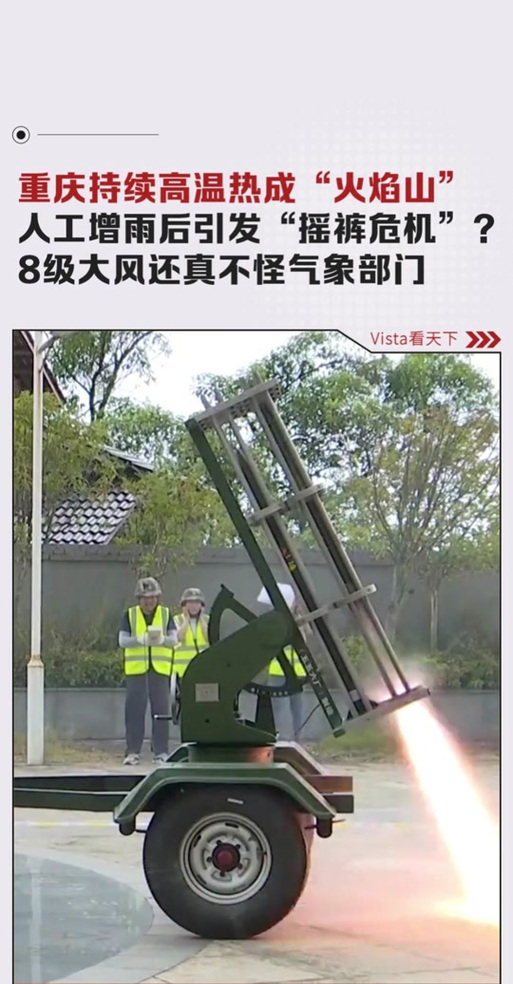
Artificial rainfall, also known as artificial rainfall. The selection of the right time is based on the physical characteristics of the different clouds (the thickness of the clouds, their height, the amount of water and gas content in the clouds, temperature, etc.), with the use of aircraft, rockets, etc., to sow into the clouds a catalyst such as dry ice, silver iodide, salt powder, etc., and to induce cloud precipitation or increase precipitation。
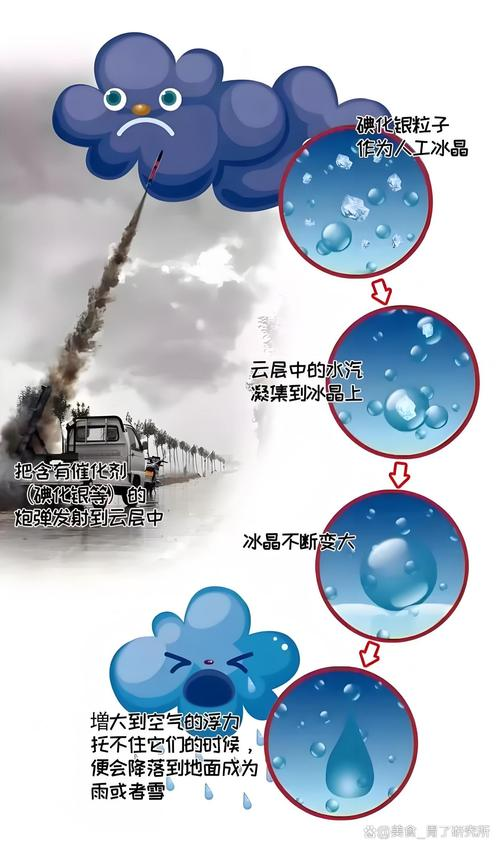
Artificial rainfall is divided into warm clouds and cold clouds。
1. In order for the warm cloud (the cloud at temperatures above 0°c) to be precipitation or increasing the rain, it is necessary to sow humid particles such as salt powder, urea, etc. In the cloud, so that the warm cloud receives a portion of the large droplets, which are activated by gravitational impact and (crash and amalgamation processes caused by gravity). This undermines the stability of the warm clouds and leads to the coexistence of large and small droplets, which can produce precipitation by touching and increasing the process (with the indication that clouds will collide with each other as a result of the combination of atmospheric rises, drops and turbulence)。
2. For cold clouds (e. G. Clouds with temperatures below 0°c) to be precipitation, such catalysts as dry ice, silver iodization, etc., are to be soaked by aircraft, thus producing large quantities of crystals in natural clouds (solid hydrates formed by the growth of water vapour condensing on ice cores), increasing the density of ice crystals above cold clouds, causing or increasing precipitation。
Note: the formation of clouds - clouds are small droplets of water vapours in the atmosphere that are quenched or condensed with small crystals of ice, a mixture of visible polymers floating in the air。
02
Artificial rainfall
What are the conditions
1. Water vapour conditions
Artificial rainfall naturally requires water and a cloud rich in water vapour at a certain altitude. Artificial precipitation methods usually work when natural clouds are already precipitation or close to precipitation。
2. Rise
This condition is equivalent to a processing process, since the uplifting movement produces precipitation only when it brings water vapour to high altitude condensate and forms a cloud (water vapour rises and cools after heat, resulting in partial saturation, which is what we see)。
3. Gravity temperature
To allow water condensation in the clouds to rain down, artificial rainfall uses dry ice to bring in large amounts of heat at short notice and lower ambient temperatures to cause clouds to rain。
4. Condensed nodules
(describes solid, liquid and gaseous aerosol particles that are central to the condensation process) because the condensation of water vapour requires a body attached to it, which cannot be effectively condensed without the condensed nodules。
5. Sufficient crystals
Because the water drops in the clouds are small enough to stay in the air for long periods of time, if there are enough crystals in this cloud in nature, there are only clouds without rain. By sowing silver iodized particles into this cloud, many crystals can be created, and the water in the water drops in the cloud evaporates and condenses quickly on these artificial crystals, which quickly grow up to produce snowfall, if the temperature on the ground is higher, the edges melt and collide into droplets and eventually rain。
It is generally accepted that scientific tests of artificial precipitation must be conducted over a long period of time, strictly in accordance with the intended design, in accordance with statistical requirements, together with detailed field detection and numerical simulation of natural precipitation and artificial catalytic processes, in order to give the experiment a more solid physical basis and statistical credibility。
03
Artificial rainfall catalysts
Dry ice - dry ice is the condensation of carbon dioxide. The dry ice temperature is negative 78. 5 degrees celsius and is therefore very useful in maintaining the object at freezing or low temperatures. Dry ice can freeze objects at short speed and reduce temperature. Dry ice is converted directly from a solid state to a gaseous state at a time of warming, and the process of conversion to a liquid state is omitted and is therefore referred to as “dry ice”。
It helps to catalyse the process of rainfall: when dry ice is spilled on the clouds by aircraft, small droplets in the clouds are frozen into many tiny crystals, prompting more water vapour to condensate on them, to rain droplets and to land on the ground。
Silver iodization - i. E., iodine and silver compounds, yellow powder, light decomposition, and large amounts of heat inhaled, which becomes ash and dark, and is not soluble in water and ammonia。
It can also help to catalyse the process of rainfall: silver iodization forms silver and iodine monotons at high altitude and forms artificial ice cores, which condensate through water and form ice crystals, which develop to a certain extent through the drop of zero layers (the zero layer refers to the atmosphere at 0°c) and then melt into raindrops。