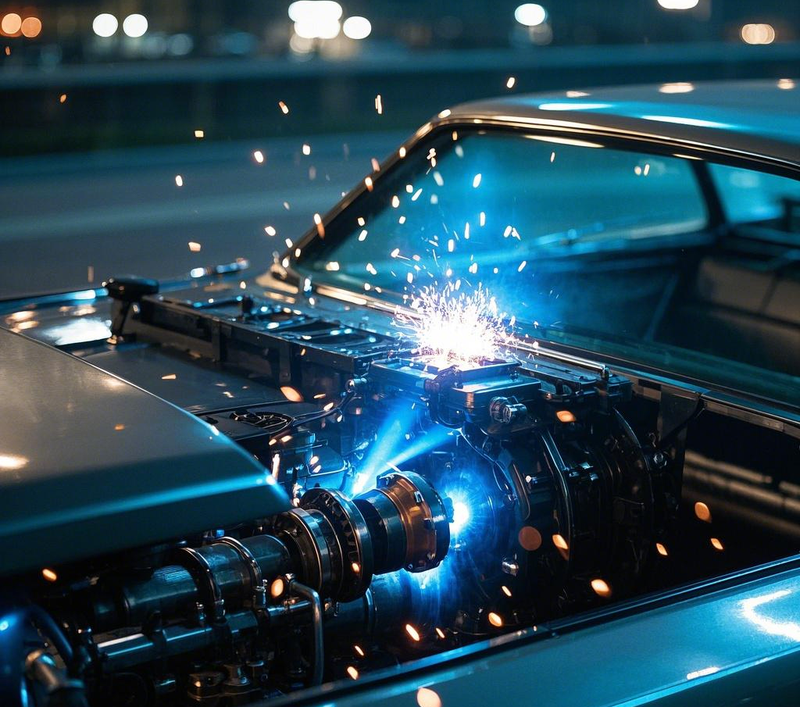
In the complex mechanical systems of cars, engines are like a powerful “heart” that constantly provides forward power to vehicles. A better understanding of the mechanics of motors would enable us to better understand the operating mechanisms of the vehicles, as well as their maintenance and maintenance. Currently, internal combustion engines are widely used in cars, followed by an in-depth analysis of their working principles, mainly using common four-string gasoline engines。
The process of four-stroke petrol engines consists of a full work cycle consisting mainly of four impulses, namely, gas, compression, utilisation and exhaust。
The inflow is the beginning of the engine. In the process, the piston is driven by a curved axis and moves from top to bottom. At this point, the infusion door opens and the exhaust door closes. As the pistons went down, negative pressure was formed inside the cylinder, and the external air was mixed with the petrol from the oil dispenser, which was then inhaled. It's like human inhaling, providing the necessary "fuel" and "oxygen" for subsequent combustion。
And then there's compression. Pistols move from point down to point upwards, and the entry and vent doors are closed. Combination gas in the cylinders is gradually compressed, the volume is decreasing and pressure and temperature continue to rise. This process has created conditions for the efficient combustion of mixed gases, like the accumulation of energy for the “small universe” that is about to erupt。
When the piston movement reaches the upper end point, the process begins. The spark plugs generate electric sparks and ignite compressed hybrid gases. Combination gas is fast-combusted, generating high-temperature, high-pressure gases that drive the piston to stop from its top stop point down, rotate through a collage-led axis and export mechanical energy externally. This is a key step in converting chemical energy into mechanical energy and is a direct source of power for vehicles, like the release of energy from humans to drive physical action。
After doing it, you're in the vent. The piston once again stopped moving from point to point, at which point the entry door closed and the exhaust door opened. The combustion exhaust is driven by pistons and drains through the vent door to prepare for the next cycle. It's like the human exhales out of the body's "gas."。
Throughout the cycle, the various parts of the engine work together and work closely together. For example, the arcs are responsible for converting the piston's straight-line movement into a rotational one, which provides power to the vehicle's transmission system; the cam axis is precise in the timing of air intake, compression, performance and venting by controlling the opening and closing of the gas door; and the work of the jets and spark plugs directly affects the formation and combustion effects of the hybrid gas。
In addition to the four-stroke petrol engines, there are four-string diesel engines. It works in a similar way to petrol engines, but differs in the way fuel is sprayed and ignited. Diesel engines use pressure-fired ignition, i. E. By compressing the air to increase the temperature and reach the self-fired point of diesel, thereby lighting diesel without spark plugs。
Automobile engines, though complex, are full of science and wisdom. It efficiently converts fuel chemistry into mechanical energy through sophisticated design and sophisticated mechanical operations, providing continuous power for vehicle movements. An understanding of how the engine works will not only provide us with a deeper understanding of the operation of this modern vehicle, but also help us to better maintain and maintain the vehicle in our daily use, ensure that the engine remains in good working condition and provides escorts for each trip。