Energy: a measure of material motion. There are various forms of energy that correspond to the movement of the substance, which can be converted to each other, but the totals remain unchanged. Thermal energy refers primarily to thermal energy and mechanical energy converted from thermal energy. The engine of our cars is precisely that which transforms the chemical energy contained in fossil fuels into mechanical energy, thus driving cars。
There are a lot of four-string engines, and we've classified them in two categories: the gas and gasoline engines with the otto circulation, the diesel engines with the diesel circulation. Modern gas engines are essentially the same as petrol engines, and direct gas jets in a tank, although structurally modified, remain within the otto cycle. For ease of interpretation, these are referred to below as petrol and diesel。
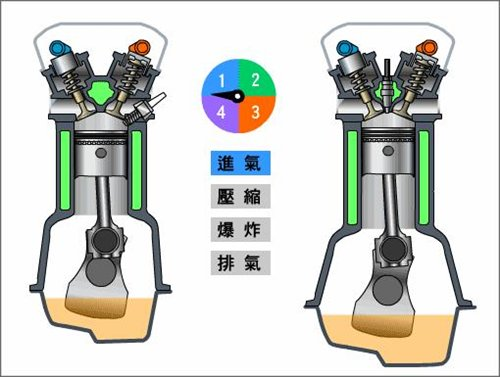
When it comes to engines, many readers say: the four-string engines are inhaled, compressed, functional and exhausting. The petroler inhales the mixed gas, then compresses to the upper point, the spark plug fires the mixed gas, the burner works to push the piston down to the lower point and then discharges the exhaust gas upwards; the difference is to inhal the pure air, where the diesel burns the diesel into the compressed hot air at the upper point。
But have we ever wondered why the gas should have spark plugs? Why can't diesel jets spray gasoline? Why are diesel engines more powerful and less fuel-efficient but less smooth? Well, in this paper, the writer interprets the working principles of the gas and diesel engines in contrast。
On the surface, there is a difference between the two heat machines in the form of gas and fuel combustion, and although it appears to be burning oil and power, it is what happens at the top of the piston, burning in a few milliseconds, which gives the two machines different characteristics. That's the difference between the otto cycle and the diesel cycle, often mentioned by the editor。
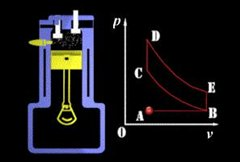
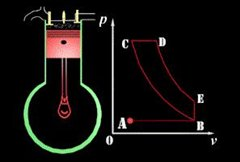
Two cycles and corresponding p-v diagrams. Otto on the left, diesel on the right
Work program for two cycles
Let's start with the otto cycle on the left. As shown in the chart above, p represents internal pressure, v represents the volume of the contents of the tank, a-b vents, pistons down to the gas, at which point the pressure of the gas remains almost unchanged; b-c insulation compression, pistons up-scrambling, increasing the pressure of the gas, at which time the pistol acts on the gas and consumes mechanical energy, increasing the internal energy of the gas (higher temperature); c-d-combustion processes, sudden combustion of the gas, pressure surges, which can not change at any moment, so it can be seen as a change in the capacity, d-e insulations, gas insulation increases, pushes the pressure downwards, while consuming its own internal energy is converted into mechanical, gradually decreasing; e-b-company exhausting processes, at the end of the process, the exhaust valves are open and the gas pressure is suddenly reduced and not changing; and b-a-a-coping, the pressure continues as a result of inertialical activity, while the pressure is maintained。
And c-d-e, as an equal-pressure diesel cycle, does its work. The first phase of c-d is equivalent to the combustion process, diesel fuel is burning, piston pressure constants and increases in volume under a certain pressure, fuel burns while pushing the piston to work, and d-e works on heat insulation. Idem. Of course, the p-v curve in the figure is an ideal state, with some variations in actual performance, while the high-speed diesel machine used as a vehicle is in between two cycles, with two stages of combustion, the first half of which is equivalent to burning, and the second half of which is equivalent to burning, satisfying the characteristics of the high-turn speed and also following the classic diesel engine。
You know what? Diesel fuel is actually easier to ignite than gasoline
The reason for the long-term coexistence of the petrol and diesel engines is the presence of two types of fuel, petrol and diesel, and thus the existence of two internal combustion engines that allow different fuels to fully characterize. It seems like bullshit, but it also confirms that the phrase “justifiably exists”。
Both gasoline and diesel are composed of hydrocarbons consisting of both carbon and hydrogen elements. Petrol consists of hydrocarbons of 5-9 carbon molecules, while the number of carbon atoms of hydrocarbons that make up diesel is 10-20. Because it is smaller than diesel, gasoline is more volatile and burn faster, but diesel fuel in long-chain structures is more likely to be oxidized, so diesel self-burning points are lower than gasoline。
Diesel is easier to ignite than gasoline? Looks hard to understand, but it's true. We compare hydrocarbons to wood, so gasoline is like wood crumbs that can be blown out into the air slowly, while diesel is like toothpicks, which can be thrown into free-fall sports; wood crumbs are hard to light, but toothpicks are easy to light; but they are thrown into a fire, and they can be burned for at least a few seconds。

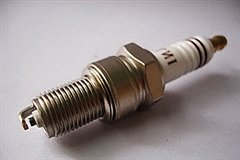
The two engines are not simply the difference between pressing and ignition. This is just the beginning
Because of these differences, the two engines are different and different
Gasoline volatilization is faster than diesel fuel, so gasoline can be blended into the cylinders in a gas-inhaling mode, while diesel fuel is not volatile and does not easily form a mixture, so it can only be injected directly into the cylinder before the start of the operation。
The self-burning point of diesel fuel is lower than that of gasoline, so that diesel fuel can be self-fired in high-temperature, high-pressure cylinders; and if the gasoline presses, higher pressure is required to get higher temperatures to ignite, but because gasoline is volatile and absorbs a large amount of heat when volatilized, this again increases the difficulty of flaming, so it is the most appropriate way to fire with spark plugs。
Gasoline is burning faster than diesel fuel, so it is too strong in high-temperature and high-pressure environments, so the body cannot stand the pyrotechnic temper, so it lowers the pressure of the cylinders, which, when lit with sparks, spreads fire in the form of “waves”, thus avoiding the impact of blasting; and diesel fuel, in high-temperature and high-pressure air, functions in multiple ways to form flames, i. E. In the form of blasting (like the “shocks” of the gasoline), in a harsh working state, but, because of the slowness of diesel combustion, the combustion starts intensely, it lasts longer than the gasoline。
Extraterrestrials: this is not an alternative
The petrol engine alters the opening of the gas-saving doors through the oil pedal to control the amount of mixed gas entering the cylinder to achieve different power output; and the total reliance of the diesel-controlled power output on the oil spray is a true oil-spill, with the removal of the gas-saving door, which allows the engine to enter more gas and burn more, which is one of the reasons for the higher heat efficiency of diesel。
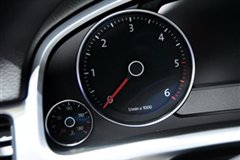
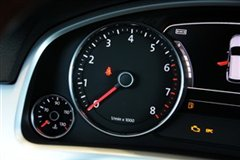
The same goes for 2011 with a maximum of 6,000 turns on the left diesel, which is almost impossible to reach
And on the right, 6,000 turns is just the beginning of the red line
Analysis of the merits of petrol and diesel
When the gas mixed in a gasoline machine is lit, it burns instantaneously and erupts with energy, so that the cycle can be repeated many times in unit time, producing high power at high rotation speed, so that small size, light weight, can have higher performances and faster response speeds, and a broad shift zone can also give a better sense of manipulation. However, the compression of petrol machines tends to be half as much as that of diesel engines, and the temperature and pressure in the cylinders are much lower than that of diesel engines at the time of the journey, so that the heat is less efficient, commonly known as “cost oil”。
The combustion of diesel engines takes some time after they are injected into the fuel, so it is appropriate to burn the fuel sufficiently at a lower rate to bring about a big twist, and in order to counter the high pressure and a big twist in the tank, parts such as the cylinders and pistons of diesel engines are stronger than the gasoline machine and therefore heavier than the gasoline machine. But it is also diesel engines that have a better heat efficiency, i. E., a better fuel consumption, because of their high-pressure than low-rotation properties, which translates heat better into kinetic energy. This is why cars and racing cars usually use petrol machines, while large vehicles such as buses and trucks use diesel machines。
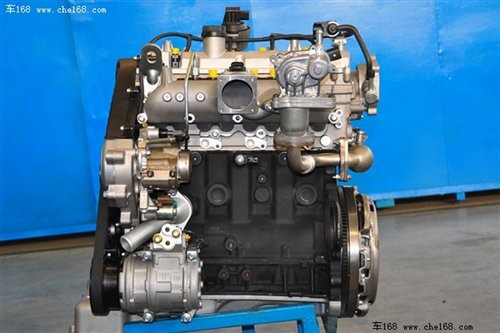
In order to adapt to diesel technology, the domestic car diesel tank is also made of heavy cast iron
Status of diesel engines
With the development of technology, diesel engines have improved considerably in their smoothing and volume, reducing engine weight by means of an intensive aluminium-cylinder manufacturing process; waste gas reprocessing and particulate recovery have effectively reduced tail gas pollution; fuel high-pressure co-orbiting and lower compression ratios (as opposed to conventional diesel engines) have effectively inhibited noise; the application of balance axes has improved smoothing; vgt and meso-coolers have improved engine power, and many excellent designs have gradually been equipped to use vehicles (click in: high-efficiency, strong environmental protection, shallow analysis using car diesel machines), allowing diesel machines to have the capital to compete with petrol machines, while their low carbon emissions and excellent low-speed swings have been accepted by many or even sedans。
In europe, the share of diesel cars in passenger cars has reached 40 per cent, while domestic diesel engines are mainly associated with the suv model, and recently, nationally owned diesel cars have been listed. However, the current quality of diesel fuel in the country is not good enough, resulting in low priority for diesel engines in the country. The main problems are the lack of high hexadecane values (bad combustion), excessive sulphur content (increased tail gas contamination of damaged engine parts), excessive polycyclic aromatic hydrocarbons (i. E., too much impurity, bad combustion, and cocalated carbon), etc. If the quality of chinese diesel can be improved, it is believed that, in the face of soaring oil prices and a deteriorating environment, the country will gradually accept diesel vehicles。
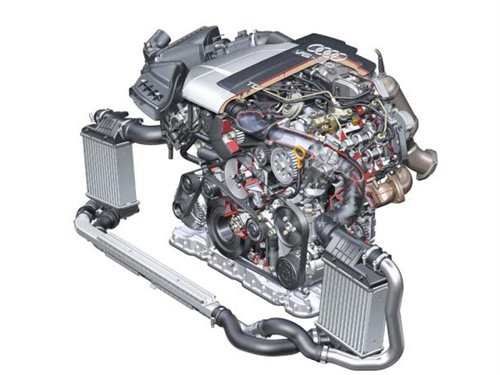
A 3. 0t turbo boost shared by the public audi
It's a little less power than a petrol machine, but it's a much stronger twist
Speaking of which, this paper is almost finished. However, after reading the first article, many students were interested in a picture of the ad at the end of "diesel", so that the editor could put another original picture on the table。
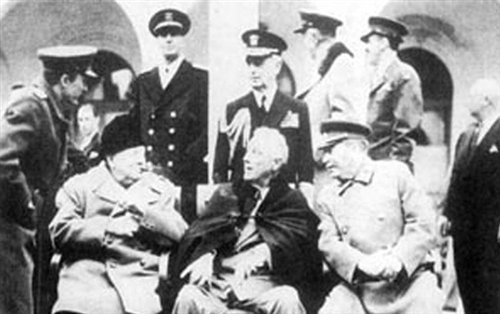
These three old men are the famous wwii triads of churchill, roosevelt, stalin