Basic steps in database design
The life of the database design
The design of the database is divided into six phases, taking into account the entire process of the development of the database and its application systems, in accordance with the standardized design methodology. See figure below。
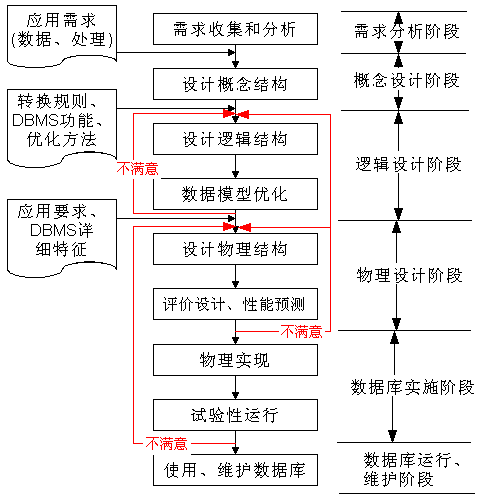
1 needs analysis
Demand collection and analysis, data demand as described in the data dictionary, and processing demand as described in the data flow map。
2. Conceptual structure
A conceptual model independent of specific dbms (expressed in e-r maps) is developed to synthesize, summarize and abstract demand。
3 logical structure design
Converting the conceptual structure to a data model (e. G. Relationship model) supported by a dbms and optimizing it。
Physical structure design
Select a physical structure (including storage structures and access methods) that is best suited to the application of the environment for the logical data model。
5 database implementation
Using dbms data languages (e. G. Sql) and their host languages (e. G. C), creating databases based on the results of logical and physical designs, developing and debugging applications, organizing data repositories and conducting test operations。
6 database operation and maintenance
The database application system will become operational on a trial basis. The database system must be continuously evaluated, adjusted and modified during its operation。
Note: it is impossible to design a well-developed database application system, which is often repeated over and over again in the six phases mentioned above。
Content of the design phase of the database
The design steps are both a database design process and a database application design process. The following is a description of the design of the phases for their content. See figure below。
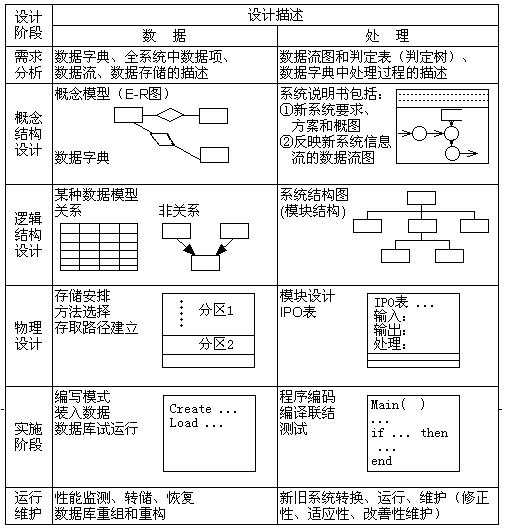
Modalities for the design phase of the database
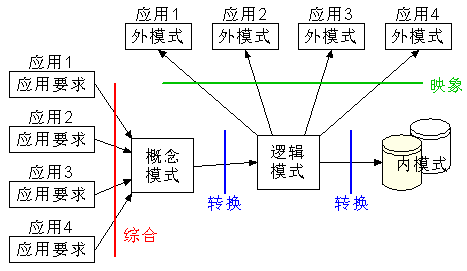
The different stages of the design of the database structure form the hierarchy of the database, as illustrated below。
(a) demand analysis phase: integration of application needs of individual users
Concept design phase: to develop a conceptual model independent of the mechanical characteristics and independent of the various dbms products, i. E. E-r maps
Logical design phase: convert e-r maps into data models supported by specific database products, such as relationship models, to form a database logic model; then build the necessary view on the basis of the basic table, based on user processing requirements, security considerations
Physical design phase: physical storage arrangements, indexing and modelling within the database according to dbms characteristics and processing requirements。