Waterproof construction methods for double rolls in basement 01
The waterproofing method
Waterproofing of the floor is an essential part of the waterproofing work in the basement. In order to ensure waterproofness, construction is usually carried out using “empty or sticky” to avoid damage to the waterproof layer caused by the cracks in the mattress. This method of construction can effectively reduce the impact of “fissile reflection”, thereby improving the water durability and reliability of the floor。
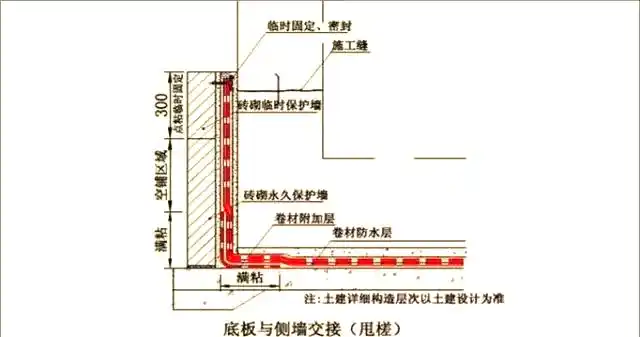
In the waterproofing work on the floor, particular attention needs to be paid to the processing of the corner, the flat interface and the turning points. In order to enhance the waterproofness of these areas, additional layers of scrolls are set up. At the same time, at the interface between the floor rolls and the brick-laying permanent protection wall, the construction is carried out in an oily manner to ensure that the scrolls are closely linked to the wall. On the other hand, in the temporary protection of the wall, the volumes were temporarily fixed through sticky points to allow for the smooth conduct of subsequent construction。
The construction method on the side wall
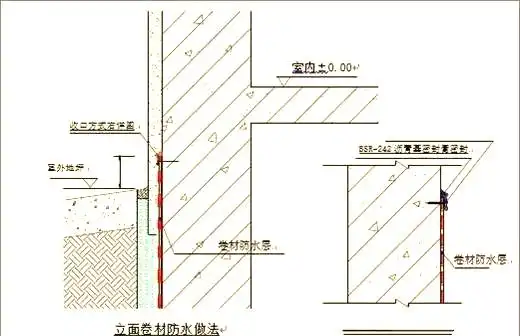
The treatment of side walls during the waterproofing of the floor is also an essential aspect. To ensure the waterproofness of the interface, a dedicated construction method is required. As a general rule, side-wall bumps will be carried out using a roll-up approach to ensure that they are closely connected, thereby effectively preventing water infiltration. At the same time, care will need to be taken during the construction process to keep the interface clean and dry to ensure that the rolls are firmly attached to the side wall to achieve the desired waterproofness。
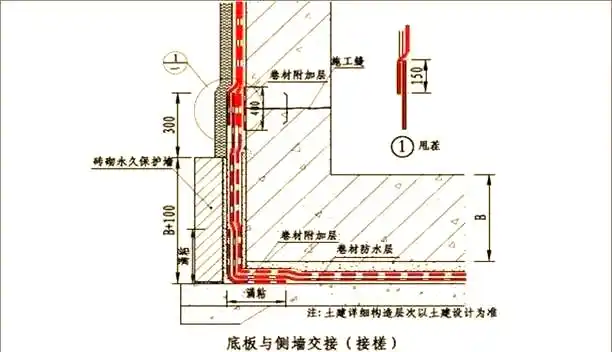
During the construction of the side wall, bricks will be used for temporary fixation in order to ensure stability in the bearings of the rolls. This fixed approach is intended to facilitate subsequent wall construction to ensure security during the construction process. Upon completion of the construction of the wall, these interim protective measures will be removed in order to facilitate smooth docking with the sheeting. In addition, in order to ensure that the width of the ripples is sufficient, it should not be less than 150 mm, and flexible protection measures for the opposite wall scrolls are recommended to ensure their waterproofness and effectiveness。
The method of construction of the post-heap belt
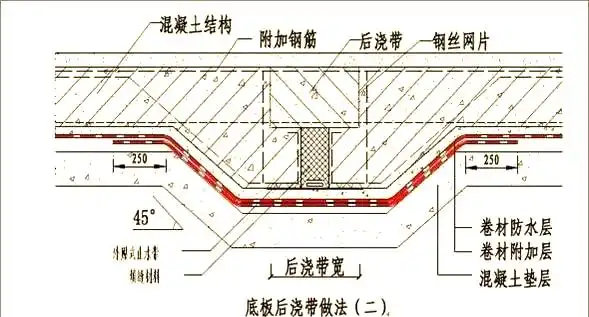
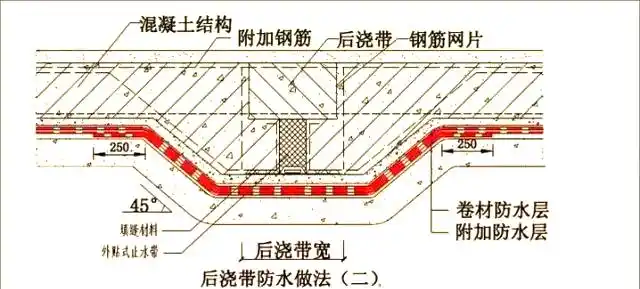
During the construction of the side wall, the rear belt is a key link. Its construction methods directly affected the stability of the entire volume intake. As a rule, the latter is carried out in a phased manner to ensure its accuracy and waterproofness。
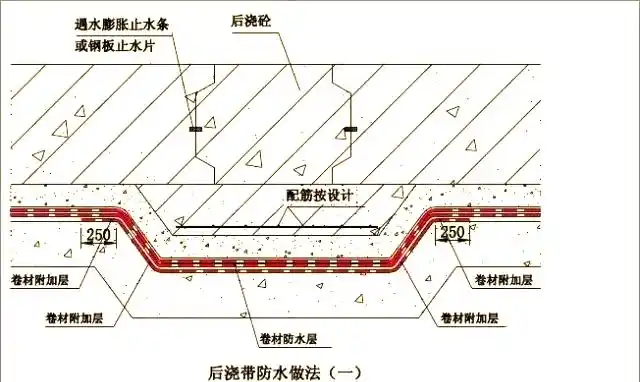
At the same time, care needs to be taken during the construction process to control the speed and quantity of construction so as not to affect the quality of the belts as a result of inappropriate operations. In the position of the rear draught, an additional layer with the same material on the larger side would be required as an additional enhanced layer。
Elevator wells and waterproofing methods for catchment pits
Particular attention needs to be paid to the details of elevator wells and waterproofing of water collection pits. First, it is important to ensure proper grass-roots processing in these regions to ensure that the scrolls are firmly glued to the grass-roots level. Second, special attention should be paid to the interface with adjacent regions when laying volumes to ensure the continuity and integrity of water defences。
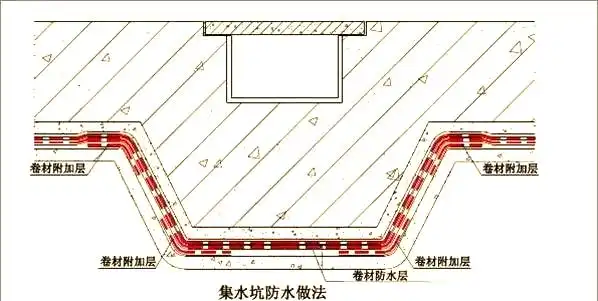
In addition, appropriate waterproofing materials and construction methods will have to be selected on a case-by-case basis to ensure that the waterproofing of elevator wells and catchment pits meets design requirements. At the turn-off point of the escalator well and the cistern angle of the catchment pit, additional volumes of the same materials as the large surface would need to be added as an additional enhancement layer not less than 500 mm in width to ensure a significant increase in water resistance in these critical areas。
The way the outer wall rolls
At the turning point between the escalator well and the luminous angle of the catchment pit, we must not only add additional reinforced layers, but also pay special attention to the handling of the outer wall rolls. This is one of the key elements in ensuring water protection。
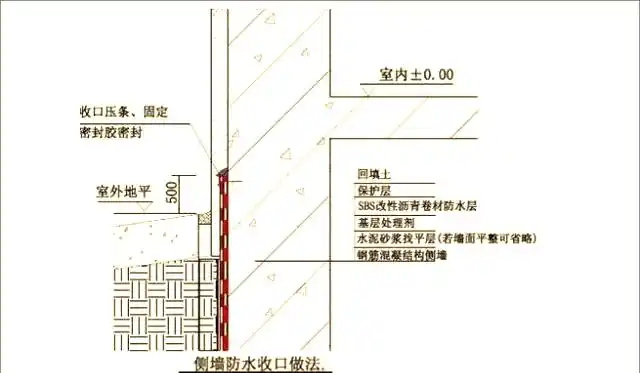
The processing of walled rolls is essential, and it involves the safety and durability of water protection systems. In practice, we usually use stationary pressure and nail fixation techniques, backed by asphalt-based seals to ensure the closeness of the intake. In addition, a reasonable location is essential, and this project proposes to place the side wall gate at 500 mm above the floor, which would ensure waterproofness and extend the life of the waterproofing system。
Waterproofing through walls
Waterproofing through the walls is essential during the construction process. We have introduced dedicated waterproof tubes and sealed materials to ensure that effective waterproof barriers can be built around the walls。
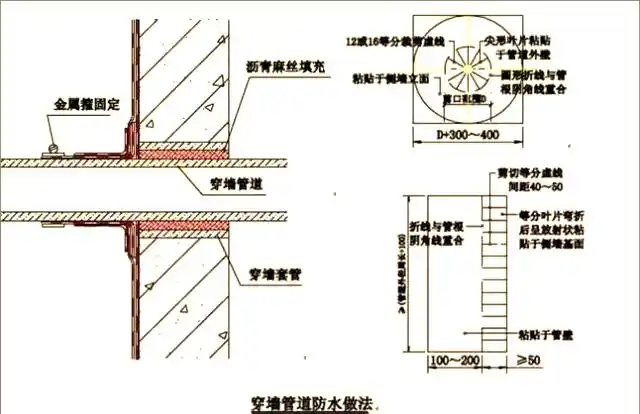
This fine construction not only ensured waterproofness, but also contributed to the sustainability of the building。
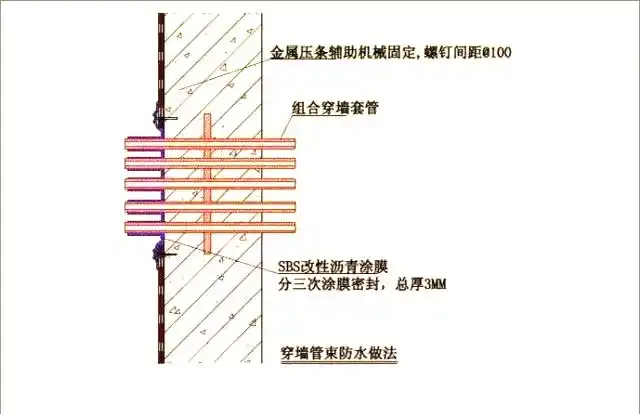
Waterproof construction methods for basement monolithic rolls
Waterproofing process
In the basement waterproofing project, we have introduced a single-floor waterproofing programme. The programme involves the construction processing of key areas, such as decks and side walls, as well as the precision control of various sub-nodes。
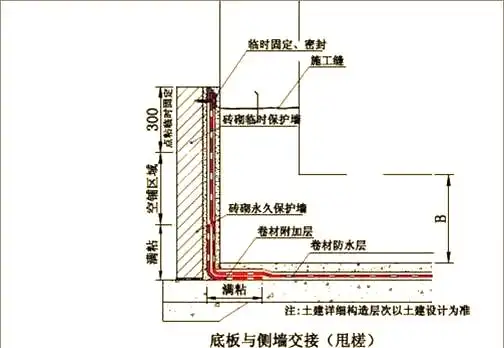
Waterproofing of the basement is an essential component. We follow a rigorous construction process to ensure that waterproofness is met at every step. First, the floors were cleared to remove miscellaneous items and dust and to lay the groundwork for subsequent construction. It then lays the scrolls and ensures that they are closely connected and seamless. The waterproofness is then ensured through a roll-up and proper matching. Finally, detailed nodes are processed, such as sealing, reinforcement, etc., to enhance overall water resistance。
♪ the way the side wall is built ♪
During the construction process, the disposal of the side walls was critical. We need to use appropriate construction methods to ensure that the interface is closely integrated to achieve the desired waterproofness。
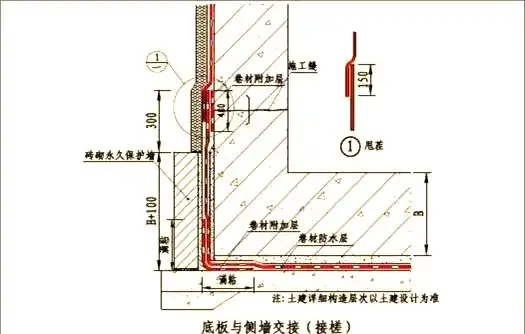
In the course of the construction work on the side wall, bricks were used to temporarily fix the parts of the volume entry to ensure the stability of the interface. At the same time, it is necessary to ensure that the ripple width is at least 150 mm in order to ensure that it is robust。
The method of construction of the post-heap belt
In the course of the construction work on the side wall, refilling is an important construction element。
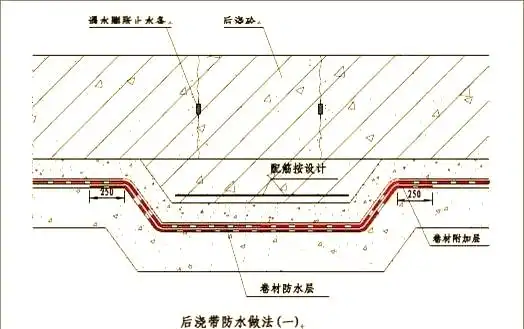
Through sound construction methods and measures, it is possible to ensure the reliability of the refills. In order to ensure the stability of the refilling, we need to add to the refilling position a volume of the same material on a large scale as an additional enhancements。
Elevator wells and waterproofing methods for catchment pits
In the waterproofing of elevator wells and catchment pits, we have focused on grass-roots treatment and the continuity of scrolls to ensure that the waterproofness of these areas meets the design requirements。
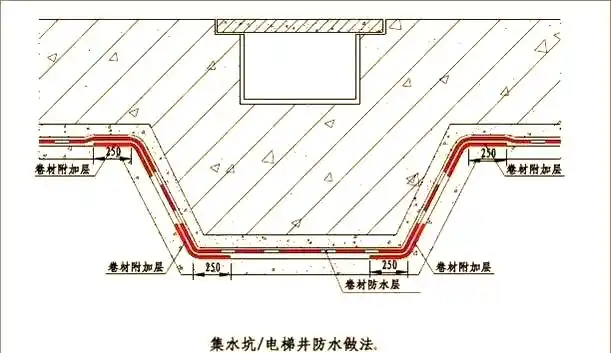
At the turning point of the sun in these regions, additional volumes of the same materials, which should be no less than 500 mm in width, need to be added to the larger surfaces to ensure a significant increase in water resistance in these critical areas。
The way the outer wall rolls
At the turning point between the escalator wells and the cisterns, we have taken special water-proof measures to further enhance the water-proofness of those areas。
The outer wall is covered by a wall of paper, which we use to stabilize with a fixed bar and nail, and which is closely sealed with asphalt-based seals. This not only ensures the safety of the water protection system, but also greatly extends its useful life。
Waterproofing through walls
Waterproofing through walls is essential in construction work. We have a special waterproofing tube and coating that provides full waterproofing through the walls。
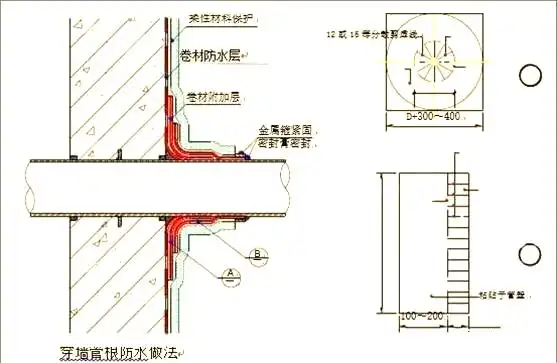
This particular method of construction not only enhances the durability of the building, but also contributes to the durability of the building by providing full waterproofing through the walls。