1. The main materials and construction processes for the waterproofing of the basements and the waterproofing of the basements and the waterproofing of the basements and the synthetics. (2) accompanying materials: the binding stripping strength of synthetic high-molecular glues shall not be less than the retention rate of the adhesive striping strength of 168h per cent per day of 15n/10mm impregnated water, and shall not be less than 70 per cent of the packages, including grass-roots processors, grass-roots glues, collage glues, enhanced sealing creams, waterproofing materials, self-sulfide tape. 2. Waterproofing of the basements of the construction process is more likely to take the form of a fully outsourced waterproofing approach, with two additional construction methods being used for outsourced waterproofing, namely, “extra-protective labelling” and “intra-protective labelling”. For a comparison of the two approaches, see table 11, where appropriate, depending on the circumstances of the project and the design requirements. 3. Extra-terrestrial topography is to be applied directly to the side wall (i. E. The underground structure) when construction is completed
2 - the wall covers the surface) and ends with a volume of waterproof layers. (a) construction proceduresa. Concrete mattresses were first poured. B. On concrete mats, a permanent protection wall of j degrees on the outer side of the structure wall, with a floor concrete thickness plus a drying floor of 200-500 mm wall, a layer of oiled oil shield. C. A permanent protection wall with a temporary protection wall 150 mmd height. Covers the concrete mats and permanent protection wall with 1:3 cement slurry and 1:3 white ash slurry on the temporary protection wall with a round corner. E. Recovering layers. After drying up, coating the basic processor (or cold base oil). An additional layer will be processed at the wall-to-platform interface prior to the official sheeting. The additional layer is typically 300-500 mm f. The waterproof layer of floor and floor rolls, which is to be constructed externally, shall be paved in front of the plane
3. Paste the plane and then paste it from the bottom up, so that the rolls are so close to the shade that they are not empty drums. The wall of permanent protection is covered with stickers and stickers. On the temporary protection wall, you'll be able to fabricate the rolls and fix them on the upper end of the temporary protection wall, and you'll be able to lower the slurry shield with the sign to protect the interface from damage and contamination. The flat-painted rolls can be either glued to the scrolls, or they can be glued to the scrolls with a sticky bar, with a sticky area of not less than two rolls of not less than 150 mm g. Each width. H. To be completed with the construction of the base-line steel concrete structure and the construction of the wall structure, to remove the temporary protective wall and to remove 1:3 concrete sand from the wall structure for floors. I. Scratch the scrolls, remove their surface ash and stains, take care not to damage them and paste them firmly on the wall when they are found on the floor. J. Volume waterproofing completed and accepted
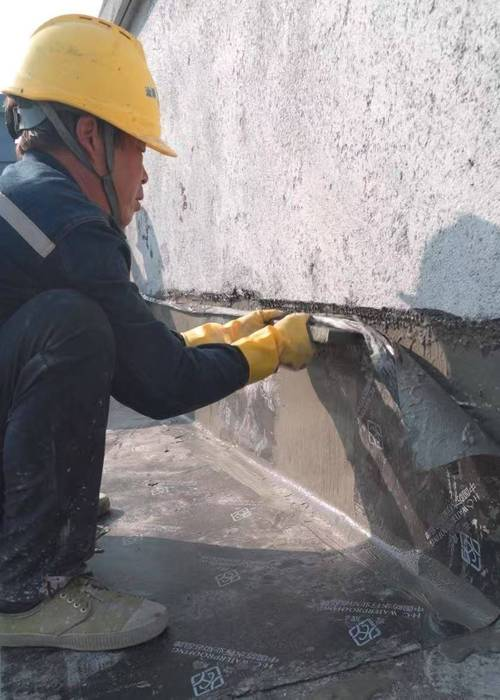
4. Qualification, timely application of 5mn thick polyethylene bubbles to paste plastic sheeting to protect the water layer. K. Base pit back to landfill. (b) the construction of cold-cracked scrolls with specialized glues solidified the rolls and floors, rolls and rolls, known as glue construction. A. An additional layer of scrolls in the angles of the plume or puddle pit puddles, which binds the plane and the side of the ground. The width of the extra rolls is typically 300-500 mm, with a roller-up of glue, evenly coated with a visceral acoustic angle and cooled. It is also dryed with glue on the back of the extra layer. If you touch the hand with a finger, you can do it with a little handless -- j glue. The glue must be attached to the corner of the sun and must not be empty. B. Volumes of the plane connected to the surface shall be laid first and then placed upward from the bottom. In order to prevent the entry of i at the angle of the vagina, the sews of the scrolls must be located above 200mn from the centre of the corner. C. After each sheet is laid
Five, immediately use a clean and soft long roller, starting in a horizontal direction from the end of the scroll, to roll it over hard, to remove the air between the scroll and the grass-roots level and make it sticky. D. Rolls. Threads bind to the width of high-molecular waterproofing rolls, either with a short or long bonding width of 80 mm, with a short or long bonding width of 100 mm: the adhesive adhesion is smoothed on the two glued sides of the flipping tape, approximately 20-mins after glue, which binds when the finger touches are largely non-clattering, and the edges are compacted to remove the air and then roll back with the hand. E. Sealed j-paint sewn. Where there is a suture of the tapering of the scrolls, it should be filled with an enhanced seal. The gap must be filled with j secret. F. Volume suture seal processing. Once we've done this, we'll cut 120mn wide, paste it with a roll
6. Above, to supplement the additional cap. The same hand-held roller is glued, and the edges of the mouthcap are reinforced with a sealing ointment. G. The surface of the ground floor, which is fully inspected and accepted, can be covered by a layer of oil asphalt on the surface of the surface of the surface of the surface of the surface of the surface of the surface of the surface of the sheet, with the protection of the shield by a small amount of glue (e. G. 404 glues, etc.) which may be laid with the use of a sticky adhesive of a small amount. The role of protection of the silo is to prevent the displacement of the corrosive water-proof layer during the planting of fine rock concrete. H plumbing of solid protective layers of concrete. Ts-f high-molecular polyethylene pylene (ts-f) water-proofing scrolls have been developed in accordance with the new requirements of our modern water-proofing works for waterproofing and seepage-proofing materials, and have been selected as the main source anti-aging agent for acetylene-free sheeting and polyethylene as the main feedstock, using high-technology, new and new materials
7. A multi-layered, high-molecular polyethylene pylene (cleaning) complex water resistant scrolls. The complete construction operational steps are as follows: 1. Construction operating procedures: receiving and inspection base - cleaning of the building layer - configure the glucose (assisting) - processing of complex areas of the t-protective layer (or construction of the insulation layer t testt shield) 2 construction preparation: 2. 1. 1 pyramid high molecular waterproofing vols. 2. 1. 2 with serial number 2. 2 cementogel preparation (see table below) specification units for unit 1 brushing 40 mm of 22 slabs and 30 mm of 3 hard rubber 3 mixers, 2 electric mixers or 4 rubber containers for hardwood, 3,100 litres of 2 and 1 common civilian knife 7 for half-barrel 5 sheaves and 5 shears, depending on the material used
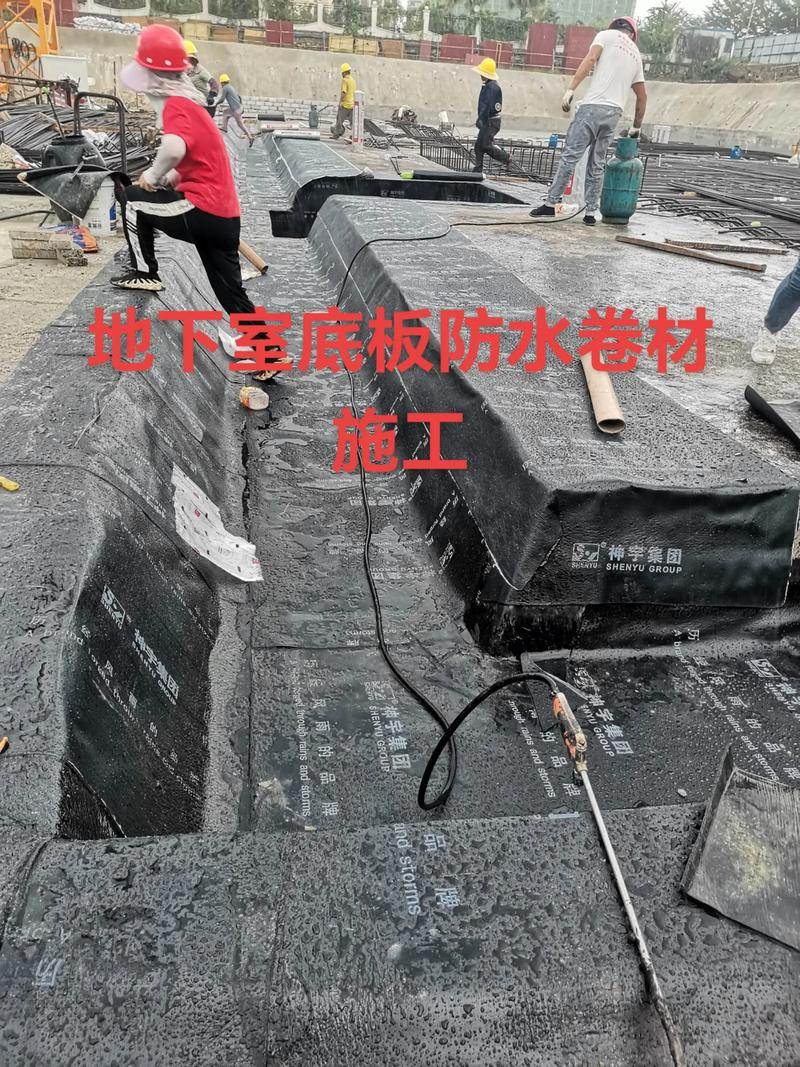
8 mm adhesive use of specialized rubber coating 3 and waterproofing construction procedures and methods: 3. 1 horizontal construction quality should be in accordance with the technical specifications for horizontal engineering (gb 50345-2004). 3. 2 the identification of layers shall facilitate the placement and pasting of the rolls; the identification of layers shall level the pressure light, surface light, smooth, clean, non-open and flat. Visible bumps, dimples, skin rises, sand rises are not allowed; the flatness of the formations should, to the extent permitted, smooth changes, even slopes, consistent slopes, and conform to drawing design requirements. 3. 3 altitude slopes for flat roofs, trenches, trenches, etc. Must meet design requirements. 3. 4 anticipatory angles shall be made at the place where the surface is found (the daughter's walls, chimneys, vents, deformations, skylight walls, etc.). The vertical slope of the cleavage should not be less than 5 per cent of the drainage water vent around which a slightly bottoming pit should be made. 3. 6 cement glue mixed with cement by adhesive 801
Note that gel packagings and work j appliances must be clean and that hard particles and impurities are not allowed in the rubber. 801 glue, water, cement j volume ratio is 2:4:10, first put 801 glue in a ready container, mix side by side with a mixer (water temperature 5c-50c), mix with side by side water (water temperature 5c-50c), mix with water until 801 glue is fully dissolved, then mix side by side with cement, and then complete the cement to be evenly uncondensed and unsilted. The focus of the glue that should be made shall be: 3. 7. 1 construction conditions and preparation of composite scrolls are suitable for work below 5c and above 25c in four hours. Construction is prohibited on a rainy day. Waterproof measures should be taken in the event of rain during the work, following pasting of the scrolls to prevent the wind from blowing up, and can be pressured with heavy weight. 3. 7. 2 the water content of the surface of the stratosphere should be in the range of 30-50 per cent; the slurry strength of the slurry of the shoal shall be 7. 5m
Waterproofing works may only be carried out at 10 p. M. If too dry, water shall be sprayed until integration. 3. 7. 3 complete clean-up of the surfaces of the substrates while also cleaning of the roll construction site. 3. 7. 4 open the rolls and examine them carefully, and the certificates should be retained to see whether they cause damage during the transport and removal. 3. 7. 5 before construction of the main waterproofing layer, the additional chimneys that are drained and attached to the more concentrated parts shall be prepared on the basis of drawings, such as the connection to the formation of the layers, the opening of the water, the ditch, the cleavage, the cleavage, etc. 3. 7. 6 the direction of the pasting of volumes may be determined as required by the drawings, which are not determined and may be determined by themselves as the case may be. Before pasting, pre-receiving 3-12 m of rolls, after looking in the right direction, at the middle, at the beginning of the rolls, at the fixed end, glued, then rolled the pre-packaged rolls back to the pasted positions, and applied them in a continuous fashion. It's not allowed under the sheet
11, particles and impurities to avoid damage to the scrolls. The method of embossing: first, the well-prepared rubber canisters should be placed on the pre-sticked slab, and the material should be scraped to a level of flatness in a continuous and appropriate amount, and the thickness should be kept above 1 mn, then it should be covered with a roll and exhaust pressure, and the excess glue should be released, the builder should be careful, the tape thickness should be even and the sheet should be bound. No empty drums, wrinkles and paste should reach more than 90 per cent. 4. Volume works should be carried out with care: 4. 1 cement coating should be followed by a scroll to prevent water from being lost in the over-duration tape and to affect glue quality. 4. 2 when cement is coated, it shall be coated at the sides of the scroll to ensure the mass of the stitching. 4. 3 when a scroll is placed, it must be guaranteed a connective width of 150 mm j on a 100 mm short side and staggered on a short adjacent edge
12. Distance. 4. 4 scraping exhausts shall be carried out with care to check the presence of hard particles and other substances under the scrolls. 4. 5 rolls should be flatly pasted on the search floor and there should be no wrinkles. If wrinkles cannot be corrected, the stitches should be broken. 4. 6 when mixed with cement, 801 glues, the glued upper rolls bend upwards, with a brush brushing up and down, and full of sutures. The coating thickness is 0. 5-0. 8 mm, while the edge is brushed, and can be sewd and pasted at the same time as the scroll, and then coated with a glue seal, so as to draw the edge of the sew, with a lacquer coating thickness of 0. 8-1. 00 mm, and a coating width extending 30 m each from the edge to the edge of the scroll (note that the two sides of the sews are to be evenly thick and do not have a demersal phenomenon, which should be followed by a detailed examination of the wrinkles, the edges, the empty drums, which should be processed in a timely manner). Four
When construction is to be carried out with a double layer structure, the cement sewn glue between the two layers is also applied with 801 glue mixed with cement configuration. The placement of the upper and lower rolls is the same as that of the lower rolls, and the direction of the coating of the upper rolls should be parallel to the direction of the lower rolls, with the long sides sewing in the wrong half. 5. Construction and operation of the protective layer: 5. 1 shall be preceded by a certificate of acceptance for the main waterproofing layer, and the construction materials transport corridor shall be made soft. 5. 2 the water-resistant level 4 of the protective layer is to be protected with 801 glue mixed with cement. The protective layer is to be painted twice, with a thickness of 1 mm and two brushes vertically. The water level 3 is to be covered by 1:2. 5-1:3 cement slurry size ratio, a layer of protection, a level 2 waterproof layer, a 10% spoonful of uea expansion in the cement slurry, and a layer of protection construction. Time
14. A semi-suture suture with an area of 1 kawa, with polyurethane, lactation asphalt and so on. The protective layer shall be emptied twice, the first layer shall be emptied directly to the second layer, the first layer shall be staggered with the second layer, and the surface shall be flat, smooth, clean, without skins, wrinkles or severe cracks at a wrong distance of 200 mm. 5. 3, and the protective layer shall be required to be emptied and maintained to achieve design strength. -5. 4 the maintenance of the protective layer shall be completed and all remaining material and construction waste at the level shall be cleared before completion. During the construction of the 5. 5 patches, the drainage concentration, complex areas are supplemented by drawings. The material can be used for polyurethane, mahjong, modified asphalt, etc., and the construction of the supplement should be carried out after the protective layer maintenance period, which contains less than 9% of water to supplement the construction. The size of the supplement from the edge of the supplement may be increased from the outer edge by 200 mm of the supplement thickness to 3-7 mm depending on the material. 6- waterproofing techniques for rollhouses: 6. 1 cryogenic construction techniques: 1. When the temperature of the night environment is below 0c, the day temperature is in the normal construction temperature range 5-25 c, as follows: a, when the night environment is in the temperature range 5c-0 c, and when 801 gel cement plaster is filled with an appropriate amount of anti-freezing agent, otherwise the construction of the rolls is not allowed and the temperature protection should be provided. B. The ambient temperature at night is -10 c-5 c; special anti-frozen agents should be added and cryogenic protection should be enhanced, without which 801 gel cement plasma is not allowed to be used for roll construction. 6. 2 the high-temperature construction technology requires that, when construction temperatures are higher than 25c, the volume construction should be followed by a reduction in the temperature of the volume surface by the application of water to prevent the drums from starting。