The pv coupling is a very interesting element. It is like a “messenger” in an electronic circuit, uniquely because it uses “light” to transmit information, thereby building a bridge of electrical isolation between the two circuits。
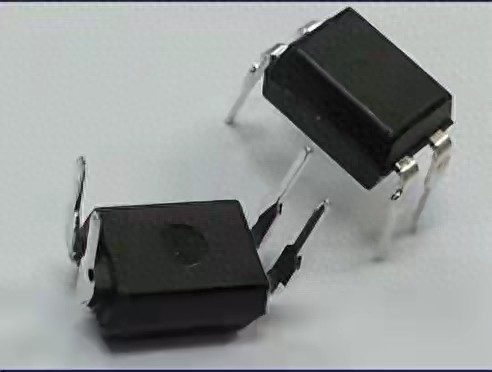
I: what's a pv coupling
You can imagine a pv coupling as a micro-encapsulated "light bulb" and "photo-sensitive electrical resistance" in the same shell. Of course, for performance and velocity, the actual elements are typically luminous diodes and photo-sensitive triodes。
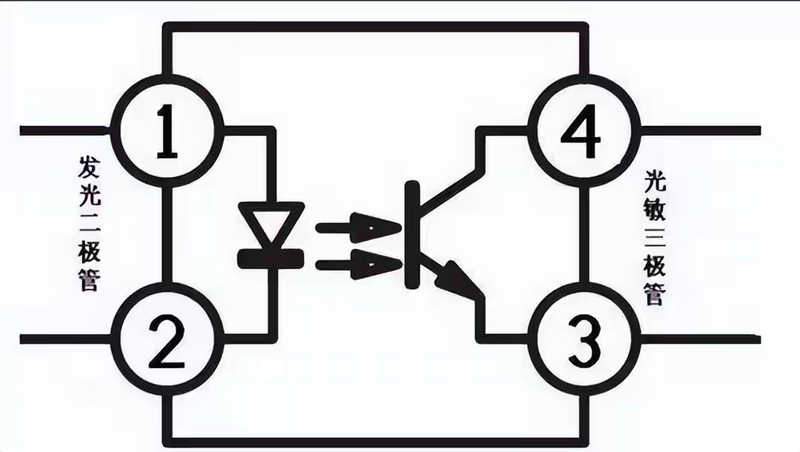
It has a very simple structure, one side being a light source, usually a light diode. The other side is a light detector, which can be a light-sensitive triode, a light-sensitive diode, or even more complex integrated circuits. The point is that the two parts are sealed together, but they are electrically insulated, without any electrical connection, and only light can be transmitted from the light source to the detector。
Two: how does it work
The operation of the pv coupling device can be summed up as a "electric-photo-electric" conversion process, like two people who do not know each other's language and communicate through light as a "translator"。
When you want to send a signal from the left side of the circuit (which we call input side) to the right (output side), the following process occurs:
Step one, electric light: if you add a suitable positive voltage to the input side of the lighted diode, the current flows through it. The size of this current determines the intensity of diode luminescence. Electricity is large, light is strong; light is small, light is weak; there is no light without it. So the telecommunications are converted into light signals。
The second step, light transmission: light from the luminous diode, irradiated through a transparent but electrical insulation quarantine material (usually plastic or air gap), directly irradiated to the light-sensitive triode opposite. This light is the carrier of information, and it passes through the electrical barrier。
Step three, photovoltaic: once the light is received, its internal properties change. The stronger the light, the stronger it is, like a faucet open by light. Thus, the current size of the output side circuit is controlled by the receiving light. So the light signal was converted back to the telecommunications。
Through this "electricity-photo-electricity" three steps, the input side telecommunications are transmitted to the output side intact (or proportionally). For the whole process, only one light is connected between the input and the output, and there is no physical wire connection。
Iii: characteristics and values of pv coupons
This unique way of working gives several irreplaceable values to pv coupons。
Its core and most important feature is electrical isolation. Because of the fact that only optical and electrical connections exist between input and output circuits, they can have completely different “earths”. This means that extreme voltage fluctuations, wave surges or noise in the input side circuits make it difficult to reach sophisticated output side circuits via light coupling. It is like communicating with light signals between two rooms, one of which is on fire (high-pressure waves) and does not burn to another。
Based on electrical isolation, it brings excellent resistance to interference. Groundline noise is common in complex industrial environments or power circuits. If it is not isolated, the noise will straddle the system along the line. When the light is used, the input and output are separated, cutting off this noise path and making the transmission very clean。
In addition, the optics also allow for the conversion of the levelling. As both circuits are independent, the input side can be a 5v logical circuit to control the strong circuit of 220v on the output side. It's like a safe bridge in one of them, making it possible to control high pressure at low pressure。
Of course, it also has some shortcomings. For example, as an active device, the luminous diodes will age over time and the brightness will decline. At the same time, while its response speed is fast enough for most switches and digital signals, it is limited compared to direct electrical connections and is not suitable for very high frequency applications。
Iv: application of pv coupling
Because of these characteristics, pv coupling plays a crucial role in many areas。
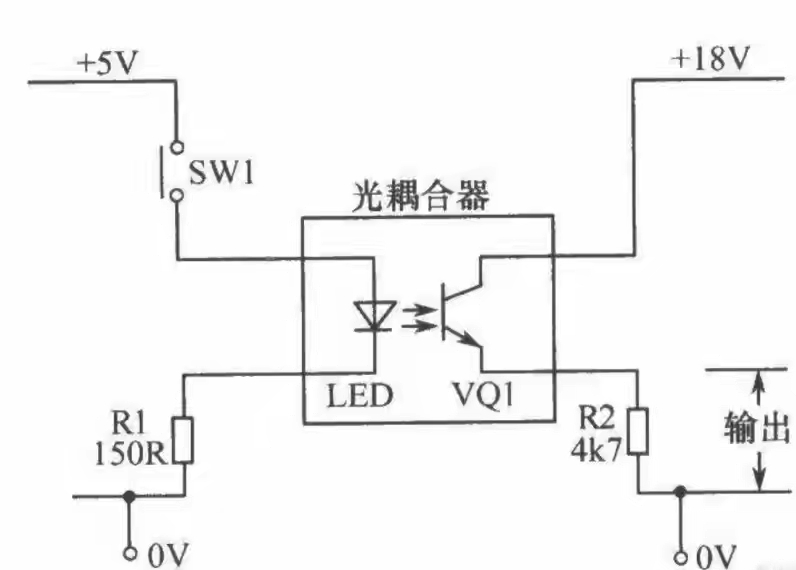
One of the most classic applications is in the switch. Your phone chargers, computer power adapters, are almost all equipped with optics. Here, its main role is “feedback”. The voltage on the side of the output is stable and accurate, and this information needs to be `informed' to the control chip on the side to be adjusted in a timely manner. But the output side is the strong power side that connects to our outlets, the input side is the weak power side that connects our phones, and it has to be isolated. This task was carried out perfectly by the optics, which safely returned the voltage samples from the output side to the input side, achieving secure uniformity of pressure and isolation。
In the field of industrial control and automation, photocoding is heavily used for the isolation of digital signals. For example, input ports for programmable logic controllers receive signals from on-site buttons, sensors, which are long and easily introduce interference and high pressure. Before the signal enters the core processor, it is sequestered with a radial, like a “bulletproof vest” for the control system, which ensures its stability and reliability。
It can also be used for signal interfaces between circuit boards. When two systems require communication but there is a discrepancy in the level of electricity, such as a single-formula system and an electric-driven system, direct connection may damage a single-formula machine. By adding light to each other, they can work together。
In sum, the pv coupling is a faithful “carrier” who transmits information with light. It has built a safe bridge between the isolated islands of the circuits, with the core value of “separation” and “protection”, through a clever “electricity-photo-electricity” conversion. And to understand that, you have the essence of the pv coupling。
If there's anything wrong, please understand and correct