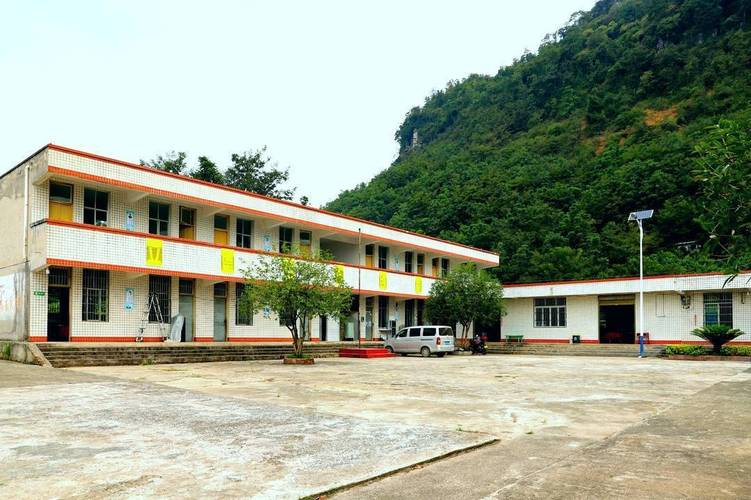
The issue of rural idle learning stock-taking continued to be of concern to the representative. In response to the commissioner's “recommendations for effective use of rural unoccupied primary schools”, the education and sports department of gian, jiangxi province, recently revealed that more than 1,400 rural uninhabited primary schools live on 42. 54 per cent。
The gyan city bureau of education and sports described some of the rural primary schools as idle as the process of urbanization accelerated and the number of children of rural age decreased. According to statistics, the idle educational resources of the city of gyan are based on school buildings and land, with a cumulative presence of over 1,400 rural idle primary schools, located mostly in the heart of villages, with adequate structures and space and valuable stock assets. The use of these resources is important for saving public resources, improving rural public services, promoting rural industry, improving the well-being of people and improving the effectiveness of grass-roots governance。
According to the response, in recent years, the municipalities of the city of gyan have been actively exploring diversified life paths, including adjustments, replacements, rentals, transfers, etc., through district governments, in accordance with the requirements of “county ownership, scientific planning, educational priorities, rational use, strict procedures and legal dispositions”. Between 2019 and 2024, 610 idle educational resources were disposed of throughout the city, with a capacity rate of 42. 54 per cent. For example, the idle small resources of villages such as the white water village in beizhou county and the former jiang village in ujia county in sugawa county have been transformed into “one old and a small”, “bay of the child's heart”, which has effectively addressed the problem of the elderly and children left unattended in the village; the conversion of idle primary schools into peasant theatres in fungshan village, sanghyun town, jiagawa county, which has added a wealth to the cultural life of the rural population; and the transformation of the idle villages in yokuku town village into small-scale oil and vegetable-rich mills to serve the surrounding oil and other growing industries in anfou county, which combines the oil and vegetable production industry with a combination of the oil production industry; and the construction of integrated cultural stations in the town of roofou, yuokayama city, using the high standards of idle schools to improve local rural public services。
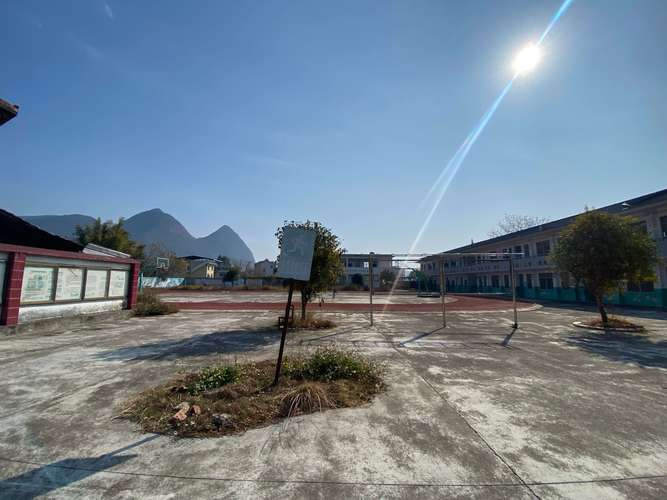
According to the gyan city bureau of education and sports, the city will continue to devote its resources to rural idle schools as a key enabler of overall rural revitalization and urban-rural integration. It will maintain the principle of public-interest ownership and balance economic and social benefits. It will continue to promote the priority use of rural idle school resources for public goods. It will also promote the improvement of rural public services, provide services to the “old and old” rural population and enhance rural cultural life. It will actively explore market-based paths, undertake industrial development to revitalize the economic function and, where appropriate, promote the use of rural idle school buildings for wealthy economies such as rural tourism and specialty industries。
In response to the commissioner on 27 june, the board of education and sports of shuyong county, sichuan county, sichuan province, reported that the situation in education had changed in recent years as the birth rate had declined and the population had gradually moved to towns. The number of schools is naturally decreasing. In 2016, there were 375 schools of all types at all levels, 269 in 2023 and 242 in 2024 (110 kindergartens, 29 primary schools, 65 teaching points, 25 lower secondary schools, 7 nine-year schools, 1 full secondary school, 3 general high schools, 1 vocational high school and 1 special school). The number of students in school is decreasing each year. There were 129,159 students at all levels and levels in 2016, 113,273 in 2020, 104,113 in 2022, 98,638 in 2023 and 93368 in 2024. There is a clear phenomenon of “crowded villages” in basic education schools, some of which have been evacuated and left unoccupied in the rear。
According to the suyong county bureau of education and sports, the county conducts detailed mapping of the location of idle assets, the nature of the land, the size of the land, the size of the building, the ownership of property, the status of formalities, the status of the assets, etc., to obtain an accurate picture of the ownership, distribution and use of the assets and a comprehensive mapping of the asset base. Since the implementation of the two reforms, 135 schools have been vacant throughout the county, covering an area of approximately 31. 38 million square metres, and 11580,000 square metres of school space. Of these, the land is of a community nature, with 120 schools, 15 state-owned educational sites, some of which were built during the “p9” period, with village investment and later construction of new schools. Based on the structure of the idle distribution of assets, tenure relationships and benefits, a two-way matching mechanism of the resource list + the demand list has been established in accordance with the “one-size-fits-all” approach to resource mobilization, with targeted targeting of local entrepreneurs, microentrepreneurs, etc., continuously expanding the channels for solicitation of funds, which are dealt with in an accurate and disaggregated manner through such models as office strengthening, pro bono renovation, support for industrial development, commissioning of village management, market operations development, etc。
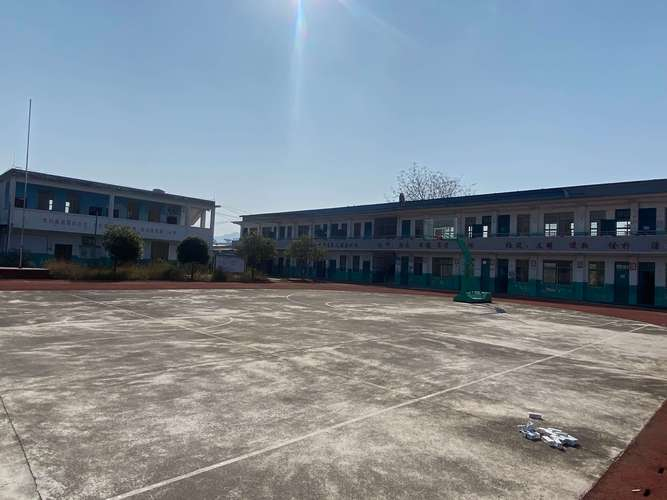
At present, the local community is using idle school buildings 1 for children's homes, 7 for village group service centres, 4 for village health centres, 2 for focus project commands, 1 for community drug rehabilitation centres, 2 for rice bases and 1 for kindergarten. The suyong county bureau of education and sport also mentioned that, where property rights cannot be processed, they may be converted to a residential service substation for public goods, market operations development sites and new rural economic development, and that collective income may be increased through the active use of idle houses, facilities, etc., rental, share-sharing, joint operation, etc. For residential hotels, storage or management. At present, one of the idle schools (the four united states primary school in the uyle hmong commune) has been converted into a home for the hmong people, effectively using small rural assets. The remaining idle schools were handed over to the local government for care and integrated planning as collective economic rehabilitation or rural old age sites。
In addition, in response to the proposal, the department of education and sports of jin shui county, chinin city, shandong province, indicated that, as the urbanization process in my county accelerated, rural populations continued to move and gather into central urban areas and county towns, some rural primary and secondary schools were reduced in terms of availability and effectiveness in running schools, and that the number of idle school buildings was increasing year by year as the integration of educational resources in my county continued. In order to avoid the waste of state-owned assets, how to set aside resources, promote the optimal allocation and efficient use of educational assets and improve the efficiency of the use of educational resources are among the outstanding issues to be addressed by the education sector。
The department of education and sports of kao shui district has completed a comprehensive mapping of the basics of school buildings in the idle school system to provide data support for the subsequent disposal of school buildings in idle schools. In general, all rural vacant campus land is collective land, which is owned by the village in which the idle school is located, and the building on which it is built is owned by the department of education and sports of the shui shui district。
In early may 2024, following a study by the bureau of education and sports, it was recalled that two observations had been made in order to boost the state's assets and restore “newer” to idle school buildings and assist in the revitalization of rural education. The first is adaptation, scientific planning, educational priority and rational use. The schools planned to be retained are used by the school districts and converted into labour education practice bases, research centres, etc. The second is that the education sector for idle school buildings is not planned to be used, and that the resources for idle school buildings should be mobilized using social forces to avoid waste of public resources. The administrative units of the townships plan to give priority to the development of public goods, with school debts. Units that engage in productive activities using idle school buildings shall bear the debts of the schools they use that were withdrawn and created, and those that continue to operate after the time-bound payment of the school debt will have to allocate a certain amount of annual resources to support the development of their town and street education. In both cases, the user must enter into a debt transfer agreement, a safe use agreement and, in principle, the status quo cannot be changed. The ownership of the school remains the same in the education sector and is subject to unconditional withdrawal if it is requisitioned by the government or used by the education sector。
However, the department of education and sports of kao shui county has stated that, to date, the effective use of idle schools in rural areas throughout the county has been low and ineffective。
According to them, the district education and sports bureau, as the authority responsible for idle campuses, was unable to fully improve the efficiency of the use of idle resources in education because of narrow approaches and unclear property rights over idle resources. In coordination with the state investment agency, it was agreed to request the standing council of the state administration of kao shui county as soon as possible to study the transfer of unused school land, houses, etc., to the neighbourhood, where they exist, and to carry out their activities on the basis of the situation, with a view to improving the efficiency of the use of educational resources and ensuring the value added of state assets。