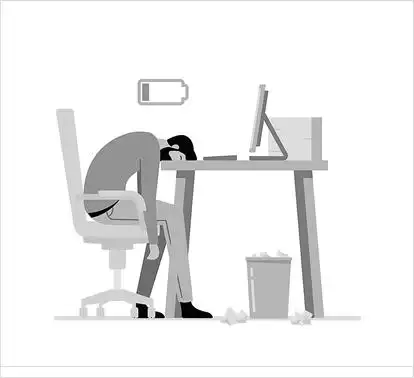
As post-traumatic stress disorder (ptsd) is becoming known, the name of mental illness has become the term often used in everyday life, and in recent years it has been claimed that it is because of something, such as “work to ptsd”. Is work really stressful? What did the real ptsd do? How can you judge whether you or anyone around you are suffering from this disease? What can we do after the diagnosis
It's not usually a real obstacle to say what you're doing
People who can say “work-to-stress disorder” are generally not really ptsd patients, because if they do have ptsd, the great pain of trauma makes it difficult for them to express themselves to others, and this is more than just an argument。
Many genuine ptsd patients have experienced, witnessed death or received death threats, or have suffered serious injuries or threats to their physical integrity, often among veterans, victims of war, victims of natural disasters, relatives of major crimes, etc. A particular incident caused the patient to suffer for more than a month before being diagnosed as ptsd。
However, some experiences or events in daily life, such as domestic violence, emotional neglect, sexual abuse, sudden death of a relative, etc., may also lead to stress disorder or the planting of the seeds of disease, which may give rise to stress and demand attention in case of subsequent stimulation。
There are four typical manifestations of real stress disorder
Patients who can be diagnosed with post-traumatic stress disorder often have four manifestations, namely flashback, recusal, heightened vigilance and negative self-evaluation。
A flashback of certain scenes will lead to the re-emergence of painful memories. For example, after seeing news of domestic violence, experiences of abuse in childhood are always present, and those who have passed away are constantly reminded of how their loved ones died in front of themselves. It is worth noting that, after a particular stimulus, dreams of a particular experience or scene at night are also a sign of flashback。
Avoid contact with everything that is related to your own trauma. For example, deliberately avoiding an accident in which he had witnessed an accident, including a car accident or a jump in a building, even if it caused inconvenience to daily life。
Increased vigilance is excessive, resulting in physical stress on certain details, or sudden emotion and irritation. Some ptsd patients jump every time they hear the phone ringing, and others jump out of nowhere when their friends are taping his shoulder to say hello。
Negative self-evaluations rated themselves badly and felt that they did not have any merit and were not worthy of compassion and survival。
At the same time, there are two or more manifestations, which may be ptsd. If a person or person with whom he or she is living meets the above symptoms, he or she is advised to go to a hospital and seek the help of a professional, who can be diagnosed only after an appropriate examination and assessment。
Medicine + psychotherapy ptsd patients are expected to recover
There is no need to panic if one is suffering from ptsd, and there is hope that the post-traumatic stress disorder will heal as long as professional help is sought in a timely manner。
For ptsd patients, psychotherapy plus drug treatment is usually available, and the symptoms of the disease can be effectively controlled by taking drugs for at least one year, depending on the number and frequency of psychological treatment。
In daily life, we can provide more or better-quality company to patients with post-traumatic stress disorder, guarantee their daily routines, help them to return to normal learning, work, and keep their lives as manageable and regular as possible, given the relative stability of the patient's mood and the relative ease of communication with the outside world。