The application of the 3e theory (outputs, efficiency, effectiveness) to performance evaluations needs to be combined with a systematic perspective, from four levels: clarity of content, optimal decision-making evaluation, enhanced efficiency evaluation and improved impact evaluation. The following are specific applications:
I. Clarifying the 3e theoretical content and constructing the performance evaluation framework
The 3e theory defines the core dimensions of performance evaluation from a systemic perspective:
Elements of application:
Ii. Optimizing evaluation for decision-making and coordinating multi-dimensional evaluation relationships
Decision-making evaluations need to address the coordination of financial management with other sectoral evaluations and avoid duplication of evaluations, including by:
Case references: through the government performance and results amendment act, the united states federal government has built a performance system from micro-project output to macro-strategic objectives to evaluate impact from the bottom up to inform decision-making evaluation coordination。
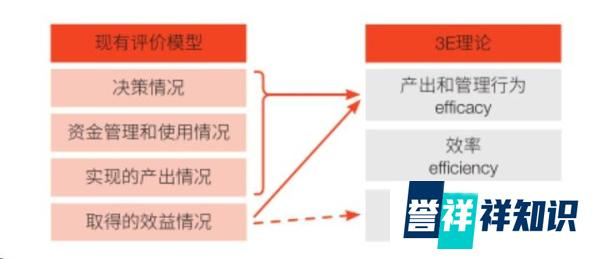
Figure: u. S. Performance evaluation system (pevs) linking mechanisms from micro to macro, iii. Enhanced efficiency evaluation and exploration of scientific evaluation methods
Fewer efficiency evaluations are currently conducted, and the following breakthroughs are needed:
Application scenario: in government investment projects, the allocation of resources can be based on an analysis of unit mileage construction costs, time efficiency, etc., compared to similar projects in different regions。
Iv. Improved impact evaluation and a multidimensional methodology system
The impact evaluation needs to address the issue of “many outputs and few contributions” from the perspective of “met needs”, including by:
International experience: the british government uses the “balanced scorecard” tool to break down strategic objectives into four dimensions: finance, clients, internal processes, learning growth, and systematic evaluation of policy effectiveness to inform the design of impact evaluation methodologies。
V. Promotion of the 3e theoretical practice test and development
Through the above approach, the 3e theory can effectively guide the shift in performance evaluation from “evaluation of outputs” to “evaluation of results, efficiency and effectiveness” to increase the value of public resources。