Basic composition of the central air-conditioning system
Refrigerating compressor systems: the system's core power source, which is responsible for compressing refrigerants to increase their pressure and temperature, commonly with centrifuges, screws, pistons and vortex compressors。
Refrigerated circulatory water systems: composed of refrigerated water pumps, evaporationers and winder tubes, which are responsible for transmitting cooling into indoor space. Refrigerated water absorbs refrigerant cooling in the evaporation unit and sends cold air into the regions through the windpipe。
Refrigerated circulatory water systems: composers consisting of cooling water pumps, condensers and cooling towers are responsible for excreting heat generated during the cooling process. When cooling water absorbs heat in condensers, it is exchanged with the atmosphere through cooling towers。
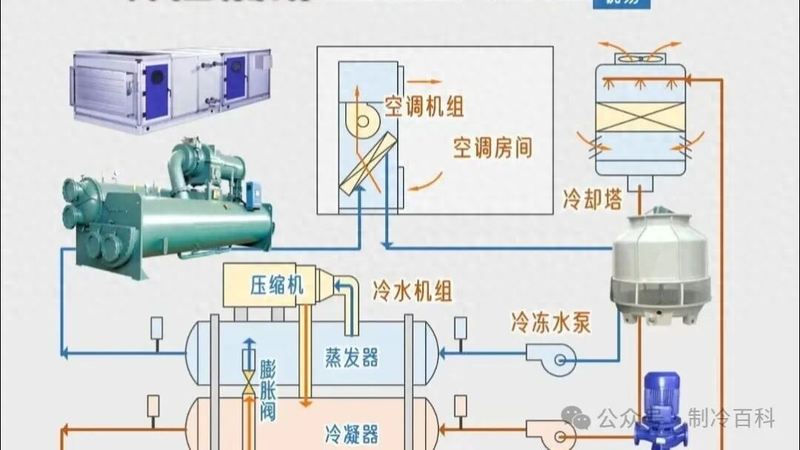
End-of-pipe equipment, including wind hoses, air treatment units, etc., responsible for delivering processed air into indoor space. Hump-top air-conditioning units are commonly used end-of-pipe devices, ranging from 1,000 m3/h to 30,000 m3/h。
Control systems: cacs generally use smart control systems such as 12 inches 1024 x 768 wide touch screens to support chinese/english interface switching with real-time monitoring, data recording and security protection。
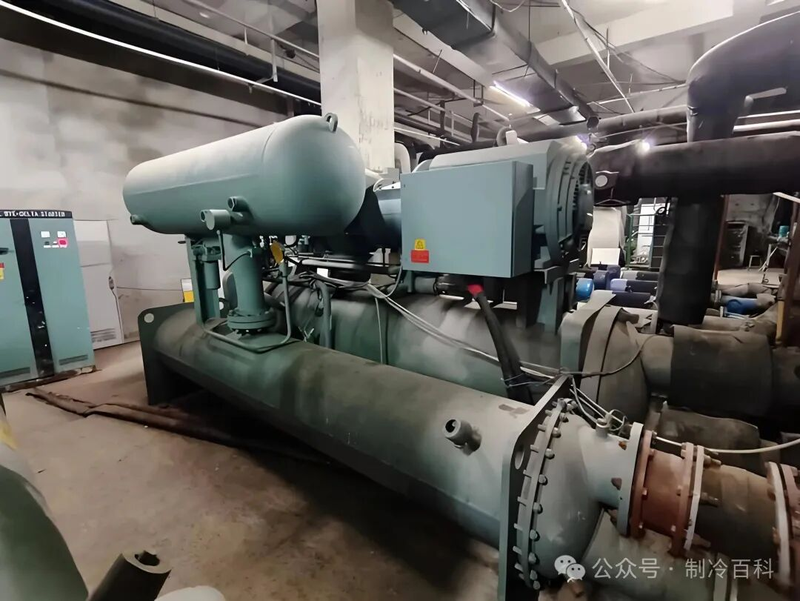
Ii. Main types of central air-conditioning units
Aqueous chillers
The cooling medium uses water to disperse heat through cooling towers or cooling water cycling systems, which are efficient and have high cooling volumes, provided they are accompanied by cooling systems. For large buildings (e. G. Writing buildings, hospitals), energy consumption is low。
Wind cold water unit
Air as a cooling medium is used to disperse the heat directly through fans, without cooling towers, and to install and maintain simplicity. For small and medium-sized sites (e. G. Malls, hotels), less efficient than water cooling。
Magnetic suspended frequency centrifuge chillers
The use of magnetic suspension bearings (without mechanical friction) and variable frequency technology has significantly reduced energy consumption (20-30 per cent of energy efficiency) and reduced noise, without maintenance. Designed for large high-end projects (e. G. Data centres, super-high-rise buildings) with high initial investment but low long-term operating costs。
Plumbing water coolers
Using a screw compressor, a water cold design, with a wide range of refrigeration (100-2000kw) and reliable operation. It is common in medium-sized commercial buildings (e. G. Malls, factories), where energy efficiency is high and failure rates are low, and one of the market mainstream options。
Insorption group for lithium bromine
Refrigeration driven by thermal energy (e. G. Steam, gas or waste heat) without electric compressors, and energy conservation (especially in the case of excess heat resources). Refrigeration is less efficient, however, mainly for large central air-conditioning systems (e. G. Hotels, industrial areas), and operating costs depend on heat source prices。
Multi-line air conditioning system (vrv)
It refers to a system where an outdoor machine connects multiple indoor machines and independently controls regional temperature. Characteristics: flexible energy efficiency, easy to install, applicable to multi-room scenarios (e. G. Office buildings, dwellings), but refrigeration is limited to outdoor capacity。
Iii. Rationale and operational parameters
Refrigeration cycle:
Key operational parameters:
Energy efficiency indicators:
Iv. Maintenance points
Daily maintenance:
Regular maintenance:
Water quality management:
Common failure: