Among the 40 types included in the city's canine regulations, three chinese dogs are on the black list, including the well-known tibetan and kawadong hounds, and it is difficult to officially change their name to china field dogs, or the dogs. The three lists, in particular, the sino-chinese dogs, whose orientation is not strict, moved with the integration of the various ethnic groups of china and travelled to various parts of china, with the exception of certain geographical and environmental isolations, resulting in particular well-known local systems. Chinese dogs are not purified by systematic varieties, so they are generally known as chinese dogs。
But this list has a particular effect, namely, to divide chinese dogs into three broad categories: first, cattle dogs, most of which are located in pastoral areas such as monk, and are represented by canine dogs; secondly, hunting dogs, which are located in china, north china, sichuan, and other areas, and are represented by canine dogs such as kawato, shandong, hebei and shaanxi; and, lastly, chinese field dogs, most of which have both home-care homes and some of their hunting functions, but whose functions are not clear, such as those of your country’s dogs。
The chinese dog tradition does not have these three subcategories, but only the vinyl subdivisions, in which the animal husbandry and hunting breeds mentioned above, as well as fighting dogs, are called martial dogs, while the town is used to look after the home wards, which is commonly known as chinese dogs, and the ancients as large, medium-sized dogs, called dogs, and small dogs, which are the sound of the lambs, which are described as small, are the most appropriate in terms of size and use, and are distributed throughout china, as are the range of range dogs that exist in the states of europe. The general characteristics of field dogs are: short mouths, flat sizes, high ears, high tails, straight legs, close to one-one on the shoulder, on the other side. However, by region, the chinese can still be divided into three subcategories:
One of them is the northern system, characterized by larger individuals, more hairy colours, less pure colours, and previously broken ears。
The second is the zhejiang family, usually with high ears and straight or “half-litres”, with long legs, white abdomen, small colours, similar to japanese fuel dogs and akita dogs。
Three are wide-ranging, characterized by the fact that most of the hair colour is pure and most of the hair is in the ear. It's closest to ancient chinese dogs。
But of these three, where is the chinese dog best qualified to be a symbol dog representing the chinese dog? I think it's the "tide-headed bear dog" in the two broad systems, with the three-side hip plains facing the sea. The second migration from the fujian region to the south to settle in the ancient chinese people, who have preserved the farming culture of many chinese fields, was accompanied by the continuation of the farming culture in china, which led to the introduction of chinese dogs to both species and history。
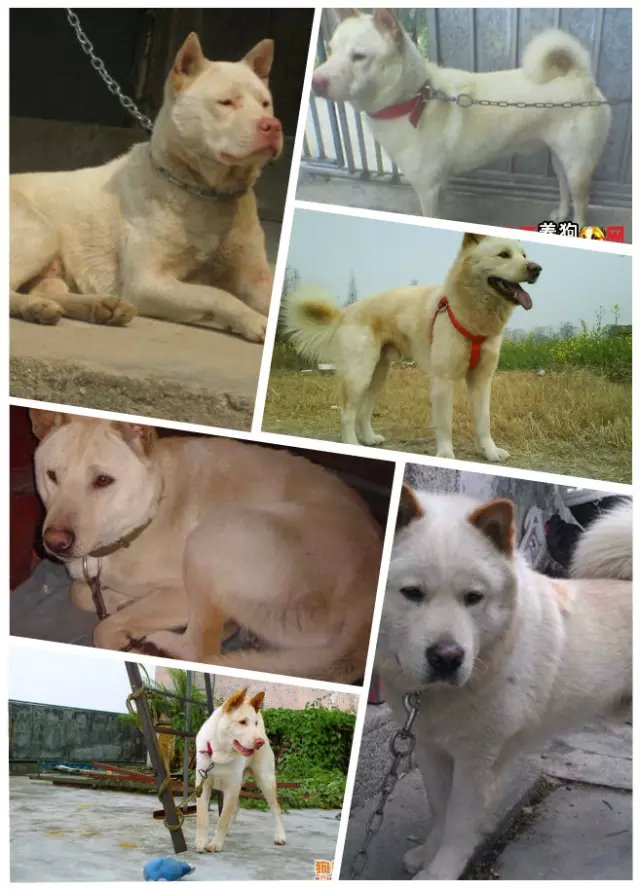
Like other chinese dogs, the “thouzhou head dog” species are not specially bred, and therefore their characteristics are not obvious, but according to oral records, the “thouzhou head dog” also has special features different from those of other dogs. I have listed the following:
1. According to the fci standard for the international dog species, it should be classified as the fifth group of pointy mouths and pristine dogs, which are close to 25 kg in weight and approximately 50 cm in height, close to the shoulder width, with a straight leg, with a side view of the square, with a size between the canine and the dog in japan, and close to the canine。
A large and round head with a face similar to a bear, close to a plum dog, and therefore also known as a “big bear dog”, whose ears are high and cannot be downsided; the mouth is sharp and the upper lip cannot be covered with a lower lip, which is in clear contrast to the pines and northern pedagogy dogs, which is more similar to the pyramid dog, which is similar to the japanese dog
3. The tail is the tail of money, the tail of a roll, which, even if frightened, does not easily fall down, and the tail of a sickle is lost
4. Gross is usually short, mostly yellow and white, followed by khaki and upper-class brown
The trueness of the money is five reds, which are characterized by “five reds”, i. E., tongues, noses, ears, tails, with red meat or hair at the end of the five palms, and the most notable sign is reds, which are distinct from any other dog species。
The five above-mentioned articles are summarised in one word as the “five red money bottoms”, which is the difference between this dog and other field dogs. Of course, as foreign dogs cross the street, the last territorial barrier to this old dog has been broken, and it is difficult to find the pures of all of these characteristics in the tidal zone as blood is infested. But in order to protect this long-spread dog species, i feel it is necessary to protect the species。
The first thing to do is give it a nice name
Which one