What's the principle of an inkjet printer? What are its techniques? What's its performance
Over the years, computer access to people's work and lives has become fashionable. As applications went further, you were no longer satisfied with the way documents and pictures could only be displayed on the screen, but rather wanted to see the effects of printing on paper, so printers began to heat up on the market。
There are currently three main categories of printers that are common in the market: needles, inkjet and laser printers. The needle printer has passed its prime time and is moving towards dusk; the price of laser printers, while declining, is somewhat different from that of the main colour spray and would be much higher if colour were to be used. Thus, it is not surprising that the inkjet printer has recently had a red-hot half day。
Inkjet printers are developed after needle printers and work in a non-hit mode. Inkjet printers can be divided into solid inks and liquid inks (now more common in the latter), while liquid inkjet can be divided into bubble (canon and hp) and liquid voltage (epson). Bubble jet technology (bubble jet) produces bubbles ink by heating nozzles and sprays them onto print media。
Inkjet printer principles
Inkjet printers are developed after needle printers and work in a non-hit mode. Prominent advantages are small size, ease of operation, low noise printing, and the availability of pictures comparable to photographs when using dedicated paper. The technology of inkjet printers has developed considerably over the years. Thinking of a colour-jet printer of about $4,000 in '95, a beautiful woman can be as rough as a king. To date, a thousand colour-jet printers are sufficient to meet all the needs of households in general, and even users with high photo quality like photographers can find a better product in 2,000 to 3,000 colour-jet printers。
The current inkjet printer can be divided into two main types of voltage and thermal ink-jet technology, working by printing head. Depending on the material nature of the ink spray, printers can be classified as water quality materials, solid ink and liquid ink. We will elaborate on them separately。
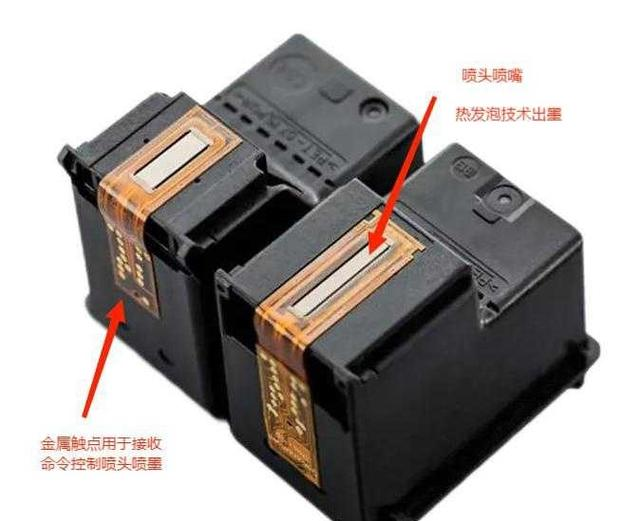
The voltage ink technique is to place many small voltage ceramics near the printing head nozzles of the inkjet printer, using the principle that they may change in shape as a result of voltage, and to add the voltage to it in due course. The voltage ceramics then generate scalding so that the ink in the nozzles is sprayed, forming patterns on the surface of the output medium。
Ink-printing using voltage-jet technology is costly, so in order to reduce user usage costs, printing of jets and cartridges is generally used as a separate structure, with no need to replace head-printing when replacing ink. This technology is original to epp, as the structure of the header is reasonably efficient in adjusting the size and use of inkdrops by controlling voltage, thus obtaining higher print accuracy and printing effects. It has strong control over inkdrops and can easily achieve high-precision printing, and now 1440 dpi's super-high resolution is maintained by april. Of course, it also has shortcomings, assuming that the jets are blocked during their use and that they are costly and difficult to operate, whether they be defunct or replaced, or that the entire printer may be obsolete. The main product currently using voltage ink technology is the inkjet printer of april。
The thermal ink-jet technique is to allow ink to gasulate a portion of the ink juice in the nozzle pipe through a small nozzle, under the influence of a strong electric field, into a bubble, and to spray the ink tops in the nozzle to the surface of the output medium to form patterns or characters. So these inkjet printers are sometimes called bubble printers. The process of making a jet with this technology is more mature and inexpensive, but it has a considerable impact on the service life as electrolysis and corrosion always affect the electrodes in the jet. Therefore, printing jets using this technology are usually made with cartridges, which are replaced with new printing heads. So the users don't have to worry about the nozzle. At the same time, in order to reduce the cost of use, we often see needles in cartridges. Once the printing header has been filled with ink, the dedicated ink will be filled and, if the method is correct, considerable savings will be achieved in terms of materials。
The disadvantage of the heat-jet technology is that the ink is heated during use, while the high-temperature ink is prone to chemical change and instability, so the colour authenticity of the punch is affected to a certain extent; on the other hand, since ink is sprayed through bubbles, the direction and size of ink particles are poorly understood, the edges of print lines are easily variable, and the quality of printing is affected to a certain extent, so most products are less printed than those of voltage technology。
Thermal ink-jet technology is used more frequently, mainly by companies such as canon and hewlett-packard。
The solid inkjet printer is tektroNix (tek) patent technology. It uses a disguised ink that is solid at room temperature and works with a larvae pigment first warming into liquid and then following the inkjet method described above. The advantage of such printers is that paints are more water-resistant and there is no problem of sealing the head because the ink has dried up. Printers using solid ink are, however, currently relatively small owing to higher production costs。
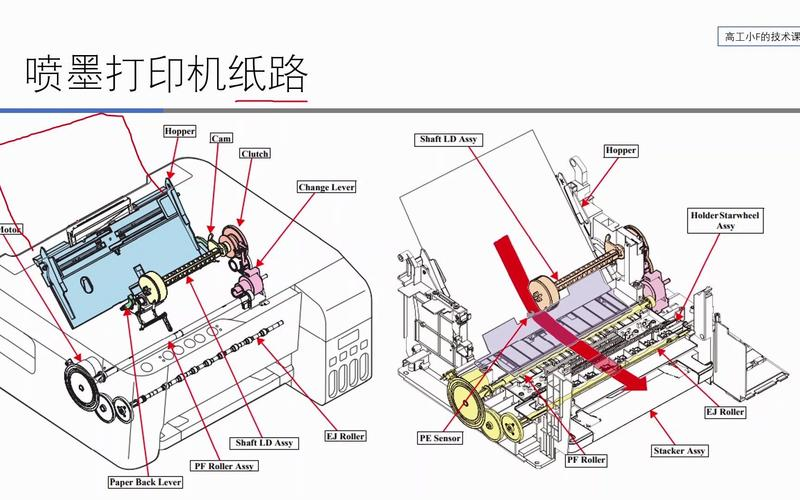
Ink-jet printers are divided into mechanical and circuital parts, and we look primarily at the mechanical parts, which usually include cartridges and nozzles, cleaning parts, type machines, paper-transmitters and sensors. There are two types of ink cartridges and nozzles, one of two integrated structures and the other of separate structures. Both approaches have advantages. The washing system is a nozzle maintenance device. The font machine is used to locate the print position. The typewriter provides paper delivery, and it must work well with the word machine to complete the full page. Sensors, on the other hand, are specially designed to check the working condition of printer components。
Inkjet printer usage techniques
1. In the use of colour spray boxes (this refers to cartridges of homogeneity), care shall be taken to balance the use of various colours, such as red, yellow, blue, etc., and not to print only pictures of one colour, since they cannot continue to be used as long as one colour is exhausted in the cartridge. Generally, the higher the resolution of printing pictures, the more ink is used. Light colours consume less ink, and red or blue composites require more than one basic colour synthesis and therefore more ink consumption。
(ii) do not switch printers frequently, since many types of printers perform self-checking procedures when they open, consume ink, and as much as possible require printing materials to be put together for printing (with care not to allow printers to work for extended periods of time), thus saving ink。
Iii. In the case of dry plugs in the printing head of a single cartridge, improvements can be made by:
1. Vaccination of the printed head segment (excluding circuit boards) into hot water for approximately 10-20 minutes, so that the hot water dissolves the dry dye (note: keep the circuit board dry)。
2. Put the head of the printer on a few soft and dry paper towels so that the tissue slowly drains the residual water and ink from the nozzle, and do not wipe the head of the printing effort. If the cartridge is to be used immediately, it can be placed in the right location in the printer. If not used for the time being, specially designed head-of-print seats can be purchased for proper storage, with rubber cushions in the protective seats blocking the air and keeping the nozzles permanently wet。
3. Don ' t ever print again when the cartridges lack ink, which causes the nozzle to burn (because it only uses electric boosting jets to spray ink and to use ink to spread heat)。
Inkjet printer performance
Resolution
Dpi is an important industry measure of print quality. It shows the printable points of the inkjet printer per inch. The higher the dpi value for monochrome printing, the better. Colour printing is complicated. The quality of printing is usually influenced by the combination of dpi values and the ability to reconcile colours. Since the black and white print resolution of the general colour-jet printer may differ from the colour print resolution, it is important to look at what resolution the vendor tells you is and whether it is the highest resolution. Inkjet printers above 360 dpi should normally be selected。
Colours and capabilities
For users who use colour-jet printers, the colour and capacity of printers is a very important indicator. Traditional ink-jet printers, when printing colour photographs, can select a close combination of three basic colour combinations for printing, which, even if added to black, can generally not exceed 16, and the ability to express colour scales is not satisfactory。
In order to address this problem, the early inkjet printers also used the method of adjusting the degree of fuzzy of the jet point to express the colour grade. However, for products with a colour resolution of only about 300 dpi at the time, the result of the adjustment of the level of decoupling is that the transition colour is poor and there would appear to be many spots. The current colour-jet printer, on the one hand, fines the print-out by increasing the print density (resolution), thus making the map more subtle; on the other hand, improvements have been made in colour harmonization techniques, which are common in several ways, such as increasing the number of colours, changing the size of ink drops and reducing the basic colour concentration of cartridges. The most effective of these is the increase in the number of colours. Currently, so-called six-colour printing is usually done using five colour cartridges, plus the original black cartridge. The number of colour combinations that can be obtained in this grouping has increased many times, and the effect of the improvement is naturally clear。
The principle of changing the size of the inkdrops is that more inkdrops are used in printing where a higher colour concentration is required, and in areas where a lower colour concentration is required. The decrease in the color concentration of the cartridges is in fact the result of repeated ink injections in high colour concentrations to create more colour classes。