Experiment 11
Simulate static fields with current fields
In engineering
They often encounter physical quantities that are not easily tested for inadequate conditions
This time
Often using simulations
To measure。
If the performance of the vehicle is tested
It's not like we're going to have to do this
Hold the vehicle inside the wind hole
(b) conducting a winding exercise to test performance based on the flight of the simulated vehicle。
Simulation is a method of scientific research。
It does not directly study physical phenomena or processes themselves
And with these phenomena
Or a model with similar processes and argon for research。
For example, using vibrating stations to simulate the impact of earthquakes on the strength of engineering structures
Electricity
Streamfield simulation of dam seepage, photometric elasticity simulation of internal stress distribution of engineering components, etc. It's called physical simulation
They keep the nature of physical phenomena or processes constant during simulations
This experiment presents another simulation
It's called mathematical simulation
It refers to a simulation of two different physical phenomena or processes that can be described in a similar mathematical equation。
Simulations are inherently easy to achieve
Physical state or process that is easy to measure
To simulate that it is not easy to achieve
The state or process to be measured
As long as the two states or processes have a corresponding two sets of physics
And they're satisfied
The mathematical form is essentially the same。
The static field conveys the effects of some electric bodies on others
It's a form of matter
Form。
In general
Static measurements are more complex than direct current measurements。
Though steady current and static fields are fundamentally different things
Routine。
But under certain conditions, the stable constant current field in the conductor medium has a mathematical equation similar to that described in the static field
And it's possible to simulate static fields with a steady constant current field。
In scientific experiments
We often need to know the static fields around the various electrodes or bodies。
But in most cases..
It's hard to get an analysis of the distribution of power fields
Most will use experimental methods to determine the distribution of static fields。
It's a model
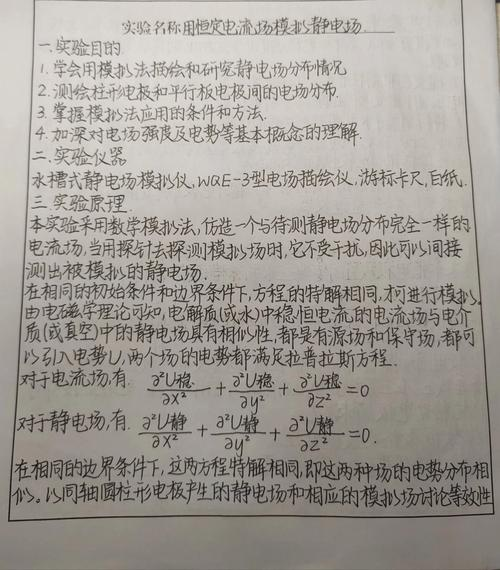
Designed to describe static fields, i. E., simulated static fields with steady constant current fields。
Imitation of electrodes to be studied, study of static field distribution using simulation experiments
In electronic tubes, oscillators
Video tube and
Electronic beams, such as electronic microscopes, are designed and researched for practical use。
I
Purpose of the experiment
Understanding the theoretical basis for modelling of static fields。
Learn to study static fields using simulations
The method of describing the distribution of static fields on the steering paper。
An equiphic line depicting several static fields, drawing electrical lines based on the equidistance line。
Increased knowledge of static and steady current fields。
Ii
Experimental principles
The simulation depicts static fields based on the theory that the electric field produced by the electric body in its surrounding space, the available field strength
And bits
Space distribution to describe. In order to visualize the distribution of the electric field, parity and power lines are often used
Describe the electric field。
Electricity lines are curves that follow successively in the direction of the strength of the field at each point in space
The plane's in the middle
It's all the same. The power lines and the equations are cross-cutting, and the graphics of the parallels can draw the power lines
And vice versa。
We're talking about measuring static fields
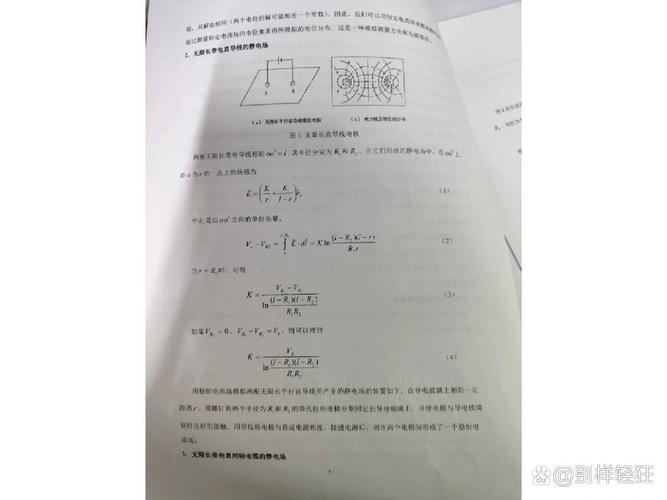
This refers to mapping of the distribution of the median bits and lines of the static field。
Being aware of the physical phenomena in the electric field or the problems that control the incompetence of electric particles in the electromagnetic field
Scientific research
And production is very useful。
However, direct measurements of static fields are difficult. First of all, there's no electricity in the static field
Magnetic and electrical meters are rendered useless
The second is when instruments and measuring probes are introduced into static fields
It's going to come from the static field
The current sensor charge
And the electric field generated by the sensor charge is superimposed with the original field
It will cause a deformation of the field
The result is certain
Serious distortion。
So direct measurements are not feasible。
It's the only indirect way to fake another field with static power
The field is similar, and when measured against this simulation, it is free of interference, and the simulated static field is indirectly measured。
One way to portray static fields using simulations is to replace static fields with current fields。
This experiment uses constant current field simulation
Describe the static field. Electromagnetic theory provides information on electrolyte (or hydromechanical) constant current field and electrostatic (or vacuum) in electrolyte
The field is similar。
When there is no large free charge in space, each of the following differential equations and boundary conditions are met to the static field in the same sex medium: