This invention covers the technical field of extraction of chinese ingredients, in particular a glycerine extraction process。
Background technology:
2. Glycerine is a commonly used chinese medicine, which has the effect of artery, blood gas, serolysis, sepsis, spleen and stomach supplementation, condensation, and blood gain. The main medicinal ingredient in glyph is glyphic acid. It is widely used in the pharmaceutical industry, with the main products being ammonium gavage, potassium salt, sodium salt, zinc salt, dimethyl gavage, etc., sodium salt, potassium salt, which is mainly used as sweeteners on foods, tobacco odor and various pharmaceutical cosmetics, with a minimum purity requirement of 90 per cent, while ammonium salt, except for the above purposes, is used mainly in medicine, which is resistant to inflammation, detoxification, synergy, and is used as a injector, with a relatively high purity requirement of more than 95 per cent。
3. The extraction of licorice is one of the key technologies for its development and application. There are many methods of extracting licorice from glycerine, but many methods are high, yield low, process cumbersome and more difficult to industrialization. Traditional methods include room cold leaching, osmosis, cooking and heat flow and sous extraction. These extracting processes are characterized by: relatively long lead times for the lower extraction of room temperature cold leaching; higher consumption of long solvents when permafrost extraction is more efficient than cold immersion extraction; increased solubility of lysin and thermal return flow through enforcement and faster desolation; more efficient extraction of low boiling point solvents, such as ethanol, avoided volatilisation losses and more efficient extraction by heat flow; and higher and relatively long solubility extraction by sodium extraction. The extraction methods developed in recent years include, inter alia, ultrasound extraction, microwave extraction, and hypercritical fluid extraction techniques to extract glycerine acid。
At present, thermal reflow extraction is a more widely applied glycerine extraction method, which avoids volatile losses of low boiling point solvents, such as ethanol, more efficient extraction and relatively low investment costs through increased enforcement to increase solubility and speed of desolation of glycerine acid, with relatively stable and low environmental contamination in large-scale production, with a high degree of technological stability and safety in production。
5. Based on the process of thermal return flow extraction of licorage, it has been studied that there are still more optimized processes that improve the collection rate and purity of licorage。
Technical realization elements:
The purpose of this invention is to provide a glycerine extraction process. By adjusting and optimizing the process, the invention secures the extraction of licoric acid, which is based on the preferred parameters proposed in this invention, with the advantage of high yield and purity rates。
7. The purpose of the invention is achieved through the following technical programmes:
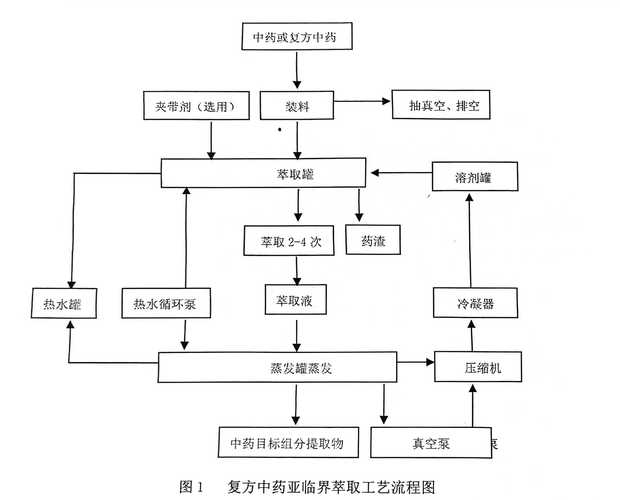
A glycerine extraction process consisting of the following steps:
9. (1) pre-glycerine treatment: glycerine slices
10.(2) glycol extraction: the grass from the cut in step (1) shall be thrown into the heat-release extraction tank, immersed in water, reflow extraction, and the fluid shall be extracted
11. (3) slag pressurization, enrichment: pressurization of the slag after step (2) has been completed in a pressurized press
12.(4) enrichment leachate: enrichment of the extract from step (2) with the filtering of pressure fluid from step (3)
Ointment
13. (5) ethanol deposition: placing the leachate obtained by step (4) in an ethanol tank, using ethanol for three extractions, recovery of ethanol and extraction of glycol acid。
In the above-mentioned glycerine extraction process, the steps listed in (1) are to be long 5-10 cm in the licorice cut。
In the above-mentioned glycerine extraction process, the above-mentioned step (2) is 6-8 times the weight of the glycerine immersed with water, 10-15h。
In the glycerine extraction process described above, the return flow extraction is 8-10h。
In the glycerine extraction process described above, the relative density of leachate in step (4) is 1. 22-1. 26。
In the above-mentioned glycerine extraction process, the steps for three extractions with ethanol in step (5) are: placement of the leachate obtained in the ethanol tank, adding 80 to 90 per cent of the ethanol to the mix to 60 to 70 per cent of the ethanol volume, sequestering 12 to 15h and extracting the liquid one; incorporation of 60 to 70 per cent of the ethanol dissolved to the sediment, full mixing, static 12 to 15h to remove the liquid two; sedimentation with 60 to 70 per cent ethanol dissolved, full mixing, static 12 to 15h to remove the liquid three。
In the above-mentioned glycerine extraction process, the steps for three extractions with ethanol in step (5) are: placement of the leachate obtained in the ethanol tank, adding 83-87 per cent of the ethanol to the mix until it reaches 63-67 per cent of the ethanol volume, sequestered 13-14h, extracting the liquid one; incorporation of the ethanol into the sediment with 63-67 per cent dissolved, full mixing with 13-14h, extracting the liquid two; and deposition with 63-67 per cent ethanol dissolved, full mixing, 13-14h, extracting the liquid three。
In the above-mentioned glycerine extraction process, the steps for three extractions with ethanol in step (5) are: placement of step (4) impregnated ethanol in an ethanol tank, adding 85 per cent of ethanol to the mix until it reaches 65 per cent of the ethanol volume, stationing 13h and extracting one of the liquids; incorporation of 65 per cent of the ethanol into the sediment, full mixing, static 13h and extracting two of the liquids; and settlement of 65 per cent of the ethanol dissolved, full mixing, 13h, extraction of the liquids, consolidation of one, two and three of the liquids。
In the glycerine extraction process described above, the recovered ethanol is filtered with centrifugal separation at step (5)。
22. Useful effects
23. 1. This invention trimmed the glycerine raw materials with a control period of 5-10 cm, which facilitates the effective extraction of glycerine acid。
24. 2. The inventions first impregnated 10 to 15h of potable water by 6 to 8 times the weight of glycerine in the cut, reflowed 8 to 10h to extract the active ingredient and then squeezed the slag, extracting the active ingredient in the slag and obtaining the pressurized fluid, thereby increasing the rate of harvest of the active ingredient。
25. 3 the invention concentrates the filtration of extracting fluids with squeezed fluids into a leachate, followed by a sanctuaries to accelerate the efficiency of the sanctuaries。
26. 4. The present invention uses ethanol for three extractions of ethanol for leachate and sedimentation, with full extraction effect, which has significantly increased the rate of lysage, filtration with centrifugal separation, and increased purity of ethanol。
27. In summary, the invention proposes a method of extraction of licoric acid, which guarantees its extraction by adjusting and optimizing the process, following the preferred parameters proposed in the present invention, with the advantage of high yield and purity。
Implementation modalities
The following is a clear and complete description of the technical options in the application of this invention. It is clear that the implementations described are only part of the implementation of this invention, not all of it, and therefore cannot be understood as limitations on the invention。
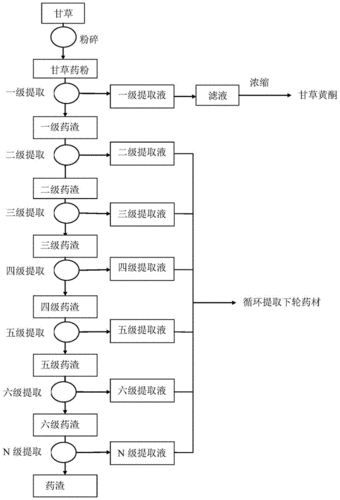
29. Example 1. A glycerine extraction process with the following steps:
30.(1) glycerine pre-treatment: the licorice section is 5 cm long
31. (2) glycol extraction: the licorice from the cut in step (1) is thrown into the heat-release extraction tank, 6 times the weight of the glycerine in the slice is immersed 10h in potable water and 8h in the backstream is extracted from the fluid
32. (3) slag pressurization, enrichment: pressurization of the slag after step (2) is completed in a pressurized press, with pressure of the fluid
33.(4) enrichment leachate: a mixture of extracts obtained from step (2) and pressure filters obtained from step (3) with a relative density of 1. 22 leachate
34. (5) ethanol sank: step (4) is inserted into the ethanol tank, step (4) is inserted into the ethanol tank with the leachate obtained, and 80 per cent ethanol is added to the mix until 60 per cent of the ethanol volume, static 12h is removed from the liquid one; 60 per cent ethanol is dissolved, fully mixed and 12h is sequestered from the ethanol tank; 60 per cent ethanol is dissolved, fully mixed, 12h is sequestered, up to the liquid one, up to the liquid two and up to the ethanol three is removed, then the ethanol is filtrated with centrifugation and recovered by gavage。
35. Implementation example 2. A glycerine extraction process with the following steps:
36.(1) glycerine pre-treatment: the licorice section is 10 cm long
37. (2) glycerine extraction: the glycerine in the cut part of step (1) shall be thrown into the heat-release extraction tank, the glycerine in the cut part shall be immersed 15h by 8 times the weight of the glycerine, and the flow shall be extracted 10h, and the liquid shall be extracted
38. (3) slag pressurization, enrichment: pressurization of the slag after step (2) has been completed in a pressurized press
39. (4) enrichment leachate: a mixture of extracts from step (2) and pressure filtration from step (3) with a relative density of 1. 26 leachate
40. (5) ethanol sank: step (4) is inserted into the ethanol tank, step (4) is inserted into the ethanol tank with the leachate obtained, and 90 per cent ethanol is added to the mix until it reaches 70 per cent of the ethanol volume, 15h is static and up to the liquid one is removed; 70 per cent ethanol is dissolved, fully mixed, 15h is sequestered and up to the liquid two; and 70 per cent ethanol is dissolved, fully mixed, 15h is sequestered, the upper liquid is removed, the upper one, the upper two and the upper three is combined, and the ethanol is then filtered with centrifugal separation to recover the gavage。
41. Example 3. A glycerine extraction process with the following steps:
42.(1) glycerine pre-treatment: the licorice section is 7 cm long
43.(2) glycol extraction: the licorice from the cut in step (1) shall be thrown into the heat-release extraction tank, and the drinking water in the cut-off section shall be immersed to 12h by 6. 5 times the weight of the glycerine, and the flow shall be extracted from 8. 5h and the liquid shall be extracted
44. (3) slag pressurization, enrichment: pressurization of the slag after step (2) is completed in a pressurized press, with pressure on the fluid
45. (4) enrichment leachate: a mixture of extracts obtained from step (2) and pressure filters obtained from step (3) with a relative density of 1. 23 leachate
46. (5) ethanol sank: step (4) is inserted into the ethanol tank, step (4) is inserted into the ethanol tank with a leachate of 83 per cent of ethanol up to 63 per cent of the ethanol volume, static 13h and withdrawal of the liquid one; ethanol is dissolved by 63 per cent to sediment, fully ethanol is mixed and 13h to remove the liquid two; sediment is dissolved by 63 per cent more ethanol, fully ethanol is soluble, 13h is sequestered, up to three ethanol is removed and recovered by centrifugal separation。
47. Example 4. A glycerine extraction process with the following steps:
48. (1) glycerine pre-treatment: the licorice section is 8 cm long
49. (2) glycol extraction: the licorice of the cut in step (1) shall be thrown into the heat-release extraction tank, and the drinking water of the cut shall be immersed to 14h by 7. 5 times the weight of the glycerine, and the flow shall be extracted by 9. 5h
50. (3) slag pressurization, enrichment: pressurization of the slag after step (2) has been completed in a pressurized press
51. (4) enrichment leachate: a mixture of extracts from step (2) and pressure filtration from step (3) with a relative density of 1. 25 leachate
52. (5) ethanol sank: step (4) is inserted into the ethanol tank, step (4) is placed into the ethanol tank with the leachate obtained, and 87 per cent of ethanol is added to the ethanol tank by mixing up to 67 per cent of the ethanol volume, and 14h is static and removed from the liquid one; 67 per cent of ethanol is dissolved to the sediment, fully mixed and 14h is sequestered to remove the liquid two; and 67 per cent of ethanol is dissolved in sediments, fully mixed, 14h is sequestered, up to the liquid three, then the ethanol is filtered with centrifugal separation and glysed acid extracts。
53. Example 5. A glycerine extraction process with the following steps:
54. (1) glycerine pre-treatment: the licorage section, with a length of 7. 5 cm
55. (2) glycerine extraction: the licorice from the cut in step (1) is thrown into the heat-release extraction tank, and the licorice in the cut is immersed to 12. 5 h by seven times the weight of the glycerine in the potable water, and 9h in the backstream, with withdrawal of the fluid
56. (3) slag pressurization, enrichment: the slag after the step (2) has been extracted is placed in a pressurized press, which must be pressurized
57. (4) enrichment leachate: a mixture of extracts from step (2) and pressure filtration from step (3) with a relative density of 1. 24 leachate
58. (5) ethanol deposition: step (4) is inserted into the ethanol tank, step (4) is inserted into the ethanol tank with the leachate obtained, and 85 per cent of the ethanol is added to the mix until it reaches 65 per cent of the ethanol volume, and 13h is sequestered to remove the liquid one; 65 per cent of the ethanol is dissolved to the sediment, fully mixed and 13h is sequestered to remove the liquid two; and 65 per cent of the ethanol is dissolved, fully mixed, 13h is sequestered, the upper liquid is removed, the upper liquid is combined with one, the upper liquid is removed and the upper liquid is removed, and the ethanol is then filtered with centrify and recovered by gavage。
59. As noted above, the scope of protection of the present invention is not limited to the best practical means of implementation, but any technical person familiar with the field of the present technology should be covered by the protection of the present invention, within the scope of the technology revealed by the present invention and in accordance with its technological programme and its design。