Name of system
Systems for equipment inspection and maintenance management
Controlled status
Designation
Executive group
Oversight
Section
Chapter 1 general provisions
Article 1 purpose
The system is designed to regulate the inspection and maintenance of equipment, ensure that the officers are able to detect and resolve the potential hazards of the equipment in a timely manner, regulate the maintenance of the equipment, keep the equipment in good working condition, extend the useful life of the equipment, reduce the cost of production。
Article 2 scope of application
This system applies to the management and control of equipment spot checks and maintenance。
Article 3 management responsibilities
1. The equipment checkpoint is responsible for conducting the equipment check to prevent equipment accidents。
2. The workshops and teams are responsible for co-ordination of equipment checkers。
Chapter 2 maintenance of equipment
Article 4. Maintenance of equipment is divided into routine and regular maintenance。
Article 5. Daily maintenance of equipment: divided into shifts and holiday maintenance。
Maintenance of equipment per shift。
(1) the equipment operator shall conduct a spot check of the equipment prior to work to check for anomalies and to analyse the records of the operation of the equipment of the previous class。
(2) the equipment operator shall process the equipment before it is activated in accordance with the provisions of the equipment lubricants icon。
(3) once the equipment is complete, the operation of the equipment shall be debugged and the work shall not be performed until all parts of the equipment are functional。
(4) in the course of the operation of the equipment, round-trip and back-trip inspections are carried out, the equipment is detected to be abnormally and immediately shut down, and the team leader is informed in a timely manner that the equipment manager is contacted for processing。
(5) the equipment operator should check that the operating records of the equipment are complete and clean up the equipment in about 20 minutes, cutting the power, cleaning the work site and ensuring that the equipment is clean and clean, before the day off。
2. Maintenance of the equipment on holidays。
In the event of a factory holiday, the equipment operator should spend approximately one and a half hours thoroughly cleaning the equipment, cleaning the oil, lubricating and cleaning the environment and conducting a unified inspection by the team leader。
Article 6. Periodic maintenance of equipment: periodic maintenance of equipment is divided into primary and secondary maintenance。
1. Primary maintenance of equipment。
(1) the primary maintenance of equipment is, in principle, a three-month cycle and the one-month cycle for dry-drying equipment。
(2) primary maintenance of equipment is performed by equipment operators and equipment repairers。
(3) operational points for equipment level-i maintenance。
1 dismantling of specified parts, hoods and dust masks, etc., and thorough cleaning。
2 oil routes, cleaning of filters, replacement of oil lines, tarp, filters, lubricants, etc。
3 complete the handles, handballs, screws, bolts, oil beaks, etc. And maintain the integrity of the equipment。
4 the loose parts of the secured equipment, adjusting the co-ordinated gap of the equipment and replacing individual vulnerable pieces and seals。
5 cleaning of guidance tracks and slides, and removal of thorns and scratches。
2. Secondary maintenance of equipment。
(1) secondary maintenance of equipment is, in principle, carried out semi-annually and may also take place during the less productive season。
(2) secondary maintenance of production equipment is performed primarily by equipment repair personnel, supported by equipment operators。
(3) operational points for secondary maintenance of production equipment。
1 part of the equipment was disassembled and repaired to replace and repair worn parts。
2 replacement of mechanical oil in equipment。
3 cleaning, checking, adjusting electrical lines and installations。
Chapter 3
Article 7
The equipment points examiners may use two methods: “five senses” and “technology”。
1. 5 a sense-checking method that uses human visual, hearing, touch, smell, and taste five sensory functions to determine the state of the equipment。
2. The technical diagnostic method, which is used by the department of equipment for the purpose of testing equipment when the precision requirements of the equipment are high and the five senses do not meet the point detection requirements。
Article 8 tool requirements for equipment check
1. For routine check-ups of equipment, equipment check-ups may be carried out using an ordinary check-up tool。
2. When periodic check-ups, precision check-ups and focus check-ups of equipment are carried out, the equipment check-ers are required to use professional and sophisticated check-ups。
Chapter 4
Article 9 identification of equipment points
The equipment manager shall pre-determine the areas of the equipment with a higher frequency and indicate the direction of the equipment point check。
Article 10 preparation of a plan for the inspection of equipment
1. The equipment supervisor prepares a check-up plan based on the ease of the check-up department or the probability of failure, which should specify the main elements of the check-up, the division of responsibilities of the check-inspectors and the periodicity of the check-ins。
2. Plans for equipment check-ups shall be submitted to the equipment manager for approval。
Article 11. Determination of standards for the inspection of equipment points
Upon completion of the development of the site inspection plan, the equipment manager defines the equipment check standards and establishes the equipment check specifications。
Article 12 notification of equipment check
1. Equipment spot-checkers shall communicate the equipment spot-checking plan to the workshops prior to the commencement of the equipment spot-checking。
2. The head of the workshop is required to inform the teams in a timely manner to be ready to cooperate with the check-ups of equipment。
3. The teams are headed by a team leader, who is responsible for carrying out equipment check-ups in cooperation with the equipment spotrs。
Article 13 daily check-ups
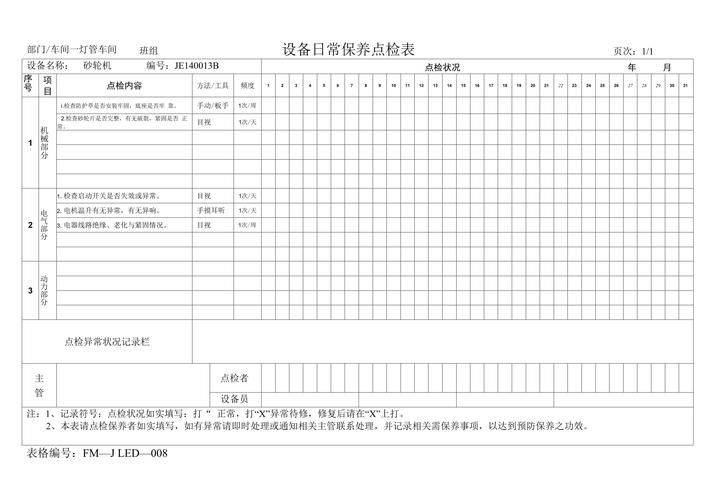
Daily spot checks are conducted by the teams themselves and are recorded on a monthly basis, which is submitted to the equipment manager for review after the workshop director has compiled the equipment spot checks of the teams. The specific points are set out below。
1. Equipment operators use five senses to conduct routine check-ups of equipment and to keep records of routine check-ups of equipment。
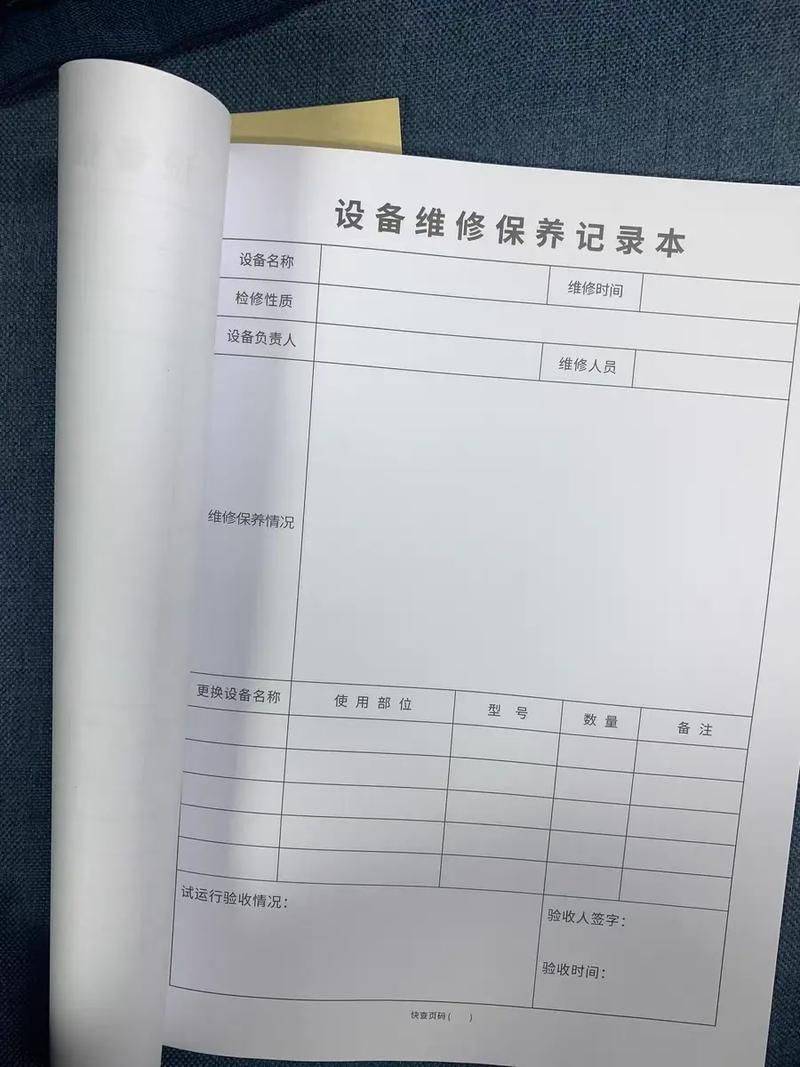
2. In routine spot checks, equipment operators who detect equipment problems should provide timely feedback to class leaders, who report to the relevant department and personnel, in order to prevent major occupational safety incidents。
3. On the basis of feedback from the equipment operator on the equipment check, the equipment supervisor shall assign the equipment checker to conduct an inspection of the check to ascertain the seriousness of the problem and whether further reporting is required。
Article 14 periodicity
In order to ensure that the equipment meets the production requirements and is productive, the commissioner of equipment shall periodically organize a check-up of the equipment by the relevant personnel. The specific points are set out below。
1. Periodic check-ups of equipment must be carried out in strict compliance with the periodicity in order to detect equipment hazards and troubleshoot them in a timely manner。
2. The equipment management commissioner is required to organize a check-up of the equipment by equipment point-checkers in order to determine accurately the condition of the equipment and to eliminate its potential risk。
3. The equipment point examiner shall collect and collate data and information obtained from regular spot checks and make comparative analyses of the information collected over different time periods to facilitate the timely detection of equipment hazards。
Article 15 precision point checks
In order to ensure that the equipment meets the required performance and accuracy, the equipment manager shall plan and schedule the precision of the equipment. The specific points are set out below。
1. Precision point checks shall be supplemented and refined as routine and periodic check-ups, which shall be established by the equipment manager according to actual needs。
2. Precision point checks must be carried out by the equipment point examiners and the quality management commissioner to ensure the quality of precision points。
3. Precision point checks should include predispositional and abnormal diagnosis of equipment, major failure profiles and equipment failure recovery programmes。
4. Precision point checks of equipment shall be carried out using technical diagnostic methods and specialized test instruments, which may, if necessary, undergo disassembly inspections of equipment。
5. The equipment point examiners shall collate the data and perform periodic summary analyses to determine the operation of the equipment。
Article 16
In order to ensure that production is carried out properly, the equipment manager shall periodically organize a check-up of priority equipment by the relevant personnel. The specific points are set out below。
1. Priority point inspections must be carried out by professionals such as equipment point examiners, quality managers and technical technicians of equipment in order to ensure the quality of inspections。
2. When the equipment points are inspected, the equipment shall be inspected primarily by means of technical diagnostic methods, including specialized testing equipment。
3. The quality management commissioner and the technical commissioner for equipment are responsible for the analysis of equipment by personnel in conjunction with equipment counts and for checking data in a timely and clear manner
4. The equipment point examiner shall collate the data and perform periodic summary analyses to determine the operation of the equipment。
Chapter 5
Article 17 security matters
In the course of implementing the equipment check, equipment checkers should be sensitive to the security aspects of the check, as shown below。
1. The equipment point examiner shall first determine whether the equipment has ceased to function and whether the various switches are closed。
2. When inspecting equipment, equipment inspectors shall carry the relevant safety and security items (labour protection gloves, smashing shoes, etc.) and, when inspecting a radiation hazard site, wear radiation-proof working clothes。
3. When operating in the wells, equipment spotters shall be careful whether there is access to water, whether the walls of the wells have been damaged or collapsed, whether there is any miscellaneous items in the wells, and wearing water safety equipment。
4. When entering the distribution room or having access to the electrical equipment, equipment spotters are required to perform insulation measures and to maintain a safe distance from surrounding buildings and trees。
5. When equipment points examiners confirm that the equipment is ready for commissioning, all personnel in the area of operations shall be notified of safety prior to commissioning。
Regulation 18 follow-up management requirements for equipment spot checks
1. The equipment manager and equipment manager should strengthen the spot control of equipment and improve the quality and efficiency of spot checks。
2. The equipment manager shall follow up on the operational status of the management of critical equipment, periodically analyse the malfunctioning and performance curves of the equipment and supervise the overhaul of the security hazards of the equipment。
3. Workshops and teams shall actively cooperate in the inspection of equipment, in order to create favourable conditions for the conduct of inspections and in order to coordinate the timely resolution of the problems identified。
4. The equipment point examiners shall establish a technical archive of each unit of equipment, and the equipment spot check records shall be filed regularly for a period of not less than six months。
5. Equipment spotters are required to exercise strict control over the progress of the equipment spot checks and complete the equipment check schedule on time. In case of unforeseen situations, such as the need to increase the time or budget for spot checks, the equipment point examiner shall submit to the equipment manager and the equipment supervisor a request for revision of the equipment check plan, for approval, or the equipment checker shall bear the corresponding responsibility。
Chapter 6
Regulation 19
When equipment malfunctions occur, the equipment operator shall immediately halt and notify the team leader, who shall, upon enquiry, fill in a “default of equipment report” and submit it to the equipment maintenance supervisor upon signature by the workshop director。
Article 20 determination of treatment
1. The equipment maintenance commissioner shall determine the manner in which the equipment will be handled in the light of the severity of the failure and the difficulty of repair。
2. When failure is common and less difficult to maintain, the equipment maintenance commissioner may assign equipment maintenance staff to perform maintenance of the equipment。
The equipment manager is required to report the suspected, significant and complex failure and to conduct the planned maintenance operations after the equipment manager has prepared the equipment maintenance plan。
Chapter 7 maintenance of equipment operations
Article 21. The working group for the production of equipment shall hand over the equipment to the equipment maintenance staff on a specified date and shall complete the equipment's handing over with a warrant, which shall be confirmed by the parties。
Article 22 if maintenance is carried out at the production site, the unit in which the equipment is produced shall, before handing over the equipment, clear the site, free the site for maintenance and remove the finished and semi-finished products。
Article 23. Equipment maintenance personnel shall, as soon as possible after inspection of the equipment, submit a list of spare parts requiring temporary processing to the relevant authorities for preparation。
The heads of the workshops shall adjust their production in accordance with the state of operation of the equipment and shall cooperate actively in the maintenance operations in order to prevent the commissioning and neglect of work。
Chapter 8
Article 25 self-examination of maintenance personnel
Upon completion of maintenance of equipment, the maintenance staff should perform air-to-air tests and precision tests and adjust in a timely manner if problems are identified。
Regulation 26 acceptance workshop inspection
The workshop responsible for equipment acceptance and inspection shall be subject to air-to-air transfer tests, load tests and precision verification before receiving and inspection。
Article 27 filling in the “equipment acceptance report”
Following the approval of equipment maintenance and inspection, equipment maintenance personnel shall return the equipment to the production workshop and complete the “equipment maintenance report”, which shall be signed and confirmed by the chief of the workshop. “equipment maintenance report” is three copies, with one copy for the equipment supervisor, one for equipment maintenance staff and one for the production workshop。
Regulation 28 accounting for costs
Upon completion of the equipment maintenance, the equipment manager shall perform the financial accounting for the equipment maintenance and report to the finance manager for the related financial processing。
Chapter 9
Rule 29
This system is developed, revised and interpreted by the department of equipment management and is validated by the equipment manager。
Article 30 time of entry into force
This approach shall enter into force on xxxxyxxxxxxxxxxxxxx。
Date prepared
Date of review
Date of ratification
Modify tag
Change places
Change date