There are more and more people buying cars, but there are not so many people who actually drive long distances every day. Many buy cars on a daily basis, sometimes on weekends, on the subway, on electric cars or in the company's proximity, driving for minutes. It's too common for a car to run 34,000 kilometres a year, not even 5,000 kilometres。

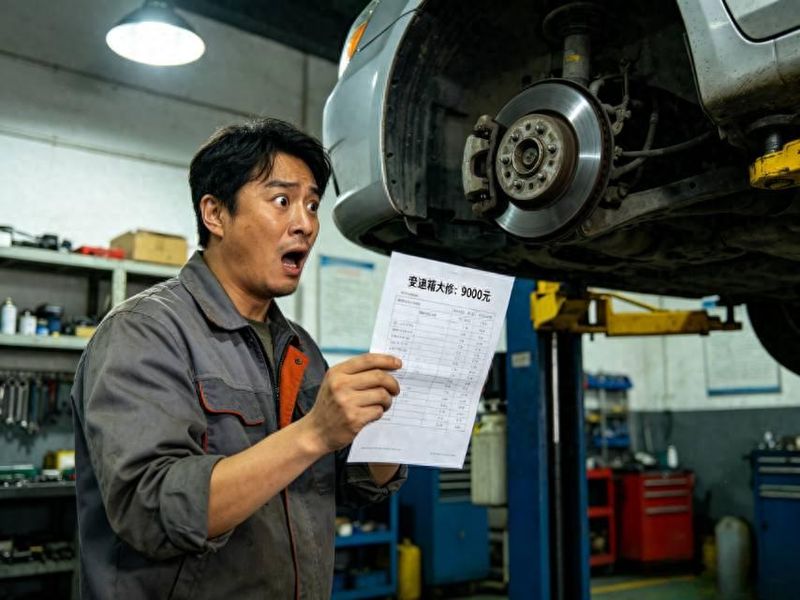
I've got a lot of friends around me who buy cars in garages longer than they do, and they get upset every time they get to the maintenance: it's half a year on the phone. It's time to change the oil machine. It's bad for the engine. It's only two or three thousand miles away, and it's too wasteful, and it's too bad. Other owners were afraid of being buried, no matter how many miles they had, had to do all the maintenance at the request of the 4s, and had spent a lot of money on it; others felt that the mileage was small and had not been maintained for two or three years, resulting in minor problems。
In fact, for owners who do not travel 5,000 kilometres a year, car maintenance does not really have to be as frequent, over-maintenance or completely unmaintenance as a network car and a long-distance car. The core will remember one sentence: less miles, less time; no blindness, focus, maintenance in this way, taking care of the car, no damage to spare parts, and saving a lot of money. Today we will talk in plain language about how to maintain it, what to do, what to do, what to do to slow down, what not to do at all, what to do, what to do, what to do, what to do, what to do, what to do, and what to do。
First of all, there's a key question: is the car maintenance, the mileage or the time? This is the most difficult point for the vast majority of car owners who use fewer cars. We usually hear the most about 5,000 kilometres of maintenance once, but this standard is directed at the owners of cars who drive frequently and drive miles. Car oils, filter cores and anti-frozen fluids are used not only for wear and tear, but also for oxidation, deterioration and failure。
In terms of the core oil, there is a shelf life for ordinary mineral oils, semi-synthetic oils and all synthetic oils. If you don't drive, put it in the engine for a year, at most, the oil's lubrication and cleanliness will decline dramatically, and the glue will produce, and the engine will be worn out; the ordinary mineral oil will go bad for six months, and the semi-synthetic oil will be 8-10 months. Your car runs thousands of kilometres a year, not even 5,000 kilometres. If you look at miles only, it'll be almost two years before it gets to 5,000 kilometres。
So it is the core principle that cars that do not run 5,000 kilometres a year, that the maintenance cycle prioritizes the time, and then the mileage, which goes first, is the core principle, and that is not to be carried by the nose。
Next, in one case, what exactly is the maintenance to do and what is most cost-effective and practical。
The first, and most basic, must be done on time — the replacement of oil and oil filters, a project that cannot be saved or delayed。
The engine is the heart of the car, the oil is the blood of the heart, and the oil filter is the filter of the blood. No matter how many cars you drive, both are expendable. For cars that travel less than 5,000 kilometres per year, the best value for money is to choose the entire synthetic oil without having to listen to what 4s store says. The total synthetic oil is more oxidative, lubricant and, in the event that it is not open, it can last steadily for a year and travels thousands of kilometres a year, with very small wear and tear, and changes exactly one year in time and mileage。
Don't choose ordinary mineral oil for the sake of saving money, you have to change ordinary mineral oil for six months. You have to change it twice a year, plus working hours, more expensive than a full-synthetic oil. The oil filters must be replaced with oil, each time they are replaced with a new machine, the filters are cheap, dozens of dollars, and if they are not, the impurities in the old filters will be mixed into the new oils, and the new oils will be replaced in vain。
It is not necessary to pursue the most expensive oil, as long as it is full-synthetic oil under a formal brand and is marked in accordance with the requirements of its own car (reading the vehicle maintenance manual, which is clearly written, for example, 5w-30, 0w-20), it is sufficient to avoid the need to buy expensive “specialized” oils, most of which are inconvenient and do not have to spend the wrong money。
The second, air- and air-conditioning-filtration cores, which need not be changed on time, depending on the situation, can be saved。
Air filter cores filter the engine, preventing dust and sand from entering the engine; air filter cores filter air inside the car, which is about our breathing well while driving. The two filter cores are not time-limited, depending primarily on the use of the environment and the extent of contamination。
Less than 5,000 kilometres a year, fewer cars are driven and air filter cores are generally not dirty. Every year when the oil is replaced, let the master blow it out, if it's just a little ash, if it's still working, usually for two years. Only if the filter core looks dark, it's not clean, or when it's driving, it feels a little weak, it's a little high, and then it's a few dozen dollars, not expensive。
Air conditioning cores are more important, after all, because of the air quality in the vehicle. If there are fewer cars usually parked in the garage and the environment is clean, one or two years later, and if there is more dust in the open, more leaves in the open, or if there is a smell in the air conditioner, and if there is dust in the wind, then change quickly. It is particularly simple to buy a car-like air-conditioning core on the internet for $20, 30 dollars, and to change it without spending time at a maintenance shop。
Third, anti-frozen fluids, brake oils, gear tank oils, which are not subject to frequent change, as per the manual, are extended over a period of time。
Many of the owners of the smaller cars, who heard from the repair shop that the fluids should be replaced, changed them quickly, but not at all. First of all, anti-frozen fluids, which are used for freezing, boiling, rustproofing, not only in winter but throughout the year. Most of the current anti-frozen fluids are long-lived, and the vehicle maintenance manual generally says two years or 40,000 kilometres of replacement. For vehicles less than 5,000 kilometres a year, as long as the anti-frozen fluids are constant, the colours are obfuscated, there is no rust, no water stains, and there is no problem of an extension to three to four years, the surface height is checked at normal times, with a few more homogenes, and no advance change is required。
Then there is brake oil, which is water-sorting, which absorbs the water in the air for a long time and affects brake effects. The maintenance manual is usually replaced by two years or 40,000 kilometres, which can be slightly more rigorous, with two to three years being replaced without a mileage. Thousands of kilometres a year, less use of brakes, slower water accumulation, more than a hundred dollars for a three-year change in total security, less expensive, less time for brake security, but no advance。
Finally, the gear tank oil, which is the most vulnerable project for the owners of cars with fewer vehicles. The fuel replacement cycle for transformer tanks is long, with manual transformers typically 60-80 million kilometres, with automatic transformers ranging from 80-100,000 kilometres, or even a lifetime exemption for some types of vehicles (the life-saving exemption here is not really a change, but a change of 100,000 kilometres). You don't run 5,000 kilometres a year, you run 100,000 kilometres for 20 years, so you don't have to change gear tanks for six to eight years, and you let the master check the fluids, so as long as it's clean and tasteless, you can use it, and you can change it once in 10 years. Don't listen to the repair shop for 3 years, and waste money。
Fourth, tyres, cylinders and brake systems, which are primarily inspected, are broken and replaced without preventive replacement。
First, the car bottle has a life span of three to five years, with fewer car owners paying attention to its maintenance. Because the car is not driven enough, the bottle is not charged enough, it is easy to lose power and its lifetime is reduced. When the vehicle is not used, every effort is made not to use electrical equipment such as car lights, radios and vehicle chargers for long periods of time. Every year, during maintenance, the master is given to measure the voltage, so long as the voltage is normal and the fire is normal, no change is required. The battery can't hit the fire, it starts with a battery, runs a run to charge it, it's full of charge, it's life, it's $3,400 for a regular bottle, it doesn't have to change ahead。
It is followed by tyres, which generally have a lifetime of five years or 60,000 kilometres, whichever comes first. Less than 5,000 kilometres a year, tyres are mainly ageing and not worn. The normal examination of tyres for cracks, drums, normal tire pressure, low tire pressure increases fuel consumption, and too high affects comfort and safety. As long as the tyres are free of cracks and drums, the flowers are deep, and within five years they will not be replaced at all, and even if they are, the tyres will not be easily broken and will not have to be replaced for long periods of time。
The brake system, with fewer cars, wears the brake plates and brake plates very slowly, running thousands of kilometres a year, without problems for 10 years. Each time maintenance allowed the master to check the thickness of the brake blades, so long as the thickness was not below the minimum level, the brake plates were not altered, so long as they were not severely worn, deformed or moved. The brakes are usually taken care of, so don't press the brakes。
Fifth, all kinds of cleaning and conservation projects are pits, and do not do anything。
It must be borne in mind that maintenance projects such as engine cleaning, gas-saving door cleaning, oil road cleaning, carbon clean-up and fuel-added for vehicles less than 5,000 kilometres a year are completely unnecessary。
The carbon of the engine is generated by long-term driving, slacking and congestion. You drive fewer cars, often in good condition and with little carbon, and you don't clean them at all. So does the gas-saving doors, which drive fewer cars, have clean air cores, and the gas-saving doors are not dirty and clean. Not to mention the oil road, which is fueled with oil from a regular gas station, there is no impurities, there is no cleaning. These projects are not cheap, they are less than one or two hundred, they are more than a few thousand, they are completely wasteful, they do nothing to the car, but they have unprofessional maintenance stores, they are poorly cleaned and they wash out the car。
Only if there are obvious problems with cars, such as glitching, difficulties with start-up, sudden increase in fuel consumption, and then checking for carbon accumulation, gas-saving doors and targeting, maintenance is routinely rejected。
There are also four rounds of positioning and balancing, so long as the car does not miss, the steering wheel does not shake, the tires do not undergo abnormal wear, no matter how long it runs, and this is a project that many repair shops will recommend and refuse directly。
Here's a simple maintenance list for the owner, who runs less than 5,000 kilometres a year
The core must do this: replace full-synthetic oil + oil filter cores once a year, which is the only item that must be done on time, with the rest to be seen。
2. Leach cores: air filter cores are blown once in the year 1-2, which are changed in a dirty manner; air-conditioning filtration cores are changed once in the year-2 and smell is changed at any time。
Oil fluids: freezing fluids change once every 3-4 years; brake oils change once every 2-3 years; transformer tank oil is replaced after 8-10 years of inspection。
4. Visible items: cylinders measuring voltage, broken or replaced; tyres looking at ageing, used within five years without problems; brake blades looking at thickness and thinness。
5. Additional items: all cleaning, conservation, four rounds of positioning and balancing, without exception。
It may be said that the car is a consumable and that there is no harm in maintaining it. This is not the case. Over-maintenance not only is a waste of money, but it also allows vehicles to be dismantled more frequently, which can result in loose parts and oil spills. Cars are not so delicate, especially for domestic use, are designed to take into account different usage scenarios, have fewer vehicles, and can drive well by capturing the core maintenance project and making basic checks。
I have a friend who buys a car and runs about 4,000 kilometres a year, and that's the method of maintaining it, changing it once a year, saving the rest, six years, without any problems, and spending more than $300 a year on maintenance, which is worth thousands of dollars a year。
There is also a negative example of the fact that the neighbors, who also use little cars, listen to the 4s store, do a bunch of additional items every six months, spend more than 2,000 per year on maintenance, drive for three years, and then the car has a glittering problem, which is the result of over-cleaning the gas door, which cost nothing and causes a minor problem。
Thus, the owners of cars with fewer vehicles must not be deceived by the notion of “maintenance as much as possible” and should not adopt a “no maintenance” mentality, focus on maintenance, do core items over time, and others on an as-needed basis, saving both hearts and money。
Finally, it should be recalled that, regardless of maintenance, it is important to read the maintenance manual for its own vehicle, which is the most authoritative guide given by the manufacturer and is more reliable than any repair shop's advice. The repair shop and the 4s store will certainly recommend more projects for profit, and as long as we hold our own lines and know what to do and do not do, we will not be trapped。
Is it not good to buy a car to make it easier for you to live, not to find yourself a burden, to run for less than 5,000 kilometres a year, to keep the car well enough to spend the money saved on fuel, car wash, daily expenses
If you are also the owner of a car with fewer than 5,000 kilometres a year, write down the maintenance method, and do it the next time, and don't bother and spend any more money. It can also be forwarded to friends with the same situation, so that everyone can avoid the loss of maintenance and make the car easier and more cost-effective。