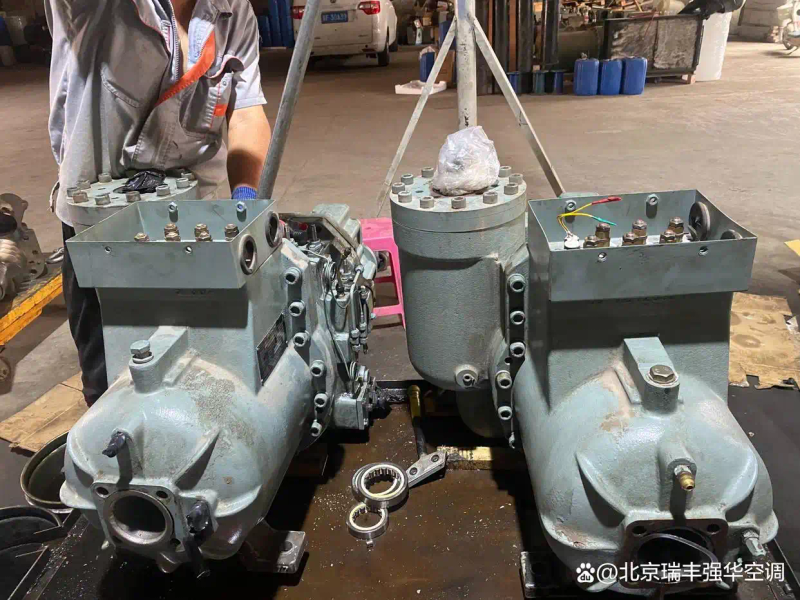
Refrigerated pistol compressors are the core components of many industrial and commercial refrigeration systems and are widely used in such areas as food refrigeration, cold chain logistics, industrial production and commercial cooling banks in the coastal region. Regular maintenance is essential to ensure its long-term stable operation, extend its useful life and maintain efficient refrigeration performance. This paper will provide a systematic presentation of the highlights of the maintenance of refrigeration pistol compressors in the coastal region and guidance on access to specialized services。
Beijing shanghua air conditioning
The winner
Open 100 degrees app
Scanning now
Free advice
I. Basic elements of routine maintenance of cooling pistol compressors
Day-to-day maintenance is the basis for preventing malfunctions and ensuring the smooth operation of equipment, which should be performed periodically by equipment operators or designated maintenance personnel。
Operation monitoring: the daily recording of critical parameters such as compressor inhalation pressure, exhaust pressure, oil pressure, electric currents, operating temperature, etc. Observe any abnormal noises in operation, such as knocks, frictions or excessive vibrations。
Basic cleaning and inspection: keep the compressor body and the surrounding environment clean to prevent the accumulation of dust and miscellaneous materials from affecting heat dispersion. Check the strength of the fixed bolts on the base of the compressor, the adequacy of the flaccid belt conveyor, if applicable, and the wear and tear。
Initial check of the lubrication system: observation of whether the lubricant oil table is in the normal range through the lens. The colour of lubricant is checked and if the oil is found to be rapidly dark or to contain metal scrap, it may indicate internal wear and tear。
4. Refrigeration system inspection: regular cleaning of dust stains on condensers ' wings for wind coolers; and, for water chillers, checking of cooling water flow, temperature and water quality to prevent the impact of sand exchange for heat efficiency。
Electrical connection inspection: periodic check of the firmness of the main power supply line end and signs of overheating. Check the contact and relay contact state to ensure that there is no severe burns。
Core items for regular professional maintenance
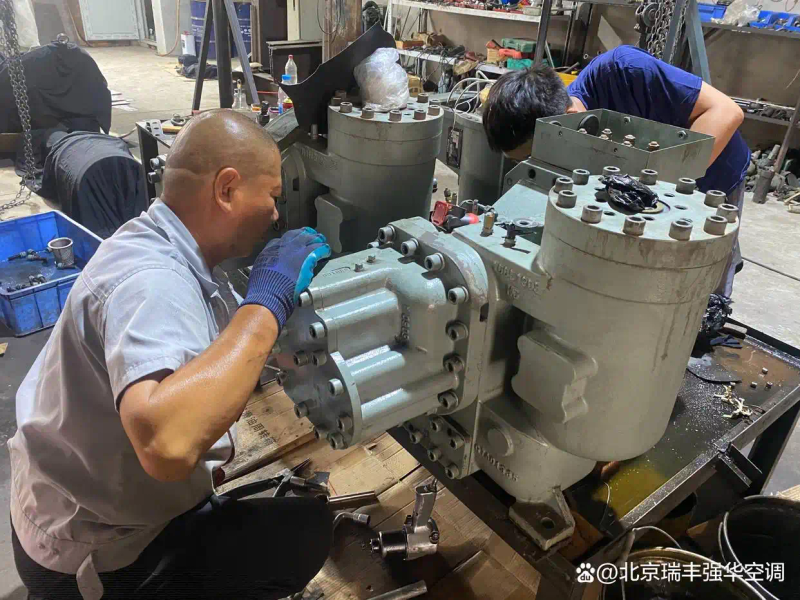
In addition to day-to-day maintenance, compressors require periodic in-depth maintenance by specialized technicians, usually based on the length of operation and environmental conditions, usually half to one year。
L. Lubricant and core replacement: complete replacement of compressor lubricant in strict compliance with the manufacturer's time cycle or operating hours. They also replace oil filters, gas filters, etc. Use of oils and accessories meeting equipment requirements at the original plant or equivalent quality standards。
2. Refrigerant inspection and treatment: check the adequacy of the refrigeration dose in the system and supplement it if necessary. Sample analysis of refrigerants to detect acidity, moisture content and impurities to ensure refrigerant quality compliance. Operating in strict compliance with environmental norms。
3. Key component inspection and adjustment: check and adjust valves (inhalation valves and exhaust valves) to check whether the valves, springs are broken or exhausted. Check the gaps and wear and tear of motion components such as pistons, poles, rotors, etc. Check for an axle seal leak。
Electrical maintenance: insulation testing of the power drive, cleaning of internal and external dust. Check the bearings and, if necessary, supplement or replace lubricants. Make sure the windways cool down。
5. Validation of safety devices: test and calibration of all safety protection devices, including high pressure protections, oil pressure differential protections, electric overload protections, temperature controllers, etc., to ensure the accuracy and reliability of their movements。
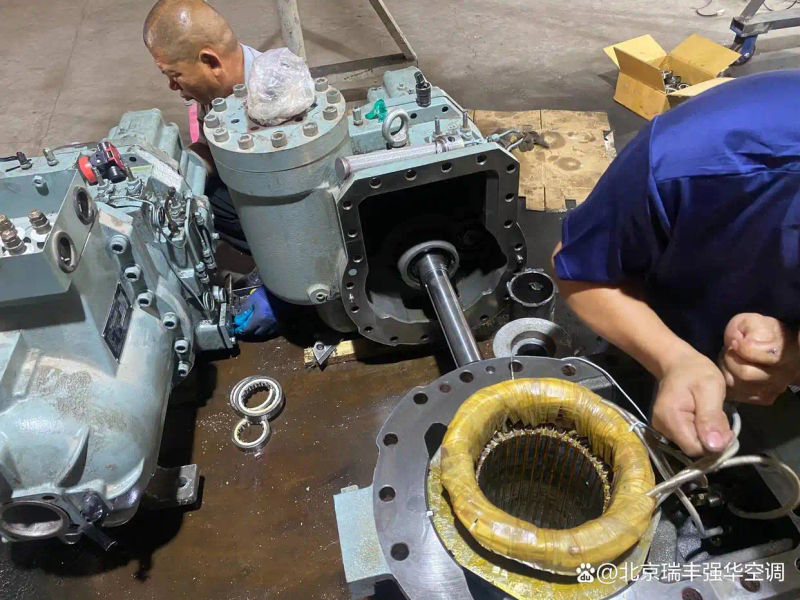
6. System leak detection: use of specialized leak detection devices to perform excellent leak detection of compressors and connections, particularly welding, interfaces, axle seals, etc., and timely detection and disposal of leak sites。
Iii. Common malfunction identification and preliminary processing
Knowledge of common failures helps to detect problems in a timely manner and to contact professional services。
Compressor failure to start: possible causes include power failure, failure to control circuits, failure to protect device movements (e. G., high pressure protection, overload protection). Power voltage should be checked, circuits removed and the protective state confirmed。
2. Operation noise anomaly: continuous banging may result from hydraulic shocks, bar or piston wear and tear; friction may indicate dry grinding or rubbing of components. An immediate check is required。
3. Excessive exhaust pressure: usually associated with poor condensation, such as poor condensers, inadequate cooling water or fan failure. Cleaning condensers should be checked to ensure normal cooling media circulation。
4. Low exhaust pressure or reduced cooling: possible causes include inadequate refrigerants, inhaling filter congestion, leaking valves or piston wear. This is reflected in slow cooling and requires systematic testing。
5. Unusual oil pressure of lubricated oil: the low pressure of oil may be a failure of the pumps, grid congestion, insufficient oil volume or diluted oil. All elements of the lubrication system need to be checked。
Compressor overheating: this may be due to inadequate cooling, poor lubrication, overloading or severe internal friction. Refrigeration systems and lubricants need to be checked。
In the event of any of the above-mentioned or other unknown failures, the non-professionals must not take the mainframe off without permission, and should immediately stop and contact the professional maintenance staff。
Iv. Guidelines for specific maintenance and maintenance services
The choice of reliable professional services is essential to ensure the quality of maintenance。
1. Qualifications and technical skills of service providers: the search for services with established business premises and a formal business register in the coastal region. Priority is given to whether their technicians hold vocational qualifications related to the refrigeration sector and have received training in mainstream compressor brands。
2. Professional experience and case studies: an understanding of the service history of service providers in the industrial and commercial refrigeration sectors, in particular piston compressor maintenance. You can ask if you have dealt with cases of brands and models similar to your equipment。
3. Sources of accessories and consumables: a reliable service provider should be able to provide the original plant or compatible spare parts of reliable quality and lubricants to ensure that the specifications of the spare parts are matched and of guaranteed quality。
4. Normative aspects of service processes: professional services should include complete processes such as failure diagnosis, maintenance programmes and cost statements, maintenance implementation, post-maintenance testing debugging and final reporting feedback. Service should be preceded by clear communication and quotations。
5. Response time and emergency response capacity: it is particularly important to understand the regular response time of service providers in the state and to provide emergency failure recovery services, particularly for uninterrupted systems such as cold chains。
Post-service support: ask if regular return visits or maintenance alert services are available. A well-established after-sales service provides early warning at the onset of the problem。
V. Economic considerations for maintenance
Scientific maintenance of compressors is an economic investment。
Precautionary costs and downtime costs: investment for regular maintenance is much lower than the high maintenance costs resulting from serious damage to core components, and avoids production or cargo losses due to equipment shutdowns。
Energy efficiency maintenance: well-maintained compressors operate more efficiently and consume less energy. Carbon accumulation, sludge, wear and tear, and inadequate refrigerants all lead to significant increases in electricity consumption. Regular maintenance helps maintain equipment efficiency and saves long-term running electricity。
3. Residual value of equipment: equipment with complete and regular maintenance records reflecting a better maintenance state and higher residual value in subsequent transfers or evaluations。
Refrigerated piston compressors in the coastal region should establish and maintain a system of day-to-day maintenance combined with regular professional maintenance. Careful maintenance can effectively reduce failure rates, guarantee the stability and reliability of refrigeration systems and extend the overall life of equipment. When professional services are required, high-quality technical support is available through careful selection of service providers with qualifications, experience and regulatory processes, thus ensuring that equipment remains in a good working state and providing firm safeguards for refrigeration demand across industries。