Henan refrigeration pistol compressor: complete strategy and techniques for professional maintenance
Beijing shanghua air conditioning
The winner
Open 100 degrees app
Scanning now
Free advice
Refrigerated pistol compressors, as core components of refrigeration systems, are widely used in the areas of refrigeration, refrigeration, air conditioning and industrial cooling. The stable operation of such equipment is particularly important in the henan region because of its climatic characteristics and industrial needs. To ensure its long-term efficiency, regular professional maintenance and scientific failure management are essential. This paper will present the system's maintenance knowledge and practical techniques for cooling pistol compressors to help users better manage and extend the life of the equipment。
I. Basic structure and rationale for cooling pistol compressors
Before further exploration of maintenance, there is a need for a brief understanding of its underlying structure and rationale. Pistol compressors typically consist of major components such as electrics, curves, poles, pistons, cylinders, inhaler valves and exhaust valves. The process is similar to that of a “gas pump” that moves back and forth: an electric-driven rotor rotation, which drives the piston into the gas tank through a collage. When the piston moves down, the internal pressure in the cylinder is lowered, the inhaling valve is opened, and the low-temperature low-pressure gas refrigerant is inhaled; when the piston moves up, the gas is compressed, the pressure and temperature rise to a certain value, the exhaust valve is opened, the high-temperature high-pressure gas is discharged into the condenser for the next cycle. Understanding this process is the basis for judging and resolving most failures。
Ii. Process-wide guidance for routine and regular maintenance
Preventive maintenance is much better than post-facility maintenance. A system maintenance process can significantly reduce the risk of accidental shutdown。
1. Highlights of daily inspections:
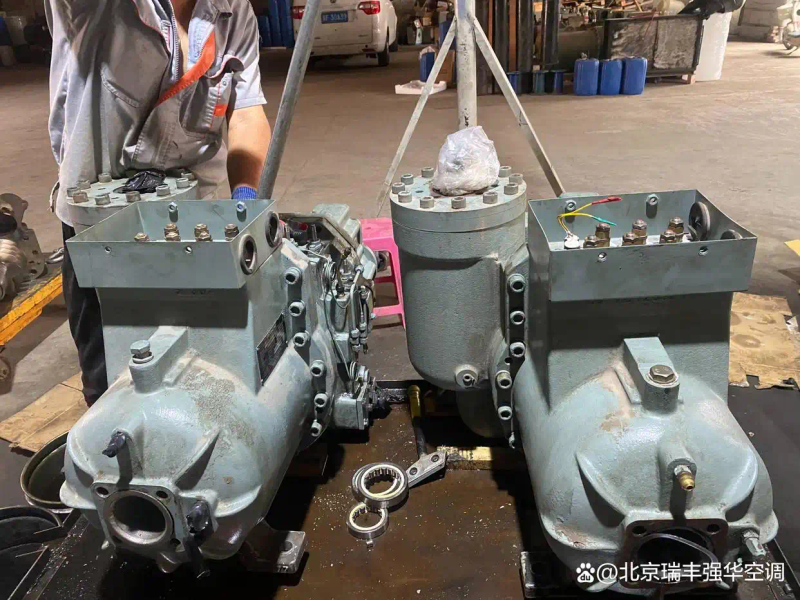
* listen: listen to the compressor as it runs. It's normal to operate evenly and smoothly. In the case of sharp friction, uneven impact or strong vibrating noise, it may mean loose, wear or lubricating internal components。
*see: observation of oil stains on the skin of compressors. Minor oil trails may be normal, but in the presence of visible and persistent oil spills, it is indicated that seals (e. G. Axle seals, joint seals) may age and fail. At the same time, check if there is an abnormal vibration in the fuselage and whether the base fixed bolt is strong。
* touch: under safety conditions, touch the different parts of the compressor shell with the hand back (with regard to the risk of high temperature). Under normal conditions, the temperature on the side of the cap of the cylinder is higher and the temperature on the side of the warp arc tank is relatively mild. If local temperatures are abnormally high, there may be poor cooling or increased internal friction。
*measurement: daily recording of key operational parameters, including inhalation pressure, exhaust pressure, oil pressure, current and voltage. Unusual fluctuations in these data are often a precursor to malfunctions。
2. Periodic maintenance plan:
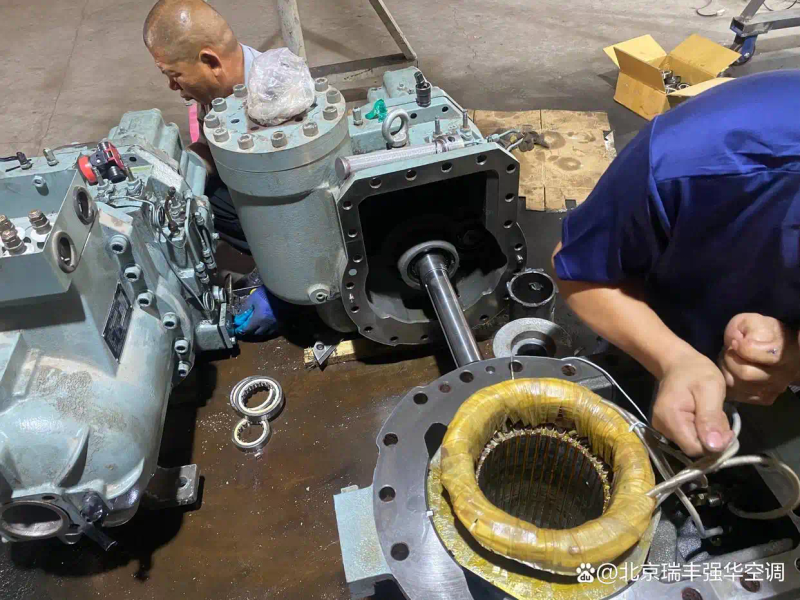
* month maintenance: cleaning of compressor casings and surrounding heaters (e. G. Wind coolers) to ensure good heat dispersion. Check and tighten all electrical connections to prevent exposure to increased resistance and even fire. Check the flaccidness and wear of moving belts (if applicable)。
:: quarterly maintenance: focus on checking the lubrication system. Check if the refrigerator oil levels are near the middle line of the mirror. The oil colour of the observation machine, clear or light yellow, may contain metal grinding or deformation if it becomes dark or fuzzy, and replacement is considered. Clean or replace the inhaler filter to prevent impurities from entering the cylinder。
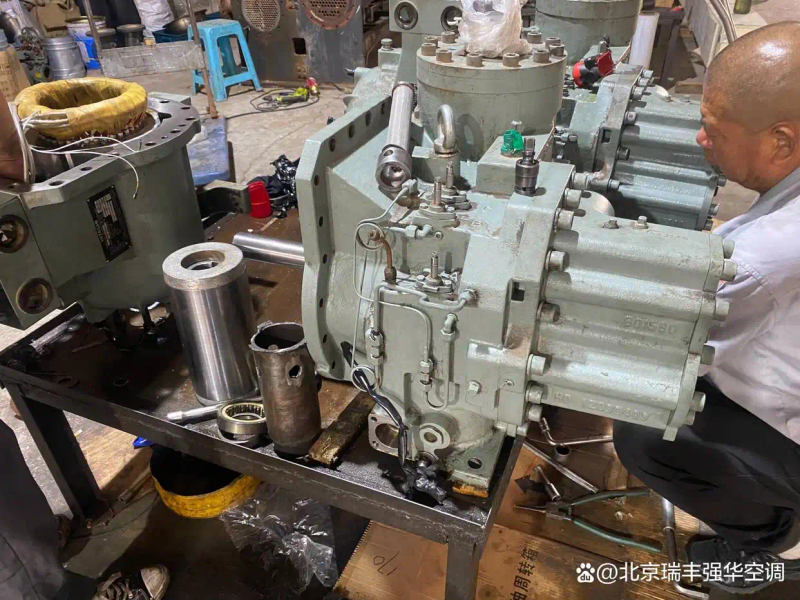
*annual maintenance (or at running hours): this is the best maintenance. Recommendations were made by professionals to: completely replace refrigerated oil and oil filters; check the sealing and wear of inhaling, exhausting valves and grinding or replacing them as necessary; check the piston ring, the wear gap of the gas tank wall; check the main bearing, the gap of the collage bearing; verify the accuracy and reliability of the movements of all safety protection devices (e. G., high pressure protection, oil pressure differential protection, overload protection); and conduct insulation detection of the electrical apparatus。
Iii. Common trouble diagnosis and maintenance techniques
When a compressor is in trouble, a structured diagnosis quickly locates the root causes。
1. Compressor cannot be activated:
:: check the power supply: confirm whether the power supply is normal and whether the voltage is within the rated range。
:: inspection of protective devices: check if the high pressure controller, the oil pressure differential controller, the overload shield has been repositioned or jumped. The jumper often indicates that the system is subject to stress abnormalities, lack of oil or electric overloading, and needs to address the root causes before repositioning。
*check control circuits: check if control elements such as thermostats, pressure switches, etc. Are channeled, contact wires are electrocuted and contact points are good。
High exhaust pressure:
*cooled condensation differential: check if the condenser is dirty (wind-cooled, water-cooled, water-screened), cooling wind or water is inadequate, and cooling media temperatures are excessive。
* over-air in the system: a vacuum that is not completely or operating over a long period of time after system maintenance may be condensed into uncondensed gases, affecting condensation for heat, requiring re-vacuation and refilling of refrigerants。
*refrigerant overfilled: also leads to abnormally high exhaust pressure。
3. Low inhalation pressure:
* refrigerant deficiency: check for leakage sites to supplement appropriate refrigerants。
* filter congestion: dry filters or inhaled filters are blocked, resulting in poor circulation and need to be replaced。
*inflation valve openings are insufficient or temperature packs fail: check the working state of the expansion valve。
*the evaporation agent is heat-replaced: the evaporation unit is over-heated or over-dusted, which affects heating。
4. Compressor abnormal noise or vibration:
* inner mechanical malfunctions: internal mechanical damage such as loose bolts, axle bearing wear, piston wear and tear, valve fracture, etc. This will require a decomposition check。
* hydraulic phenomena: large quantities of liquid refrigerants or refrigerated oil enter gas cylinders, causing severe impact. Check whether the expansion valve is open too much, whether the refrigerant is filled too much, whether the evaporating load is too small, and ensure sufficient preheating before it starts。
* basic loose or poorly fixed pipes: check and tighten foot bolts and connections。
5. Compressor overheating:
* inadequate cooling: check if the fan is normal for the machine type with the cooling fan。
:: lubrication: too low oil levels, poor oil quality or blocked roads, resulting in poor lubricants and cooling of friction areas。
* overloading: the exhaust pressure is chronically excessive or overcompressed。
*electoral failure: *the electrical circuit problem may also lead to an overall temperature increase。
Key skills and care in professional maintenance
1. Cleanness is the lifeline: when a compressor or pipe is opened for maintenance, diversity guarantees the cleaning of the operating environment, tools and parts. Small impurities into the system may block the throttle structure or wear sophisticated parts。
2. Regulation of the use of lubricating oil: multiplastic use of refrigerated oil of the correct type specified by the compressor. A combination of different types of oil can produce chemical reactions leading to deterioration of the oil. When oil is replaced, old oil should be drained to the maximum extent possible and can be washed with new oil as necessary。
3. Valves and sealed grinding: for valves and valves that are slightly worn or scratched, finely polished ointments may be used for grinding on flat plate glass to restore its sealed plane. However, there is serious damage to diversity replacement。
4. Precise measurement of the gap: the gap between the piston and the cylinder, the gap between the bearings, etc., are permitted by the manufacturer. Maintenance should be carried out using precision measurement tools such as stifling and thousands of metres to ensure that, within standards, leaks and noise are caused by passing the general assembly and, if too small, death。
5. Safety operations are always of high quality: before any maintenance is undertaken, it is essential to ensure that the compressor is completely out of power and that the pressure in the system is released safely through the discharge valve. In the treatment of refrigerants, environmental norms need to be observed to avoid direct emissions。
V. Consolidated recommendations for extending the life of compressors
In addition to standard maintenance, good usage practices are equally important:
:: smooth start-up: avoid frequent start-up and wait for minutes after each stoppage until system pressure is balanced before it is activated to reduce the impact on the electric power。
*compatibility of operation: ensure that the compressor's capacity corresponds to the load of the evaporationer, condenser and avoids the “grandmara minivan” or long-term overloading。
:: maintaining systems clean and dry: regular replacement of dry filters to prevent the circulation of moisture and acid substances in the system and the erosion of metal components。
:: complete operating records: a detailed equipment archive is established to record the contents of each maintenance, repair and replacement spare parts, as well as daily operating data. This is of great value in analysing trends of failure and developing preventive plans。
For cooling pistol compressors used in the south and beyond, their long-term reliable operation relies on the concept of “resilence over cure”. The system's daily inspections, periodic in-depth maintenance, doctrine-based failure diagnosis and rigorous maintenance operations can significantly improve the efficiency of equipment and reduce unplanned downtimes, ultimately achieving economic and stable operational objectives. The acquisition of such expertise and skills is an extremely valuable capability for equipment managers and maintenance staff。