As a mediaman who has been dealing with industrial equipment for a long time, i have been exposed to maintenance problems of various types of machinery. Today, i would like to talk to you in depth about the equipment that plays an important role in the refrigeration sector — the chiller piston compressor. Such compressors are widely used in scenarios such as cold storage, cold chain transport, industrial refrigeration, with their classic structural characteristics, operational stability and relative simplicity of maintenance. No equipment was left without careful maintenance, and proper maintenance was essential to ensure its long-term stable operation and to maintain refrigeration efficiency. Next, i will streamline the professional maintenance of such compressors with a kopp style。
Beijing shanghua air conditioning
The winner
Open 100 degrees app
Scanning now
Free advice
I. Understanding piston compressors: core structure and working principles
Before talking about maintenance, we need to get a brief picture of its basic composition. The piston compressor consists mainly of electrics, corrods, pistons, cylinders, exhaust valves, lubricant systems and cooling systems. The working method is similar to the engine of the car: the engine drives the rotor rotation, which drives the piston into the gas tank to re-move. When the piston goes down, the pressure in the cylinder is reduced and the refrigerant gas is inhaled from the inhaler valve; when the piston goes up, the gas is compressed, the pressure rises to a certain value, and the exhaust valve is opened at the end, and the high-temperature, high-pressure refrigerant gas is discharged into the condenser, and the cycle is repeated。
Understanding this basic process helps us to understand the importance of following up on the various elements. Normal co-operation of each component directly relates to the cooling capacity and service life of compressors。
Ii. Daily inspection and operational monitoring: pre-emptive
Preventive maintenance is much better than post-facility maintenance. For piston compressors operating on a day-to-day basis, operators should establish a standardized inspection system。
1. Hearing and seeing: before and after the day-to-day start-up, pay attention to whether the sound of the compressor is smooth and even and whether there is an abnormal impact, friction or sharp sound. Observe any abnormal vibrations in the body。
2. Check meters: closely monitor whether the reading of the pressure table (inhalation pressure, exhaust pressure), the oil pressure table, the temperature table (inhalation temperature, exhaust temperature, oil temperature) on the control plate is within the normal range specified by the equipment. Unusual pressure differentials or temperatures are often a precursor to malfunctions。
3. Observation of lubrication: checking whether the oil table of refrigerated oil is between standard lines, and whether the oil colours are normal (usually clear or light yellow, which requires attention if it is darker or darkening)。
4. Cleaning: keep the compressor body and surrounding environment clean, and regularly check whether cooling fans, condensers wings are blocked by dust and dust to ensure the heat is spread well。
Core items for regular maintenance: sequenced
In addition to routine inspections, periodic periodic maintenance based on the length of operation is essential. The following are some of the core maintenance projects:
1. Maintenance of lubrication systems:
:: replacement of refrigerated oil: this is one of the most important maintenance projects. Refrigerated oil not only serves as a component of the lubricants movement but also as a seal, cooling and cleaning function. Diversification is strictly based on the type and cycle recommended by the equipment manufacturer. The first replacement is usually carried out after a certain period of initial operation (e. G. 500 hours), followed by a certain length of each operation (e. G. 2000-3000 hours, depending on the condition of the work). Oil filters should be cleaned or replaced at the same time。
:: inspection of pumps and roads: ensure that they work properly and that they are accessible。
2. Inspection and maintenance of valve plates and valve groups:
* ventilated valves and valve plates are vulnerable. Valve fatigue, wear and tear, and damage to valve seals can lead to reduced compressor exhaust, reduced efficiency and increased power consumption。
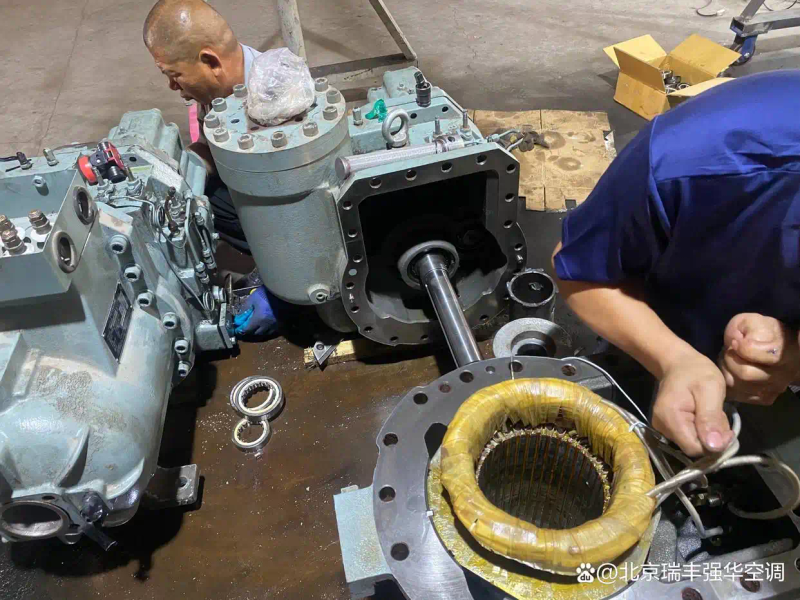
:: periodic (e. G., annual or after a certain period of operation) stoppage checks, disassembly valves to see whether the valves have cracks, curls, wears, spring strength has decreased and the valve seals have been flat. If necessary, grinding or replacement。
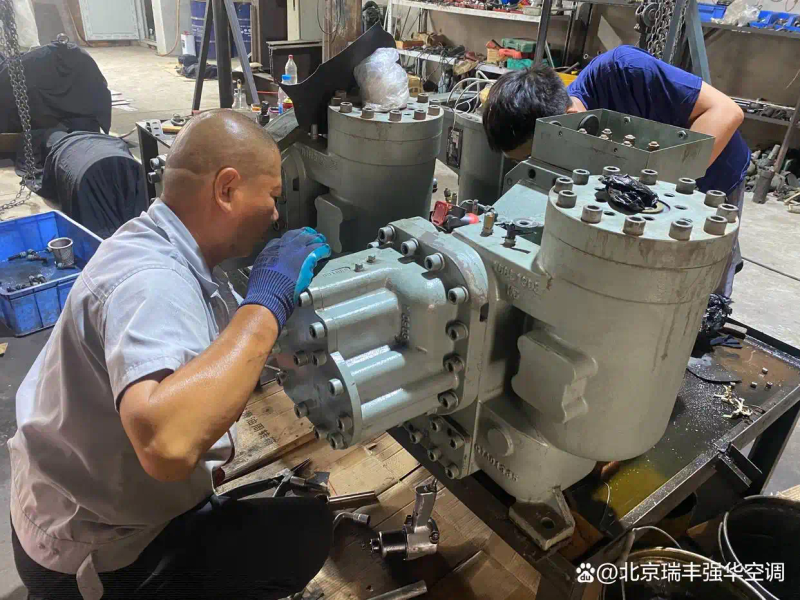
3. Inspection of piston rings and cylinders:
*psystals wear and tear can lead to tight air tank seals, reduced compression efficiency and lower refrigeration. When the equipment is overhauled or trimmed, the opening space, side segment and bullet force of the piston ring shall be examined and the wear and scratches of the cylinder wall shall be examined. Overwhelming requires replacement of piston rings and serious damage to gas cylinder walls requires treatment or replacement of tatters。
4. Sealed and secured:
:: check whether there are any signs of leakage in the axle seals (for open compressors) or in sealed lines (for semi-closed compressors). Minor seepage is permitted, but leaks require treatment。
:: good inspection and tightening of the bolts connected to the various parts, in particular key stress areas such as the foot bolt, the lid bolt and the bolt, to prevent further malfunctions due to looseness。
Electrical and electrical system maintenance:
* checks whether the main electric generator and the initiating cabinet are secure and the contact point is flat and unburned。
:: measuring electrical insulation and ensuring that it meets safety standards。
* cleaning of electric wind leaves and casings to ensure ventilation and heat。
Security devices verify:
:: periodically inspect safety protections such as high-pressure pressure controllers, oil pressure differential controllers, safety valves, temperature controllers, etc. To ensure that they are set with accurate and action-sensitive values. This is the last line of defence for the safe operation of the equipment。
Common trouble analysis and approach
When problems arise with compressors, judgement needs to be systematically analysed。
Compressors are unable to start or have difficulty: first, to check whether the power source, voltage, is normal; secondly, to check whether protective devices such as pressure controllers, temperature controllers, pressure variance controllers, etc. Are repositioned or malfunctioning; and also to check whether the power was overloaded and whether the circuit was damaged。
2. Shortage of refrigeration: possible causes include: air filter congestion; leaking or damage to exhaust valves; severe piston wear resulting in gas cylinders; inadequate or excessive system refrigerants; and excessive exhaust pressure due to heat outage by condensers. A combination of pressure and temperature parameters is required。
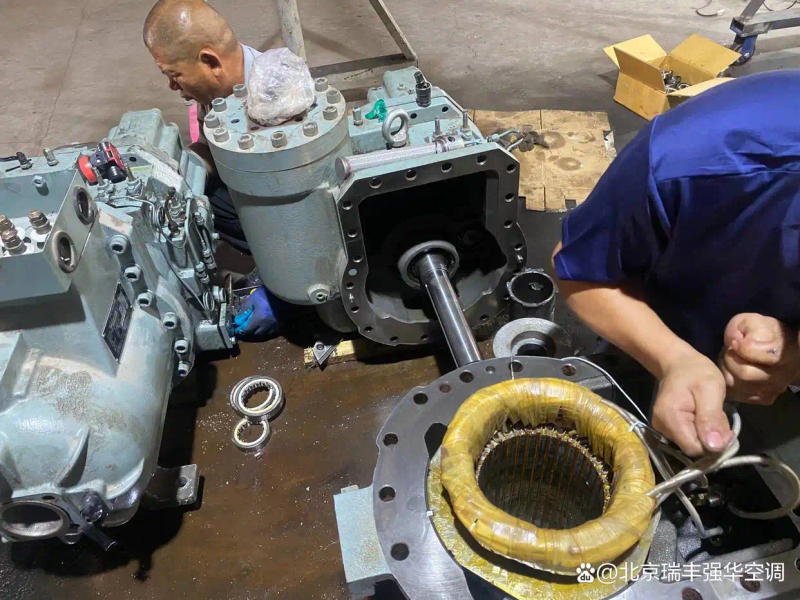
Operating acoustics and vibrations: possible causes include: excessive gap between the cortex's head or small liner; wear and tear of the main axle bearings; loose movement of the wheel or coxlear; “liquid shock” caused by liquid refrigerants entering the gas tank; looseness of the ankle bolt, etc。
4. Excretion temperatures or excessive oil temperatures: check whether condensed pressure is excessive; overheating is too high; whether refrigerated oils are spoiled or under-oiled; and whether cooling waterways (for water chillers) are smooth。
Increased consumption of oil or abnormal decrease in the level of oil: possible causes include: severe damage to the piston ring leading to “up-oil”; reduced efficiency of the oil separator or blockage of the pipeline; and thinning of refrigerant fluids into the arc tank (which may have been increased)。
Professional principles and recommendations for maintenance
I would like to highlight a few important principles:
1. Safe quality: any repair and maintenance operation diversification takes place after power cuts and full system pressure is released. For refrigerant recovery and promotion, qualified personnel are required to use specialized tools to comply with environmental requirements。
2. According to the manual: compressors with different brands and models vary in design parameters and maintenance requirements. The most reliable basis is the statement of maintenance for use of the original plant。
3. Professional diagnosis: in case of complex malfunctions, non-professionals are not recommended for blind dismantling. Measurements should be carried out using tools such as pressure meters, thermometers, current meters, etc., and logical analysis should be carried out in conjunction with the operational state of the system and processed by experienced technicians。
4. Spare parts quality: in the replacement of critical spare parts such as valves, pistons, bearings, seals, etc., priority should be given to the original plant or brands of reliable quality, which has a significant impact on performance and life after maintenance。
5. Records archiving: complete equipment maintenance and repair files are maintained to record the time of each maintenance, the project, replacement spare parts, anomalies discovered and disposal measures. This is of great value for analysing equipment status trends and predicting malfunctions。
The sustainability of the performance of the chiller piston compressor as a durable industrial equipment relies heavily on regulated, detailed and planned maintenance. It is hoped that this whole plan will provide a clear framework for maintenance. Remember that careful care of equipment is the most effective investment to ensure smooth operation of production and save long-term operating costs。