Purpose
To ensure the steady operation of piston compressors, comprehensive maintenance and overhaul protocols are developed。
Scope of application
This protocol applies to the existing piston compressors at the nitro oxygen workshop of the large chemical power plant。
General equipment
Pistol compressors in the workshop are divided into air presses and nitrogen presses, depending on the medium type, and are divided into different types depending on the mass size. Specific equipment information is shown in the table below:
Bits, place of installation, model, exhaust, excretion
5#-7# old air pressure station 4l-20/8 air pressurers 20m3/min 8mpa 3
9#-11# new air pressure station l5-20/8 air pressurers 20m3/min 8mpa 3
12# new air pressure station 5l-40/8 air pressurer 40m3/min 8mpa 1
13# old air substation 5l-40/8 air presses 40m3/min 8mpa 1
1#2# nitrogen pressure station 3le-5/25 nitrogen pressure machine 5m3/min 5 mpa 2
1 #-3 # air pressure station 4l-20/8 air pressurers 20 m3/min 8mpa 3
1#-3# pvc air pressure plant zw-3/12 nitrogen presses 3 m3/min 2 mpa 3
1#, 2# pvc air pressure plant zw-75/12 nitrogen presses 75m3/min 2 mpa 2
Review protocol
Pistol compressors are classified as minor, intermediate and major repairs. The intervals between the various types of repairs are shown in the table below:
Interval (hours)
Minor repairs 1300-160 medium repairs 4000-500 major repairs 8000-1000
Minor repairs: includes inspection and tightening of bolts and cross-locks, cleaning of condensed stains on valve components, inspection and replacement of necessary parts, and inspection and adjustment of parts of the lubrication system。
B. Clearing gas chambers and water clips and measuring wear and tear on the inner walls of the cylinders。
C. Inspection, repair or replacement of pistons, pistons, steering rings and pistons。
D. Checking or replacing poles and axes and adjusting gaps。
E. Check and adjust the main axis。
F. Checking and adjusting the piston dead-angle gap。
G. Check and replace inverse valves (if required)。
H. Cleaning and checking reversible valves (if required)。
I. Inspection and decomposition of cooling water systems。
J. Repair of offloading systems。
K. Replacement of lubricants。
(3) major repairs
A includes all elements of medium repair。
B. Dissolution and cleaning of all compressor parts。
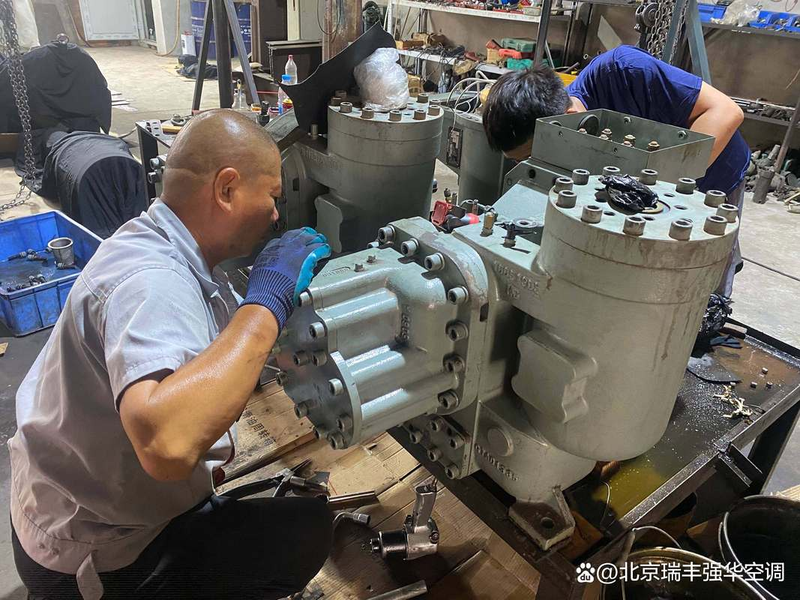
C. Check the wear and tear of the cross, the warp and the cross glide, and perform repairs or replacements as necessary。
D. Repair or replacement of gas cylinders and water pressure tests. Unrepaired cylinders are subject to trial pressure after five years of use。
E. Correction of axes and levels of components。
F. Inspection, repair or replacement of coolers, separators and water pressure tests。
G. Examination of cortex cross-locks, bolts, piston poles and, if necessary, surface detection。
H. Check and adjust the beat rate of the ship。
I. Inspection and repair adjustments to the equipment base。
J. Preserve and spray paint。
Preparation before overhaul
(1) technical preparations
A. Collection and familiarity with information on the use of manuals, technical standards, etc。
B. Information on equipment operation records, overhaul records, etc。
C. Pre-test equipment performance and record relevant technical parameters such as noise, vibration, etc。
D. Development of a detailed overhaul plan。
(2) material preparation
A. Material and spare parts for preparation of repairs。
B. Preparation of instruments and specialized tools。
(3) safety technical standards
A. Security measures are in place to ensure the safety of people and aircraft and to prevent fires and explosions。
B. Cut off the power supply and the pipes connected to the compressor and set up warning signs to prevent mishandling。
Method and procedure of overhaul
(1) dismantling procedures are as follows:
A. Dismantling into exhaust, cooling and oil pipelines。
B. Dismantling of the vent bolts of frank and removing of the intermediate cooler。
C. Dismantling of the cylinder lid bolts and removal of the cylinder cap。
D. Remove the crosslock, turn the axis and separate the pole from the cross and then remove the cross。
E. Remove the piston from the cross and remove the piston and piston。
F. Dismantling of cylinder bolts and suspension of cylinders。
G. Dismantling the bolts, removing the rods and placing the parts in sequence for subsequent overhaul。
H. Remove the large belt wheels on the axes。
I. Unmounting of the bearings and suspension of the rotors。
Elements of dismantling
A. The method of unloading the entire machine from the base before disassembly parts are removed。
B. Carefully examine the swing of the piston on the itinerary。
C. Measuring the linear pistons at the back and forth end。
D. Ensure that the pistons are appropriate for the outer edge of the surface surface of the cylinder。
E. Check the level of the cylinder and whether the cylinder axis is the same as the slide axis。
F. Measuring the gap between the side of the main axis and the curvature of the axis and checking the gap of the axis when the head is fixed。
G. Validation of the extent of the axis of the cross in the tunnel and the verticalness of the end of the cross with the piston to the slide axis。
H. Check the appropriateness of the gap between the slide and the slide。
I to ensure that the crucifixes fit well with the crucifixes, while examining the gap between the crucifixes and the corrosive mini-axis。
J. Measurement of the verticality (discretion) of the diagonal axis line of the intermediate slide axis。
K. Checks the horizontal level of the curve axis and whether the curve lock is parallel to the curve neck。
L. Validates whether the scrolling value is within normal range。
M. Check the adequacy of the gap between the main axle and the main axle on the side of the neck and on the side。
N. Measurement of the variance in the opening of the ware arm (column arm differential) to ensure its conformity。
O if necessary, check the level of the airframe and whether the slides and cylinder axes are parallel。
(2) assembly
A. Gas cylinders
A. Before assembly, the working volume of the cylinders and the water heating system shall be subjected to hydraulic tests to ensure that no leakage occurs。
B. When assembled, a careful examination shall be made of whether the axial line of the cylinder is the same as the axis of the crosser slide, and at the same time a measurement shall be made of the balance of the trajectories after the piston is loaded into the cylinder。
C. The cylinders shall be fitted in such a way as to ensure that the exposure is even and that there is an appropriate heat-inflation gap。
D. Correct the assembly position of the cylinder to ensure accuracy。
B. Curves and main bearings
A. Ensuring unimpeded flow of oil holes in warp axes and main bearings。
B. Checking the robustness of the locks of oil bolts and balance iron on the curve axis。
C. The main axle watts and bearings should be closely aligned to ensure good support。
C. Chain poles and crosses
A. During the assembly of open poles, the bolts of the pole shall be tightened in accordance with the specified value and the trajectories of the head of the pole shall be checked to the extent permitted。
B. Selection of the appropriate corrosive large-head-axis trajectory gap based on cross-lock diameter and axle-wall material。
C. In the case of a liner with a long head walrus, ensure that the liner is well aligned with the small head。
D. Carefully examine the parallels of the length and size of the head of the pole to ensure that it meets the requirements。
E. Scratch the crosses and check their angles of contact with the crosses to ensure sufficient area of exposure。
F. Detailed examination of cross-locks and lock-axis matching cones and cross-crossing contact with the piston link to ensure good coordination。
G. Tightening the bolts of connections at the corner of the cross and taking pine locking measures to ensure their reliability。
D. Filling components and oil scrapers
A. Ensure unhindered and clean access to oil, water and gas corridors in fillings。
B. Carefully grind the end of each filling combination on a grinding platform to ensure that it is closely aligned。
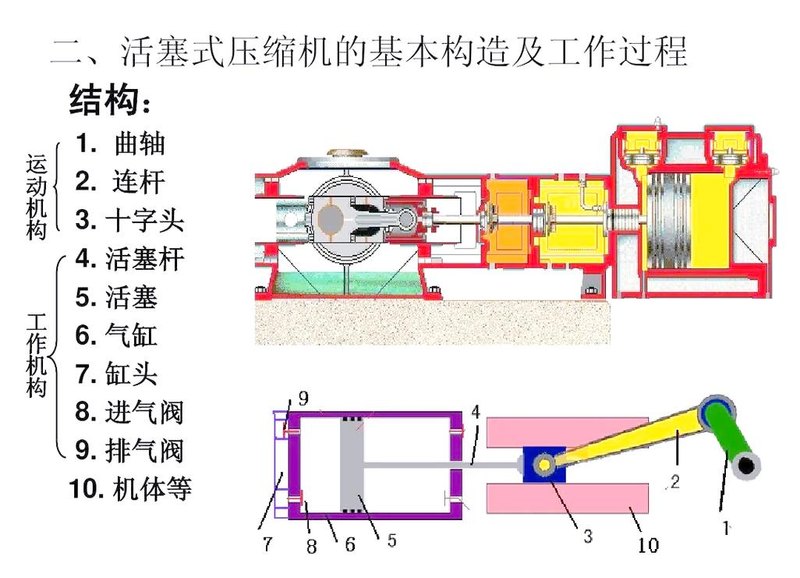
C. A scratching of the sealed surface of the filling seal and the piston surface, resulting in an area of 70 to 80 per cent。
D. When aid lock-in seals are used, ensure that the cut does not overlap, but is staggered。
E. Sealed elements such as closed-town rings in plastic-platform filling boxes shall follow the correct order。
F. The inner column of the scraping ring shall be closely aligned to the piston pole, and shall be fitted in the direction of the scraping blade and require the same as the filling seal。
E. Pistol components
A. When the piston is connected to the piston pole, it shall be carefully combined to ensure that the surface of the piston is even and to check the verticality and congenerity of the piston with the piston pole when the piston nut is tightened。
B. Carefully examine the parallel and plane levels at both ends of the piston ring。
C. After placing the piston group in the cylinder and following the cross-cutting mechanism, measure the gap between the piston and the lens and the distance from the outer circle of the piston to the inner circle of the cross-board slide, and measure the gap between the end of the piston and the end of the flag pole。
F. Gas valves
A. Check for gaps or cracks in valve valve seals and valve plane levels。
B. Measuring geometric dimensions of springs。
C. When the valves are assembled, check whether the valves, springs or springs are stuck or tilted and confirm the height of the valves when they are activated。
D. For gas valve pads, it shall be ensured that each valve is of the right size to the buffer tank and that, when installed, the valve is free to fall into the buffer slot and be flexible to move。
Review quality standards
(1) airspace and china
A. The vertical and horizontal deviations in the seat shall not exceed 05/1000 (for recoil, v and w compressors, the horizontal measurements shall be made on the main axle bearings; for stand-on compressors, the measurements shall be made on the seat paste; for l compressors, the measurements shall be made on the french side of the seat)。
B. The collage of the seat and the medium parallels the bearings, with a common mass of 8 in g131184。
C. For the meso- and gas cylinder interfaces, the vertical deviation of the cross-lock axis is 7 degrees of precision in g1321184。
D. If the compressor contains two columns or more, the parallel public differential between columns shall be as accurate as the 7th of g131184。
E. The coaxial variance between the axis of the middle slide and the positioning axis of the gas-filled steel shall be controlled within the 8-degree accuracy of g131184。
(2) the following is required for arcs:
A. Curvature axes shall be examined by an injury or hammer to ensure that there are no defects such as cracks。
B. The extent and depth of the bruising of the main axle and the mist is severely restricted and must be repaired beyond the standard。
C. The main axis axis and the warp line shall be kept parallel to the 8-degree accuracy of g131184。
D. A rectangular column and circle of the main axis diameter and warp sales, which shall be less than 1/2 in diameter。
E the maximum volume of wear and tear on the main axis and on the handle is also specified, as detailed in the table。
F. A reduction of not more than 1 per cent of the original axle shall be required for mechanical processing due to wear and tear。
G. The warp axis shall be installed to ensure that the horizontal deviation is not greater than 1/1000 and that the warp arm differential is kept within a certain range。
H. When the warp key is damaged, the size may be increased, as appropriate, depending on the circumstances of the situation, but with regard to the extent permitted by the structure and stress。
(3) requirements for overhaul of axle watts (including main axle watts, collages and heads) and scroll bearings:
A. The combination of axle bearing alloy and hull shall be strong and free of defects such as cracks, gas holes and layers。
B. The degree of alignment of the main axle watt back with the axle bearings shall be strictly controlled against the criteria in table 3。
The lower watts shall be closely bound and matched by the area of the side tile contact requirements of the quadrilateral thick wall-axis, i. E. The area of the flat wedge mat. For balconies, the options are lead-based alloys, tin-based alloys, copper-based alloys, aluminium-based alloys and antimony alloys. In addition, the alignment of the axle with the main axle neck is strictly controlled by reference to table 4. The upper balconium shall be greater than 50 and the lower balconium shall be less than 70 and ensure even contact points. For four thick wall-axis, the upper-wall collage is greater than 50, the side-wall collage is greater than 60 and the lower-wall collage is greater than 70。