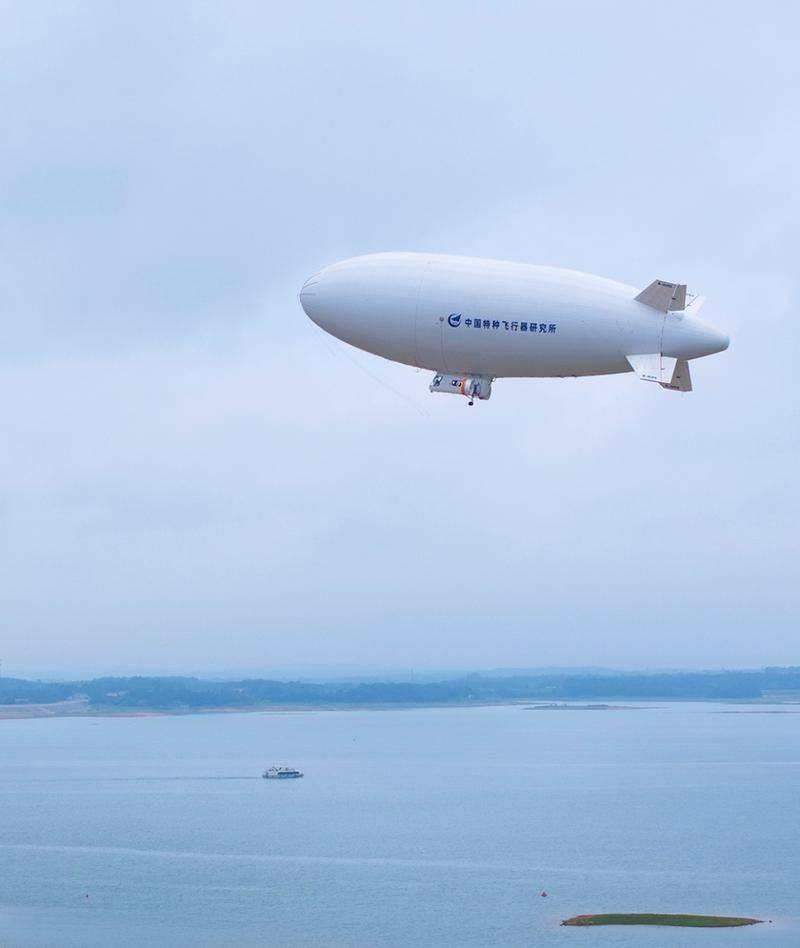
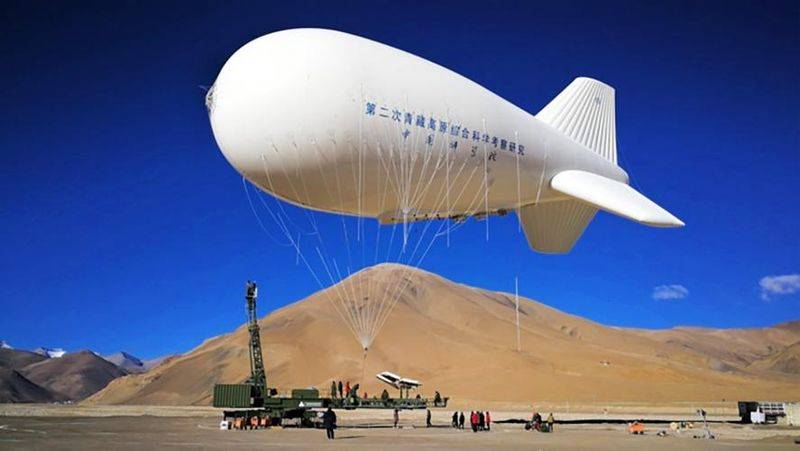
By their structural characteristics, the craft can be divided into three categories: soft, semi-hard and hard. The traditional soft craft is carried with static lift power, carrying capacity, flight speed, flight time, wind resistance, and is less capable of taking off and landing. The semi-hardship adds rigid dragon bones inside the cylindrical body, reduces the internal stress of the airbag, generates lift power with a pair of kinetic wings, increases the carrying power, speed and flight time of the vessel. Traditional, semi-hard and hard craft, relative to the same carrying capacity, can in turn significantly reduce the price of construction。
The content of the invention
The purpose of this practical novelty is to provide a low-cost semi-rigid craft that uses both lift and float, with good flight and landing performance. This is a floating, semi-rigid craft, characterized by a rigid dragon bone that runs through the centre of the vessel, which forms a semi-rigid structure with a pair of revolving lifting wings on both sides。
The main technical options of this practical new type are the following: the craft consists of structural components (airbags, dragon bones, pods, kinetic wings, tail wings, landing gears, etc.), energy power (engine, propeller, fuel and power systems, etc.), navigation control systems and communications systems, etc. The ship balances its weight with that of its payload with the static lifting power of air generated by the venting of air from the air; the power propulsion system provides the driving force for forward flight, the vector thrust provides the vertical thrust to support the launch's take-off and landing; and the direction and direction of the flight control。
After inflating the airbags, they form an external shape similar to a hammer or a drop of water, with light and high strength inside the airbag along the central axis of the vessel。
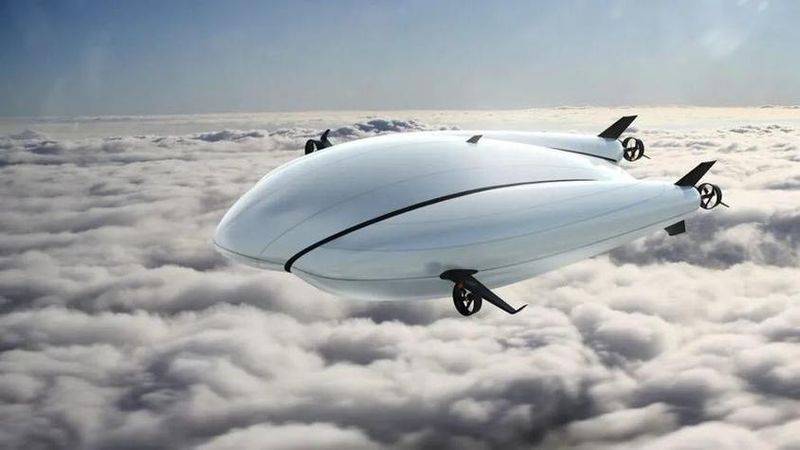
Each of the airbags is designed to adjust the internal pressure of the airbags of the vessel, while at the same time acting as an auxiliary to the centre of gravity。
The first cone of the ship's head is mainly to increase the speed of the ship's head while it is winding, improve its resistance to wind, and achieve ground retention。
The lifting wing support structure in the centre of the craft is reinforced with the dragon's bone, with the lifting wing, the motors in the lower part of the movement wing, and the lifting wing and engine can be rotated up and down at 30 degrees under control of the control system. In a leaning state, the engine, in addition to providing forward power, provides vertical thrust weights, enhances the effectiveness of the lifting wings, and supports the launch to take off and land。
The tail of the ship is set up to stabilize the flight and to control its attitude and direction by regulating its rudder。
Navigation control systems, communication systems and energy systems of the craft are installed inside the pod。
The following are the advantages of this practical new type compared to the traditional ones:
(1) the use of an in-house pod design with a smaller resistance factor than the traditional craft
(2) capable of taking off at greater net gravity and capable of landing at larger net floats, suitable for longer flight times
(3) have a strong carrying capacity and low cost。
Annex figure description
This practical development is further illustrated below in conjunction with the attached chart and implementation examples。
Figure 1 provides a side view of this practical new implementation。
Figure 1. Head cone, 2. Lasso, 3. Dragon bones, 4. Former side airbags, 5. Rise and fall, 6. Hut, 7. Back side airbags, 8。
Figure 2 provides an overview of a practical new implementation example。
Figure 9. Engines and propellers, 10. Height wing, 11. Height wing main beam, 12。