On february 20th, xinhua news agency wuhan (journalist zhang yang), in a deep area of the wuyung hills, in the village of the white village, in hubei crest county, the barbed wire stretches across the canyon and the wind blows the wires and squeaks on the crane. The channel was not far, and the electrical room, which controlled the zodiac, was locked and the door was covered with weeds。
It is hard for outsiders to imagine, in this quiet, now-silent solo station, that a simple solo had been the only fast route to connect villages to the outside world. On numerous occasions, villagers sat in poor casseroles and quickly crossed the frontal canyon, which was 400 metres deep and 700 metres wide, through the zodiac。
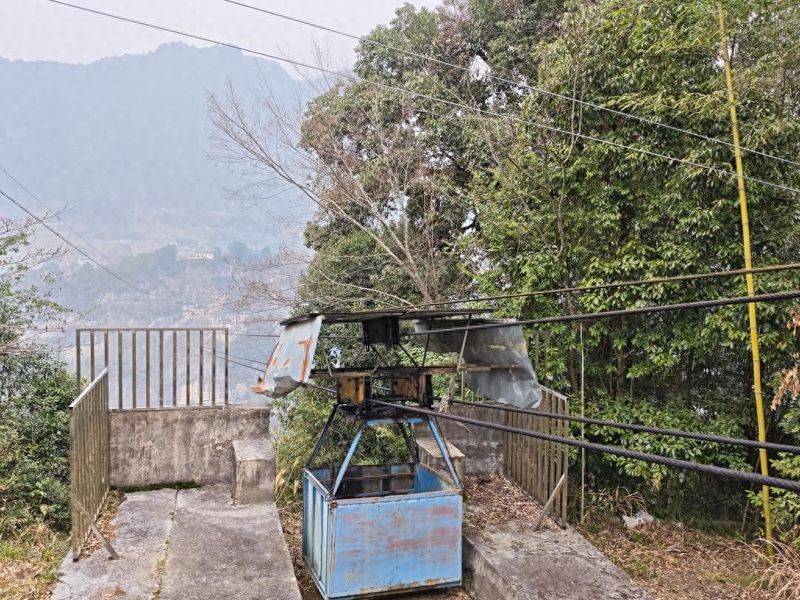
Stopping of abandoned containers on the side of the line. Xinhua news agency journalist zhang yang
The fishing village, once known as the village of sodo, was difficult to build because of the three surroundings and the loss of one wall, and the villagers used to walk out of the village for hours. In the late 1990s, there was a tunnel here to make it easier. However, the limited access to and weight of the sodo do not completely change the backward face of the village. It was not until road access that the fishing villages changed dramatically。
In recent days, journalists have been travelling in high-fine vehicles, shifting from wuhan to the fishing village for about 10 hours, to explore the new life of this small village, which lies above the wall of extinction。
On the outside of the car window is the green river, on the one side is the cliff, and the closer it is to the fishing hill, the steeper the mountain and the more the road is. When the narrow terrain suddenly opened up, the fields and houses were spread between them, the boundaries of the fishing villages。
In the square opposite the fishery village council, several elderly people exercise in front of fitness equipment, new street lights have been installed on both sides of the village, and the cement road in the village has reached almost every doorway. Further forward is the integrated people's service, which contains delivery packages that have just been delivered to villagers for pick-up。
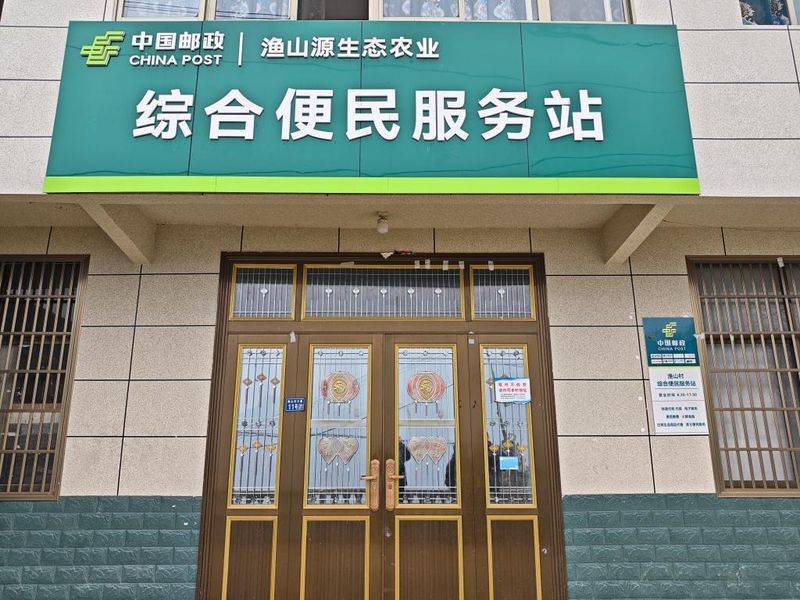
Integrated civilian service stations in fishing villages. Xinhua news agency journalist zhang yang
“the changes that have taken place in the village over the years have been too great.” sixty-three-year-old villagers made it clear that in the past the villages had been isolated and had faced many difficulties in their lives: difficult access to roads, drinking water, medical treatment, schooling and employment
Traffic closures are important reasons. There are seven groups in the fishing village, divided into two parts by one large mountain, which, even if it were to be made available, would be sufficient for the passage of only two groups of villagers, the rest of whom would have to climb about 10 kilometres to reach the site。
It is clear that, in the past, as there were no roads, families used to transport their goods on mules and sometimes on their shoulders. Added to the poor conditions of cultivated land, some villagers are often hungry. The journalists stood at the door of his house and looked away and “spreaded up” a steep field of land, with crops such as cabbage and maize that could only be sewn up, as the villagers described it as “cracking in stone”。
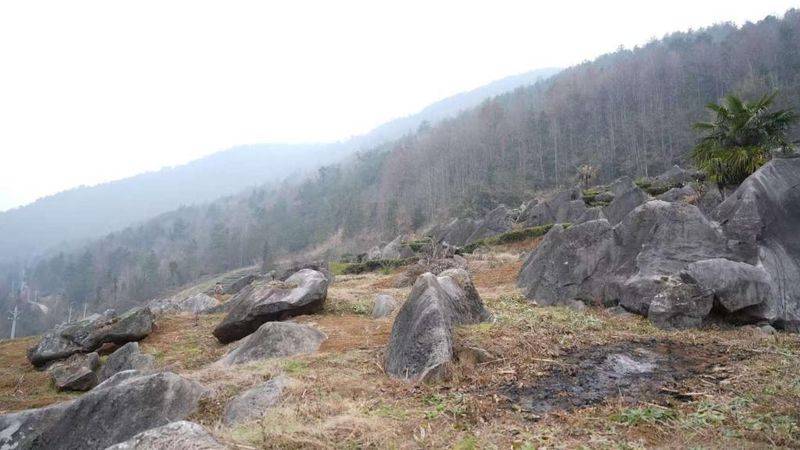
Rocks on land in fishing villages. Xinhua society
Walking out is a survival strategy. In the past, more than a dozen villagers had left the village, selling cattle and mules to start their homes in white hands. When she was young, she also wanted to go out with her daughter-in-law and ended up in a situation where parents insisted on the concept of “earthing”。
In april 2014, the tsuruf feng county support team came to the village. “roading roads is the key to poverty alleviation.” the village support team has made road construction a top priority. Guns were booming, diggers were booming. After several years of effort, around 2017, a “y”-shaped road was connected to the entire village, leaving the village with its history of lack of access。
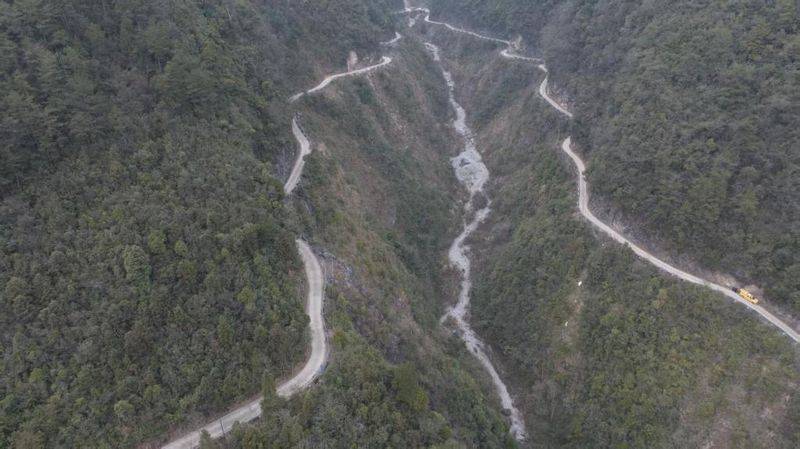
A cliff road leading to fishing villages (unmanned aerial photographs). Xinhua
In recent years, tsuruf feng county has invested more than 26 million yuan, hardened 8 km of main roads, rehabilitated more than 50 km of cluster roads and continued to improve transport conditions in fishing villages。
“now, the pigs fed in the village no longer need to be carried down the hill and can be transported directly by car. The household has access to running water and some have built small ocean buildings.” speaking of the freshmen of the fishing mountain village, the chat box was opened. Recently, he had also purchased a small farm machine on his mobile phone, which had been sent directly to the village express point, which he had been afraid to imagine。
"when the road passes, i can sell anything good." during the spring festival, zhang zhengqing, a villager in fishery village, was particularly popular during the live broadcast, and her family sold the leaves and leaves, which were sold best online. The main raw material is artemisinin, rice and bacon, wrapped in monkey chestnut leaves, and the taste is unique。
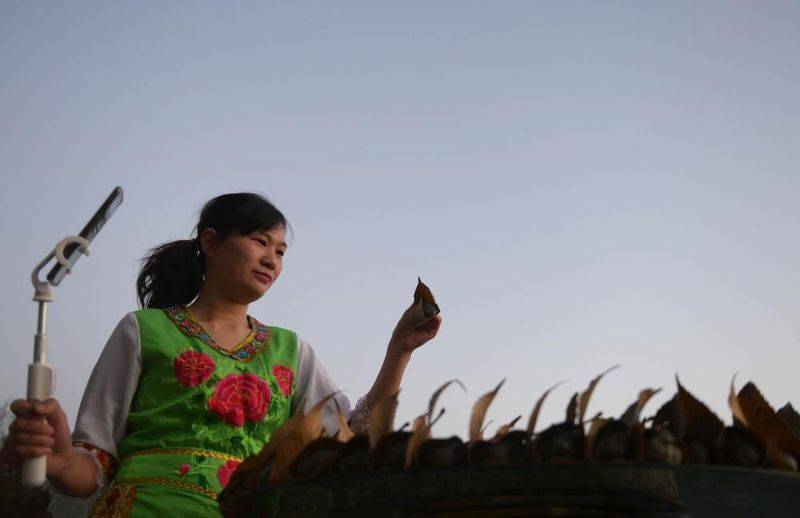
Zhang jing, a villager in fish mountain, sells mountain goods live. Xinhua society for social development
Thanks to its unique ecological advantages, fishing villages have developed industrial patterns dominated by tea, leaf and specialty farming。
The wild tea hidden in the mountains is of good quality and becomes a “gold leaf” for villagers to grow wealth. In recent years, the village-wide tea industry has been steadily developing thanks to policies such as low-yield tea garden renovation, tea seedling subsidies and microcredit. At present, 792 acres of tea are available in fishing villages, with an average income of over $15,000。
“there are 20,000 acres of leaf and more than 300 herds of bee in the village, with pigs and goats holding more than 200 heads.” according to the village worker tan denbin, there are 18 forest rangers in the village who patrol the forest for years and guard the forest and sea. According to statistics, villagers receive more than $4,700 per year in state-level public forest subsidies。
Green development, continuing for the “sodo village” above the wall。