There is a rain swallow in the family, and the back wheel is a drum brake, which is uneven at the time of the year and requires review。
Here's to share my solutions. There's something wrong, welcome to square one。
It was the back wheel brakes, the left brakes, the left brakes, the right back brakes, 150.
Dismantling the right rear wheel and finding oil leaks in the sub-pumps resulted in the clean-up of brake drums, the replacement of new sub-pumps and the new brake foot and foot。
The brakes would then need to be adjusted to bring about convergence between the left and the left。
As shown in figure 1, this brake gap is automatically adjusted, but does not mean that it can be automatically adjusted on a random load。
Instead, the procedure must be followed to give effect to the automatic adjustment device and to maintain a reasonable brake gap automatically。
The rationale for such a device is shown in figure 1, and the physical figure is shown in figure 2.
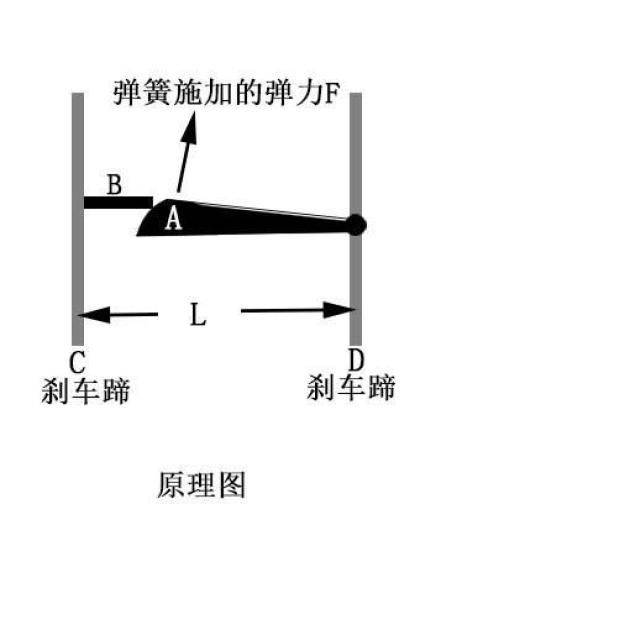
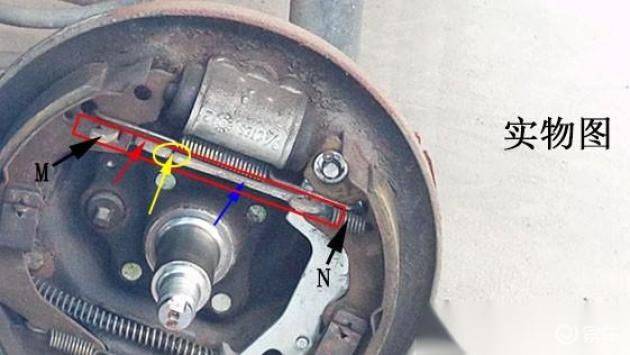
As the brake foot and foot were worn, part a rotated in a certain angle under the spring power f, causing the total length of the regulators of parts a and b to grow, always to keep brakes c and d on top, to keep brakes to the drums and to keep the workshop gap。
In the physical chart, the parts in the red rectangular frame are equivalent to part a of the rationale. The length can be adjusted by squeezing the gap in the yellow arrow with a single-word screwdriver。
The springs indicated by arrow n provide a bullet power f, which leads to a shift in component a, and general commander a will keep the brakes to his feet and feet on top of them as they grow。
The deeper you press m, the more powerful the spring n provides, the smaller the brakes, the tighter the brakes
The rain swallow, which had been debugged several times, found that the old brake blade generally pushed the m to the middle of the brake gap. The new brake plate allows the m to press a little bit, or to raise it completely (not at all), because the brake plate is not sharpened and too much is pressed, resulting in the brake shop being too small and too tight。
Put the brakes back on the drums, there's a slight friction, and there's no undue resistance. All too loose or too tight can be adjusted to the length of the automatic regulator a until it is appropriate by slamming the gap indicated by the yellow arrow with a single-word screw knife。
In the last step, when you return to the brakes in the car, you may hear the sound of the sound generated by the operation of the auto-regulator, which is that as the brakes are raised to the drums, the spring n automatically pulls the regulator to the right position and leaves the brakes in the workshop gap。
Repeated hand brakes were pulled and finally released, the brake drums were removed, the location of m was confirmed, the brakes were reset, and minor frictions were confirmed without undue resistance。
If you fail to meet the requirements, then a screwdriver is used to fine-tune the gap in the yellow arrow, repeat the above steps and check them until they are met。
Once this is done, go back to the car. It's over once。
Before the next year's review, check, adjust the brakes, last year's review, once passed。
Drum brakes are a lot more troublesome than saucers, although there are some differences in the specific structure of each car, and if it's able to break down and figure out the principle, and adjust to the optimal state, then the brakes will do the desired effect, and once and for all, it's proof of a good brake。
These are just some of the lessons learned in the amateur business and, if there is any inaccuracies, they are welcome。