The motor status of fuel vehicles is assessed at four dimensions: drive, brake, switch, chassis. Drivers involve a complex set of technologies, while vehicle brakes, commonly known as brakes, also involve a series of theoretical processes that are excellent。
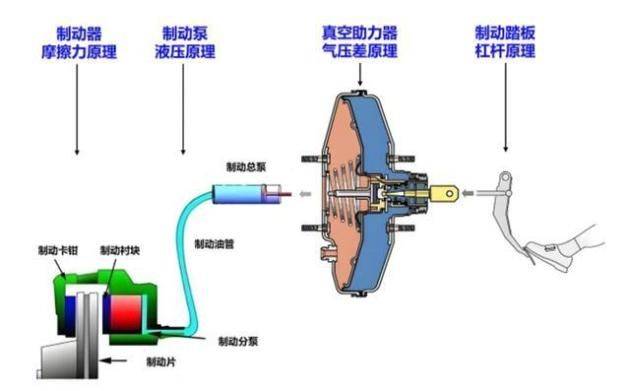
In modern vehicle technology, the owner (driver)/driver exerts power on the brake pedal, the pressure on the brake pedal is transmitted to the vehicle vacuum brake booster, and the fluid from the total brake pump is released into the fluid catheter with the force boosting of the booster, which in turn is transferred to the four wheel-drive rooms, which promotes the movement of the brake-cracker or brake drum between the wheel, which in turn causes friction between the brake skin and the wheelbarrow complex and reduces the speed of the car。
At this point, you probably already know that a car's full brake system consists of a 1st brake pedal module, 2 vacuum booster modules, 3 brake pump hydraulic modules and 4 brake modules。
In the brake pedal module, which uses force leverage to allow the driver to easily step on the pedal to get deep and shallow feedback on the brake, with a strong rectitude, there is a spring inside which the brake pedal is automatically restored when the driver does not step on the pedal。
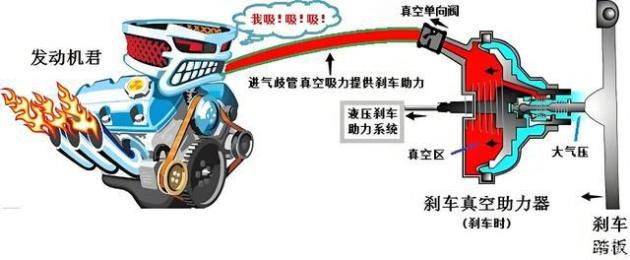
In the vacuum booster module, there are two chambers, internal and external, and when they receive pressure from the brakes, the computer's euu simultaneously receives a brake signal from the owner, the euu processes the signal and transmits the execution information to the engine, commands the engine to open into the gas tube, links to the vacuum booster interior, and when the engine takes the air from the vacuum booster's inside, the vacuum booster's exterior is air, has a standard atmospheric pressure, and the interior and the interior have a pressure difference, which can push "out of the outer chamber and compression" so strongly that the vacuum booster's pole drives the fluid from the general pump to the four wheels, similar to the one that the doctor uses the needle to the patient, so that the fluid reaches the control module。
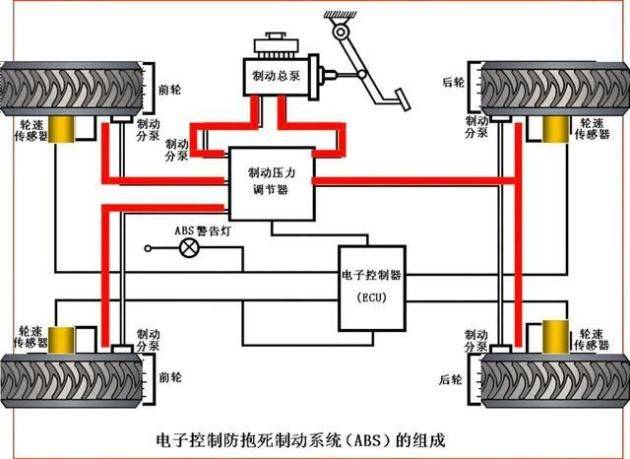
In addition to opening the engine's entry tubes to air from vacuum boosters, the brake ecu collects data from vehicles ' accelerator sensors, tyre revolving sensors, brake pedals, and deep shallow sensors, triggering abs system work when the wheel is overpowered and has a critical point of holding a dead end, preventing the vehicle from falling out of control, while at the same time transmitting the signal to displaying the abs alarm on the dashboard。
In the brake module, it is divided into disk brakes and commonly used drum brakes. Drum brakes have been used in cheap cars and commercial trucks, such as the 2024 expanse, honda fit, the upper steam, the popular polo, and then the wheel still uses the drum brakes, but the vast majority of the new cars have been brakes. The brakes are frictions that match the brakes' linings, the brakes' linings are attached to the brakes' brakes, the brakes are fixed on the brakes' brakes, and the brakes are moving at high speed with the wheel, but both the brakes and the drums' brakes are brakes that use force, and the brakes are easier to spread heat in terms of their effect, the brakes' brake bands are more linear, the construction is relatively simple, the maintenance is relatively easy, and the disadvantage is that the brakes' linings is relatively high, and the brakes are relatively high。

The engine determines the speed and slowness of the vehicle, while the brakes determine whether the vehicle can park. The owner may have been checked by a car mechanic for routine vehicle maintenance and advised to change brake skins and brake oil, but the vast majority of the owners ignored the replacement of brake plates. In fact, for the sake of safety, generally speaking, when you find the chassis deep enough to be more than 3 mm, or the last time you replaced it, it is time to change brakes when the drive reaches 80,000 km or more。