The central role of the electrical protective devices, which act as a “safe immune system” in the electricity grid, is to rapidly and precisely isolate malfunctions, prevent minor accidents from becoming corrosive, and provide for physical, equipment safety and system stability. From household electricity to ultra-high voltage, it is silently guarding the reliable supply of electricity。
Millisecond response: fail-segregated "safe valve"
When the grid fails, such as short circuits, the relay protection must move within a very short period of time, just as the safety valve releases pressure instantaneously. For example, the distribution arc-ray protection unit is able to remove the failure of the main line within 7 ms to avoid damage to the main transformer; while the 1,000 kv hypervoltage breaker is protected by a double test of "electric shock variable + zero sequence current" and the main protective action time is controlled within 10 ms。
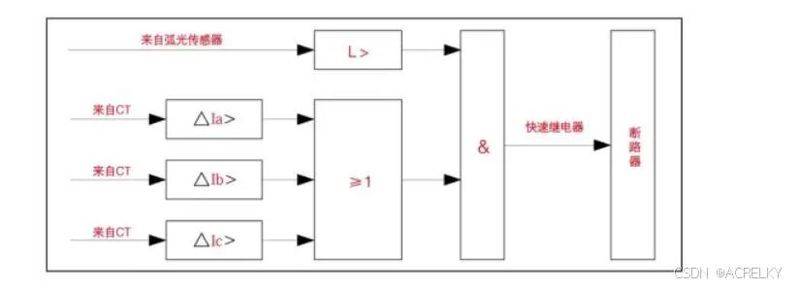
This speed is critical because the failure of electrical currents can be dozens of times the normal value, and delayed removal can lead to overheating, explosions and even grid collapses。
It is more critical that protective devices be selective — only those that are closest to the failure point are removed to ensure that the non-facility area continues to be powered. Traditional back-up protection is achieved by the “time-bound steps” logic, with close backups filled in 0. 3 seconds and long-range backups operating in 1 second to form layers of protection. Thus, a single circuit short-circuit does not result in a total power outage at the transformer station and minimizes the impact。
New energy challenges: the “upgrading war” of protective logic
With large-scale access to new sources of energy, such as wind power and photovoltaics, the grid has been transformed from a single power source to a multi-power network, with new challenges for relay protection. New energy sources are grided through electrical and electrical power, with low failure current bands and high condensation levels, which differ significantly from traditional synchronized generators and may lead to difficulties or errors in the initiation of traditional protection based on work frequency。
In photo-storage integrated charging stations, where photovoltaic and energy systems simultaneously inject currents into the failure point, protection logic settings may be unreasonable or unable to isolate malfunctions quickly. To this end, new methods of protection have emerged:
Smart evolution: from "implementer" to "sensor"
Modern relay protection is not only an “executor” for failure removal, but also a “sensor” for system state. Smart upgrades make protection more efficient and reliable:
From the rapid response safety valve to the battle against the upgrading of new sources of energy to the intelligent sensory network, relay protection devices have always been an indispensable cornerstone of grid safety。