The revised trademarks act was submitted for initial consideration to the standing committee of the xiv npc. The revised draft regulates the improper use of trademarks by adding provisions that allow fines to be imposed on the use of registered trademarks in a way that misleads the public and the trademarks to be revoked。
Application for registration and use of trademarks shall not prejudice national interests
At the nineteenth session of the standing committee of the fourteenth national people's congress, entrusted by the state council, the director-general of the national intellectual property authority, shin longyun, made a presentation on the trademarks law of the people's republic of china (revised)。
Shin long rain indicated that the existing trademark act, which had been introduced in 1983 and amended four times, had played a positive role in protecting trademark exclusive rights and promoting the economic development of the socialist market. As of the end of 2024, the cumulative number of applications for registration of trademarks in the country was 83. 52 million, and the number of valid registered trademarks had reached 49,777,000, all ranked first in the world. At the same time, there have been new developments in the area of trademarks. In order to address outstanding problems in practice, it was necessary to amend the existing trademark law。
The revised draft contains a total of 9 chapters, 84 of which are devoted to identifying general requirements for trademark work, the development of high-quality services, the conditions for the registration of trademarks, the regulation of trademark registration, the optimization of the process for authorizing trademarks, the facilitation of parties, the strengthening of trademark management, the maintenance of a fair competitive market order, the strengthening of the protection of trademark exclusive rights and the protection of the legitimate interests of the parties。
In clarifying the overall requirements of trademark work and the development of quality services, the addition of the requirement that trademark work should follow the strategic deployment of party and national intellectual property rights; the clarification of the division of responsibilities for trademark registration, management and enforcement; and the addition of a definition of trademarks and the emphasis that applications for registration and use of trademarks must not be made to the detriment of national interests, the public interest or the legitimate interests of others。
The use of the name of the communist party of china, the party flag, the party emblem and the medals as merchants is explicitly prohibited. Indicators
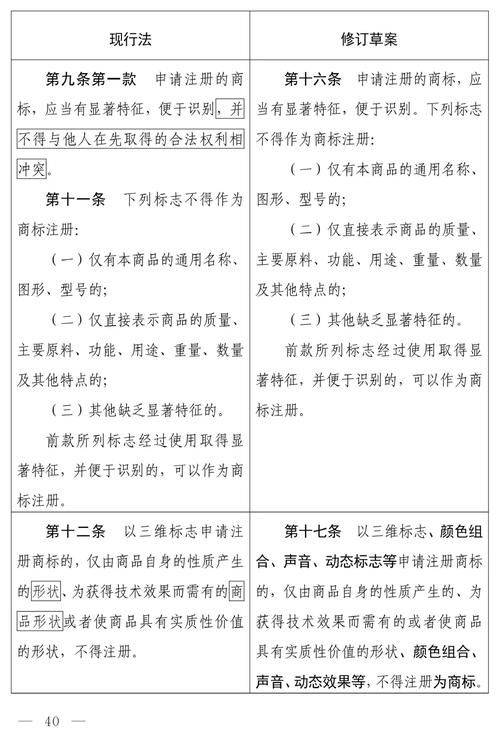
The conditions for the registration of trademarks are specified and the registration of trademarks is regulated. The addition of a special chapter consolidates and refines the conditions for the registration of trademarks, which were previously scattered in various chapters. The use of the name of the communist party of china, the party flag, the party emblem and the decorations as trademarks is expressly prohibited; the addition of a provision that “dynamic signs” may be registered as trademarks, and that only colour combinations, sound, dynamic effects resulting from the nature of the goods themselves, which are necessary for the acquisition of technical effects or which give them substantial value, may not be registered; the explicit exclusion of registration of trademarks for purposes of use, which clearly exceed the requirements of normal production operations; and the strengthening of the protection of copyrights, which would prohibit the use of registered trademarks on different and similar goods, and the extension of registrations to non-differentiated entries。
In recent years, the trademark office of the national intellectual property office has continued to fight against the industry。
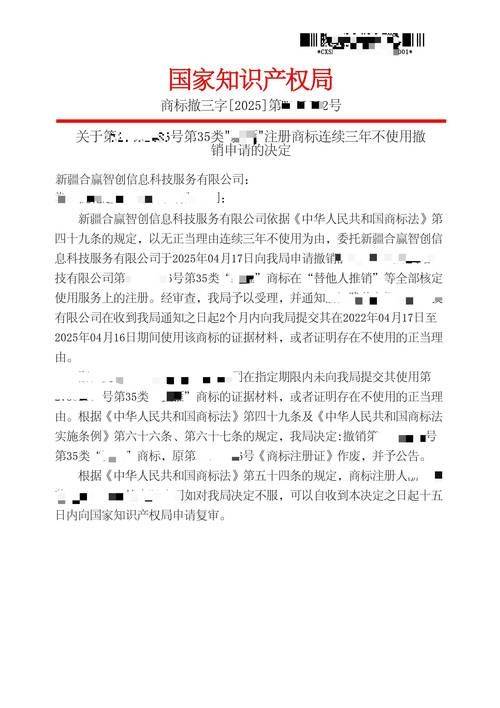
With regard to the strengthening of trademark management, the revised draft includes provisions that require the department responsible for the enforcement of trademarks to order correction within a period of time if the registered trademark is used in a manner that is clearly misleading to the public; penalties of less than $50,000 for failure to correct it; and, in serious cases, the cancellation of the registered trademark by the trademark administration of the state council. In addition, the regulation of trademark agencies and trademark agents has been strengthened。
In the context of strengthening the protection of trademark rights, the revised draft strengthens the detection of trademark torts and provides for the transfer and coordination of trademark tort offences. It is also clear that when a trademark action is instituted in bad faith, it is punishable by law and civil liability for damages is established by law。